
Title
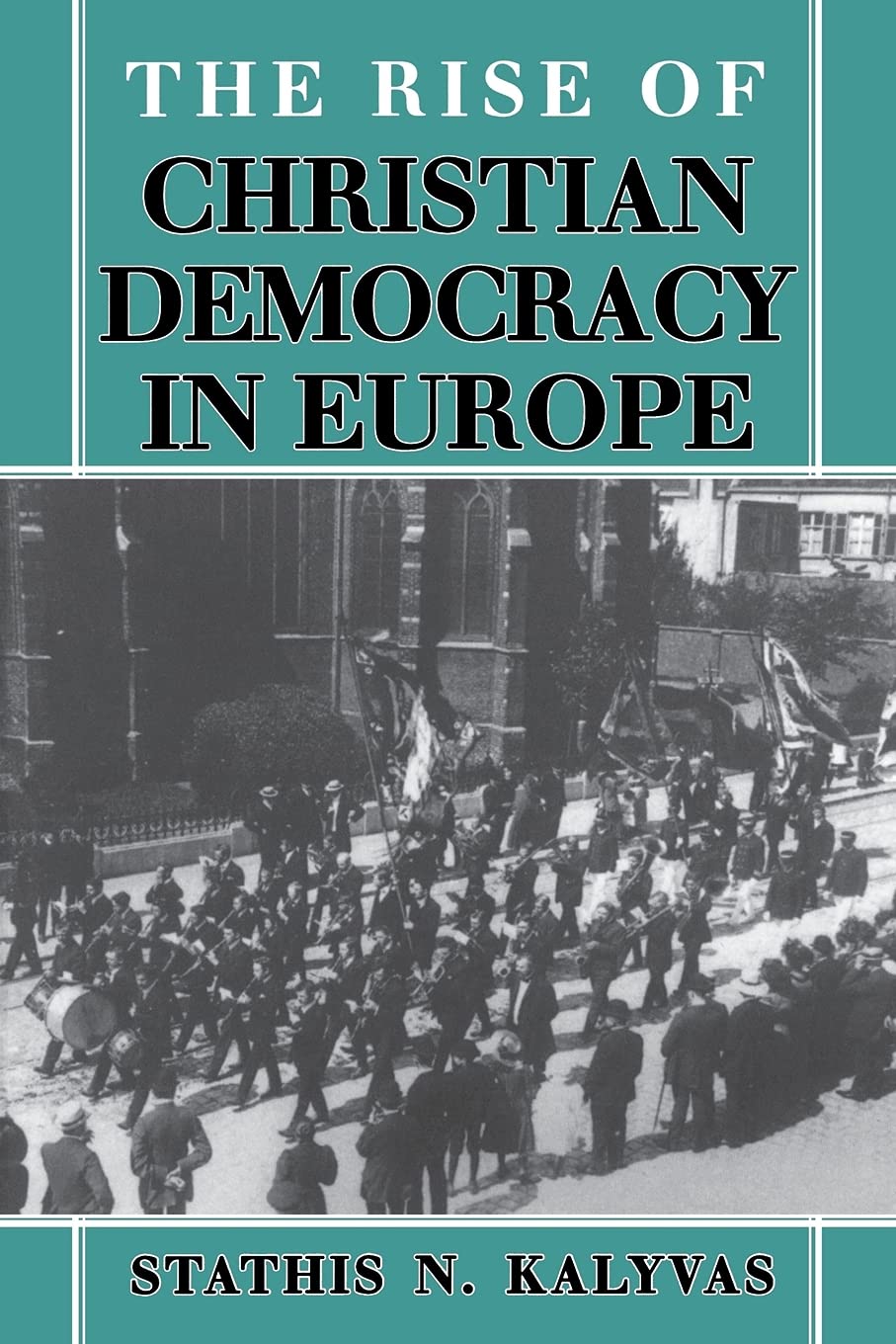
The Rise of Christian Democracy in Europe (The Wilder House Series in Politics, History and Culture),Used
Sold by Ergodebooks, an authorized reseller.
Returns accepted within 30 days | support@ergodebooks.com
Shipping Information
- Free Standard Shipping — United States only
- Processing Time: 3–5 business days
- Estimated Delivery: 6–10 business days after dispatch
- Double-boxed, fully insured & discreetly packaged
- Tracking number sent via email once dispatched
Returns & Refund
Returns accepted within 30 days of delivery.
Damaged or Defective Item
Free return shipping + replacement or full refund
Wrong Item Received
Free return shipping + replacement or full refund
Change of Mind
Return shipping at customer's expense · 25% restocking fee applies
Payment Option

Although dominant in West European politics for more than a century, Christian Democratic parties remain largely unexplored and little understood. An investigation of how political identities and parties form, this book considers the origins of Christian Democratic 'confessional' parties within the political context of Western Europe.Examining five countries where a successful confessional party emerged (Belgium, the Netherlands, Austria, Germany, and Italy) and one where it did not (France), Stathis N. Kalyvas addresses perplexing questions raised by the Christian Democratic phenomenon. How can we reconcile the religious roots of these parties with their tremendous success and resilience in secular and democratic Western Europe? Why have these parties discarded their initial principles and objectives to become secular forces governing secular societies? The author's answers reveal the way in which social and political actors make decisions based on selfinterest under conditions that constrain their choices and the information they rely onoften with unintended but irrevocable consequences.Kalyvas also lays a foundation for a theory of the Christian Democratic phenomenon which would specify the conditions under which confessional parties succeed and would determine the impact of such parties, and the way they are formed, on politics and society. Drawing from political science, sociology, and history, his analysis goes beyond Christian Democracy to address issues related to the methodology of political science, the theory of party formation, the political development of Europe, the relationship between religion and politics, the construction of collective political identities, and the role of agency and contingency in politics.
⚠️ WARNING (California Proposition 65):
This product may contain chemicals known to the State of California to cause cancer, birth defects, or other reproductive harm.
For more information, please visit www.P65Warnings.ca.gov.