
Title


The Rise Of Statistical Thinking, 18201900,Used
Sold by Ergodebooks, an authorized reseller.
Returns accepted within 30 days | support@ergodebooks.com
Shipping Information
- Free Standard Shipping — United States only
- Processing Time: 3–5 business days
- Estimated Delivery: 6–10 business days after dispatch
- Double-boxed, fully insured & discreetly packaged
- Tracking number sent via email once dispatched
Returns & Refund
Returns accepted within 30 days of delivery.
Damaged or Defective Item
Free return shipping + replacement or full refund
Wrong Item Received
Free return shipping + replacement or full refund
Change of Mind
Return shipping at customer's expense · 25% restocking fee applies
Payment Option

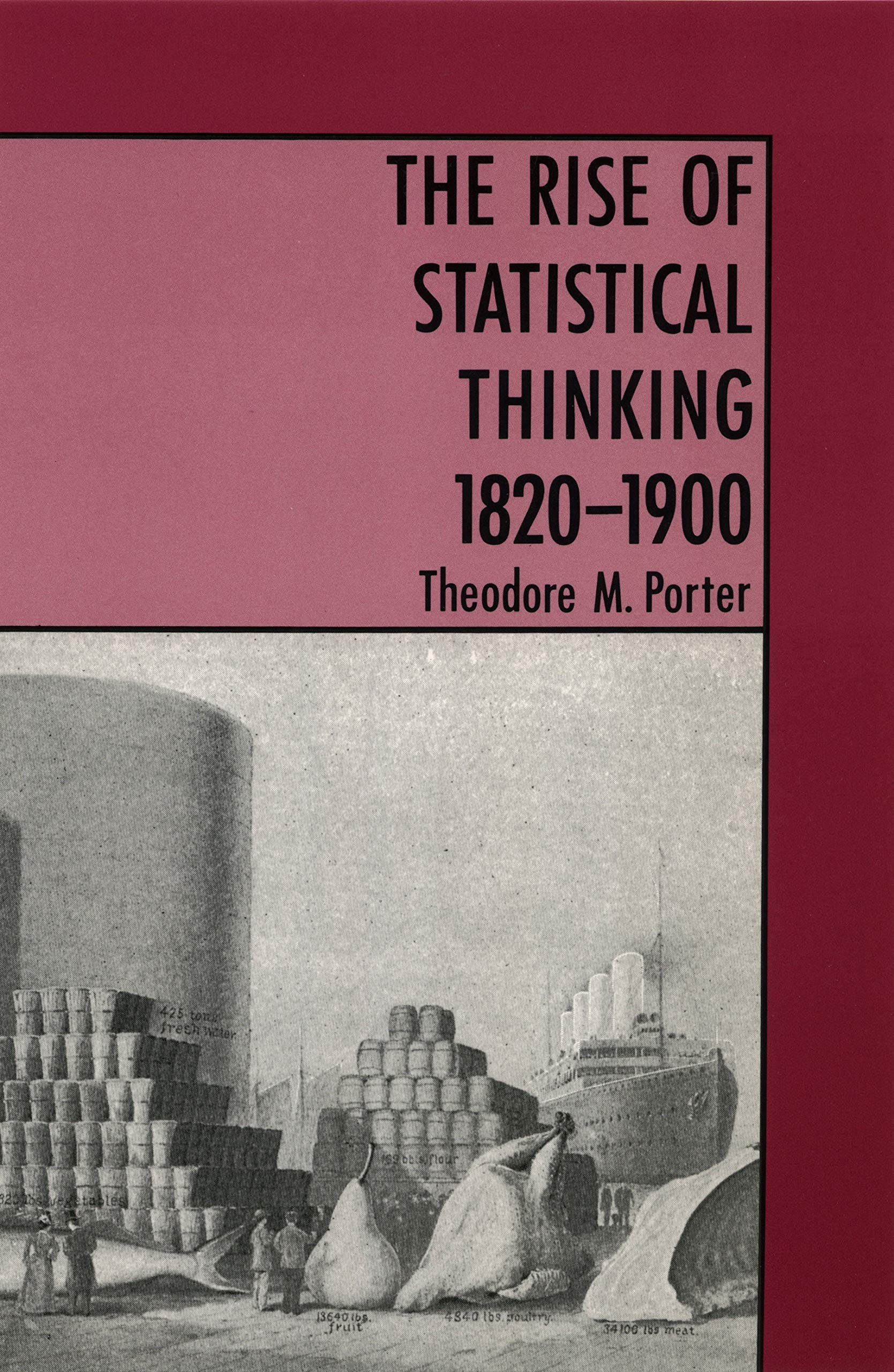
Emphasizing The Debt Of Science To Nonspecialist Intellectuals, Theodore Porter Describes In Detail The Nineteenthcentury Background That Produced The Burst Of Modern Statistical Innovation Of The Early 1900S. Statistics Arose As A Study Of Societythe Science Of The Statistand The Pioneering Statistical Physicists And Biologists, Maxwell, Boltzmann, And Galton, Each Introduced Statistical Models By Pointing To Analogies Between His Discipline And Social Science.
⚠️ WARNING (California Proposition 65):
This product may contain chemicals known to the State of California to cause cancer, birth defects, or other reproductive harm.
For more information, please visit www.P65Warnings.ca.gov.
- Q: What is the page count of 'The Rise of Statistical Thinking, 1820-1900'? A: This book has three hundred forty-eight pages. It provides an in-depth exploration of the development of statistical thought in the nineteenth century.
- Q: What is the size of the book? A: The dimensions of the book are six inches in length, zero point eight-seven inches in width, and nine point zero two inches in height. This makes it a convenient size for reading and storage.
- Q: What type of binding does this book have? A: The book is available in paperback binding. This allows for a lightweight and portable reading experience.
- Q: How do I approach reading this book? A: You can read this book at your own pace, as it is suitable for both casual readers and academic audiences. The content is designed to engage those interested in history and philosophy.
- Q: Is this book suitable for beginners in statistical thinking? A: Yes, this book is suitable for beginners. It introduces concepts in a clear manner, making it accessible for those new to the subject.
- Q: What age group is this book appropriate for? A: This book is appropriate for adults and older teenagers. It covers complex themes that are best understood by those with some background knowledge.
- Q: How should I store this book? A: You should store this book in a cool, dry place to maintain its condition. Avoid exposure to direct sunlight to prevent fading.
- Q: Can I clean the book if it gets dirty? A: Yes, you can clean the book gently with a dry cloth. Avoid using liquids as they may damage the pages.
- Q: Is this book considered a used book? A: Yes, this book is classified as a used book in good condition. It may show some signs of wear but remains readable.
- Q: What topics are covered in this book? A: The book discusses the evolution of statistical thinking and its connection to various scientific disciplines. It highlights historical figures and their contributions.
- Q: How does this book compare to other history books? A: This book stands out for its focus on statistical innovation, unlike many history books that cover broader topics. It's particularly valuable for those interested in the philosophy of science.
- Q: Is this book recommended for academic study? A: Yes, this book is highly recommended for academic study. It provides insights that are useful for students and researchers in the fields of history and philosophy.
- Q: What makes this book a good choice for reading? A: This book offers a unique perspective on the historical development of statistics, making it a compelling read for anyone interested in the intersection of science and society.
- Q: What if I receive a damaged copy of the book? A: If you receive a damaged copy, you can return it for a replacement. Always check the return policy for specific instructions.
- Q: Is there a warranty for this book? A: Typically, there is no warranty for books. However, you should be able to return it if it arrives in poor condition.
- Q: How do I contact support if I have an issue with my order? A: You can contact customer support through the retailer's website or by phone for assistance with your order issues.