
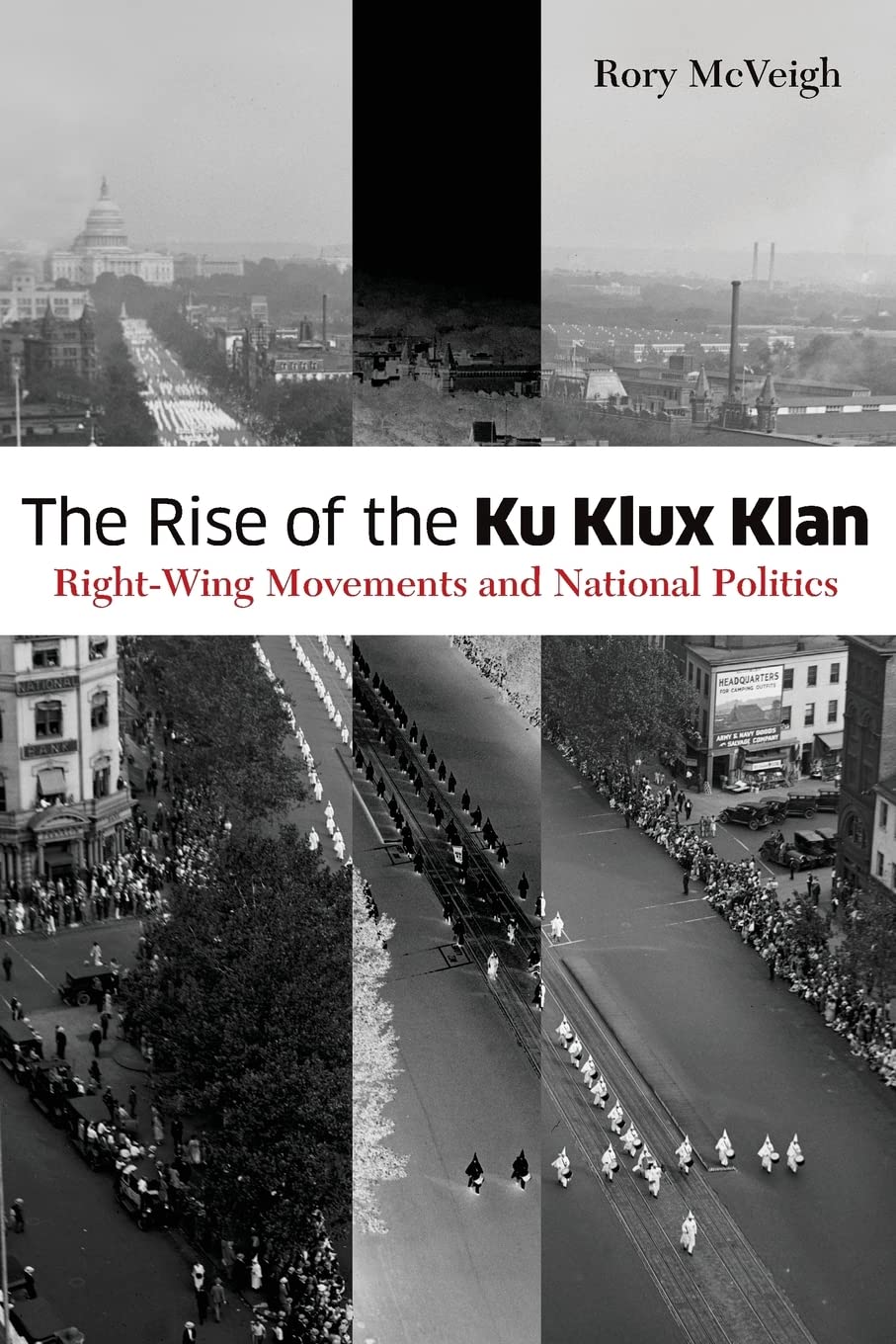
Title
The Rise Of The Ku Klux Klan: Rightwing Movements And National Politics (Volume 32) (Social Movements, Protest And Contention),Used
Sold by Ergodebooks, an authorized reseller.
Returns accepted within 30 days | support@ergodebooks.com
Shipping Information
- Free Standard Shipping — United States only
- Processing Time: 3–5 business days
- Estimated Delivery: 6–10 business days after dispatch
- Double-boxed, fully insured & discreetly packaged
- Tracking number sent via email once dispatched
Returns & Refund
Returns accepted within 30 days of delivery.
Damaged or Defective Item
Free return shipping + replacement or full refund
Wrong Item Received
Free return shipping + replacement or full refund
Change of Mind
Return shipping at customer's expense · 25% restocking fee applies
Payment Option

Rediscovering The Ku Klux Klan As A National Movement In The 1920Sin 1915, Forty Years After The Original Ku Klux Klan Disbanded, A Former Farmer, Circuit Preacher, And University Lecturer Named Colonel William Joseph Simmons Revived The Secret Society. By The Early 1920S The Kkk Had Been Transformed Into A National Movement With Millions Of Duespaying Members And Chapters In All Of The Nations Fortyeight States. And Unlike The Reconstructionera Society, The Klan In The 1920S Exerted Its Influence Far Beyond The South.In The Rise Of The Ku Klux Klan, Rory Mcveigh Provides A Revealing Analysis Of The Broad Social Agenda Of 1920Sera Kkk, Showing That Although The Organization Continued To Promote White Supremacy, It Also Addressed A Surprisingly Wide Range Of Social And Economic Issues, Targeting Immigrants And, Particularly, Catholics, As Well As African Americans, As Dangers To American Society. In Sharp Contrast To Earlier Studies Of The Kkk, Which Focus On The Local Or Regional Level, Mcveigh Treats The Klan As It Saw Itselfas A National Organization Concerned With National Issues. Drawing On Extensive Research Into The Klans National Publication, The Imperial Nighthawk, He Traces The Ways In Which Klan Leaders Interpreted National Issues And How They Attemptedand Finally Failedto Influence National Politics.More Broadly, In Detailing The Klans Expansion In The Early 1920S And Its Collapse By The End Of The Decade, Mcveigh Ultimately Sheds Light On The Dynamics That Fuel Contemporary Rightwing Social Movements That Similarly Blur The Line Between Race, Religion, And Values.
⚠️ WARNING (California Proposition 65):
This product may contain chemicals known to the State of California to cause cancer, birth defects, or other reproductive harm.
For more information, please visit www.P65Warnings.ca.gov.
- Q: How many pages does the book have? A: The book has two hundred forty-eight pages. This length provides a comprehensive exploration of the Ku Klux Klan's influence in the 1920s.
- Q: What is the binding type of the book? A: The book is paperback. This makes it lightweight and easy to carry for reading.
- Q: What are the dimensions of the book? A: The book measures six inches in length, zero point eight inches in width, and nine point zero two inches in height. These dimensions make it a convenient size for reading.
- Q: Who is the author of the book? A: The author is Rory McVeigh. He provides an in-depth analysis of the Ku Klux Klan and its social agenda.
- Q: What is the main theme of the book? A: The main theme is the examination of the Ku Klux Klan as a national movement in the 1920s. It discusses its impact on American society and politics.
- Q: Is the book suitable for academic study? A: Yes, the book is suitable for academic study. It includes extensive research and analysis of historical social movements.
- Q: How does the book discuss the Klan's influence? A: The book discusses the Klan's influence by detailing its social agenda and the issues it targeted. It covers themes of race, religion, and national politics.
- Q: Is this book recommended for history enthusiasts? A: Yes, this book is highly recommended for history enthusiasts. It provides a detailed look at a significant aspect of American history.
- Q: Who published this book? A: The book is published by the University of Minnesota Press. This publisher is known for scholarly works in various fields.
- Q: Does this book include any visuals? A: Yes, the book includes twenty-four black and white photos and four tables. These visuals enhance the understanding of the content.
- Q: Can this book be used for research projects? A: Yes, this book can be used for research projects. Its thorough analysis and references provide valuable insights.
- Q: What type of reader would benefit from this book? A: Readers interested in social movements, American history, and political dynamics would benefit from this book. It offers a critical perspective on the Klan's influence.
- Q: What is the focus of Rory McVeigh's analysis? A: Rory McVeigh's analysis focuses on the Klan as a national organization. He examines its attempts to influence national politics during the 1920s.
- Q: Does the book address any contemporary issues? A: Yes, the book sheds light on dynamics that fuel contemporary right-wing movements. It draws parallels between past and present issues.
- Q: Is there a specific audience for this book? A: The book targets academics, historians, and general readers interested in understanding historical social movements. Its content is accessible to a wide audience.
- Q: What can readers expect to learn from this book? A: Readers can expect to learn about the Klan's broad social agenda and its historical context. The book provides insights into race, religion, and political issues of the time.