
Title


The River Pollution Dilemma in Victorian England: Nuisance Law versus Economic Efficiency (Modern Economic and Social History),Used
Sold by Ergodebooks, an authorized reseller.
Returns accepted within 30 days | support@ergodebooks.com
Shipping Information
- Free Standard Shipping — United States only
- Processing Time: 3–5 business days
- Estimated Delivery: 6–10 business days after dispatch
- Double-boxed, fully insured & discreetly packaged
- Tracking number sent via email once dispatched
Returns & Refund
Returns accepted within 30 days of delivery.
Damaged or Defective Item
Free return shipping + replacement or full refund
Wrong Item Received
Free return shipping + replacement or full refund
Change of Mind
Return shipping at customer's expense · 25% restocking fee applies
Payment Option

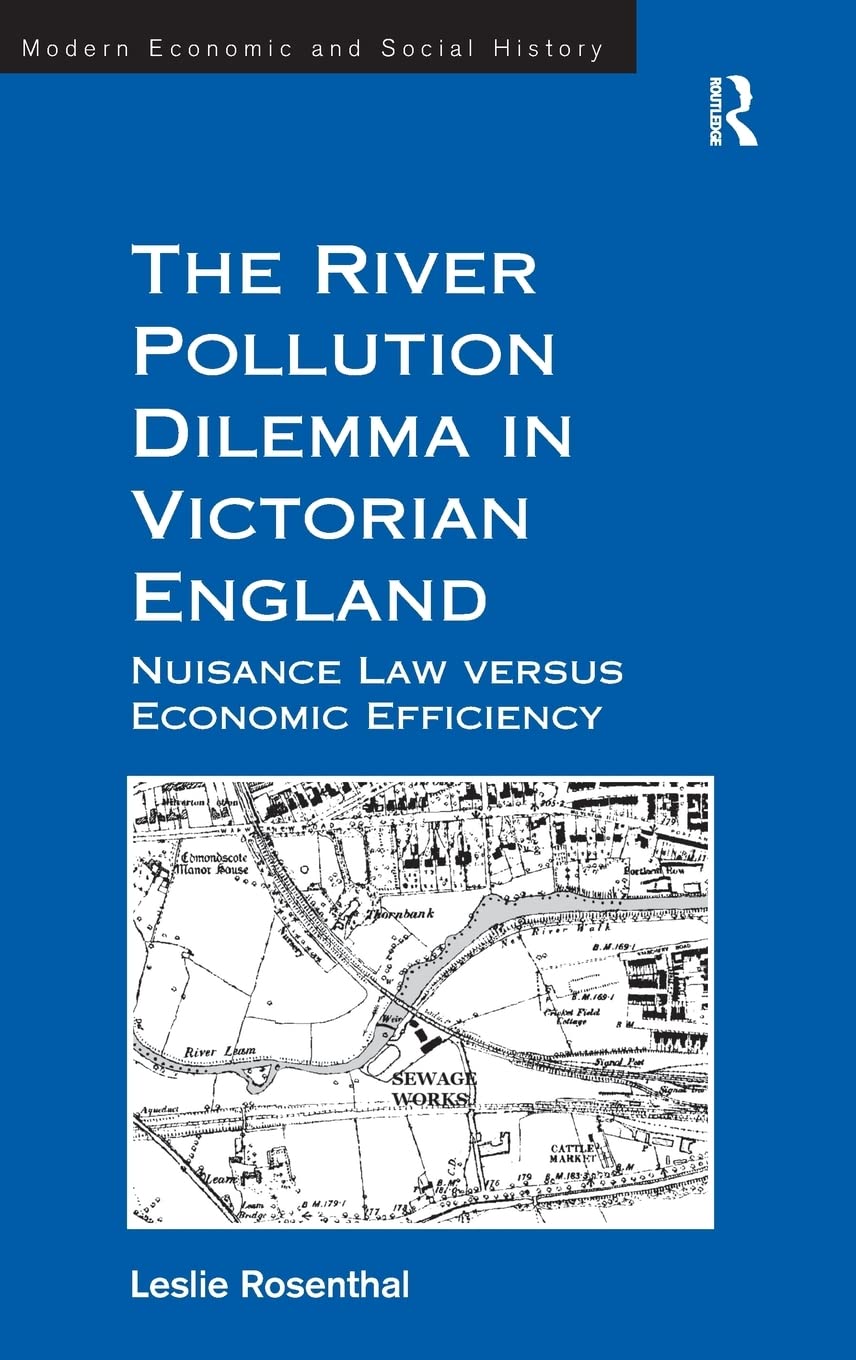
Nineteenthcentury Britain witnessed a dramatic increase in its town population, as a hitherto largely rural economy transformed itself into an urban one. Though the political and social issues arising from these events are wellknown, little is known about how the British legal process coped with the everyday strains that emerged from the unprecedented scale of these changes. This book explores the river pollution dilemma faced by the British courts during the second half of the nineteenth century when the legal process had to confront the new incompatible realities arising from the increasing amounts of untreatable waste flowing into the rivers. This dilemma struck at the heart of both Victorian urban and rural society, as the necessary sanitary reformation of the swelling cities and expanding industry increasingly poisoned the rivers, threatening the countryside and agricultural rents and livelihoods. Focusing on ten legal disputes, the book investigates the dilemma that faced the courts; namely how to protect the traditional and valued rights of landholders whose rivers and lands were being polluted by industrial waste and untreated sewage, whilst not hindering the progress of sanitary reform and economic progress in the towns. The case studies considered involve major industrialising centres, such as Birmingham, Leeds, Northampton, Wolverhampton and Barnsley, but also include smaller towns such as Tunbridge Wells, Leamington Spa and Harrogate. The fundamental issues raised remain as important today as they did in Victorian times. The need for the courts to balance a variety of conflicting needs and rights within the limits of contemporary technological capabilities often played out in surprising ways, with outcomes not always in line with theoretical expectations. As such the historical context of the disputes provide fascinating insights into nineteenthcentury legal process, and the environmental and social attitudes of the times.
⚠️ WARNING (California Proposition 65):
This product may contain chemicals known to the State of California to cause cancer, birth defects, or other reproductive harm.
For more information, please visit www.P65Warnings.ca.gov.