
Title
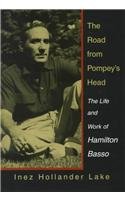
The Road From Pompey'S Head: The Life And Work Of Hamilton Basso (Southern Literary Studies),Used
Sold by Ergodebooks, an authorized reseller.
Returns accepted within 30 days | support@ergodebooks.com
Shipping Information
- Free Standard Shipping — United States only
- Processing Time: 3–5 business days
- Estimated Delivery: 6–10 business days after dispatch
- Double-boxed, fully insured & discreetly packaged
- Tracking number sent via email once dispatched
Returns & Refund
Returns accepted within 30 days of delivery.
Damaged or Defective Item
Free return shipping + replacement or full refund
Wrong Item Received
Free return shipping + replacement or full refund
Change of Mind
Return shipping at customer's expense · 25% restocking fee applies
Payment Option

Facts are deceptive. Fiction is truth. . . . Impious though it may sound, the novelist can play God. Nothing is hidden from him, nothing is concealed. He can approach as close to the truth as his genius permits.Hamilton BassoNovelist, literary critic, an articulate voice within The New Republic and The New YorkerHamilton Basso (19041964) gained his writerly bearings in his native New Orleans during the 1920s at the feet of Sherwood Anderson. Over the course of his life, his friends and associates also included William Faulkner, F. Scott Fitzgerald, Thomas Wolfe, Maxwell Perkins, Van Wyck Brooks, Malcolm Cowley, Matthew Josephson, and Edmund Wilson. Since his death, Bassos name and writings have somehow slipped between the cracks of the American canon, leaving him only a faint memory alongside his more famous contemporaries. In The Road from Pompeys Head, the first major biography of Basso, Inez Hollander Lake makes the appealing, illuminating argument that present memory does a disservice to this distinctive mind and talent.Between 1929 and 1964 Basso published eleven novels, including in 1954 The View from Pompeys Head, which spent forty weeks on the New York Times bestseller list and was translated into seven languages. Lake suggests, however, that Bassos less popular works of the 1930s, particularly Cinnamon Seed and Courthouse Square, also deserve new examination. Like no other writer of the Southern Renaissance, she says, Basso portrayed the double alienation experienced by the southerner who leaves and then returns home; he analyzed the theme more often, more thoroughly, and less sentimentally than Wolfe, who has received most if not all credit for the motif. At the same time, he displayed a marked southern otherness, taking the Agrarians to task for breeding plantation anachronisms out of the dead land and criticizing writers like Erskine Caldwell and Faulkner for cultivating the other extreme of the southern grotesque and southern decay. Social realism was Bassos prescribed approach to depicting the South in fiction, and he would grind his axe against public vices such as racism, intolerance, and social and intellectual pretense.Independent, a loner who shunned literary society in New York City, Basso finally broke with New Orleans completely and even took leave of the South, settling in Connecticut. Inez Hollander Lake brings this reluctant southerner vividly to mind in a skillfully integrated discussion of his life and work, employing to the fullest the letters, diaries, manuscripts, and family and friends that remain behind.
⚠️ WARNING (California Proposition 65):
This product may contain chemicals known to the State of California to cause cancer, birth defects, or other reproductive harm.
For more information, please visit www.P65Warnings.ca.gov.