
Title
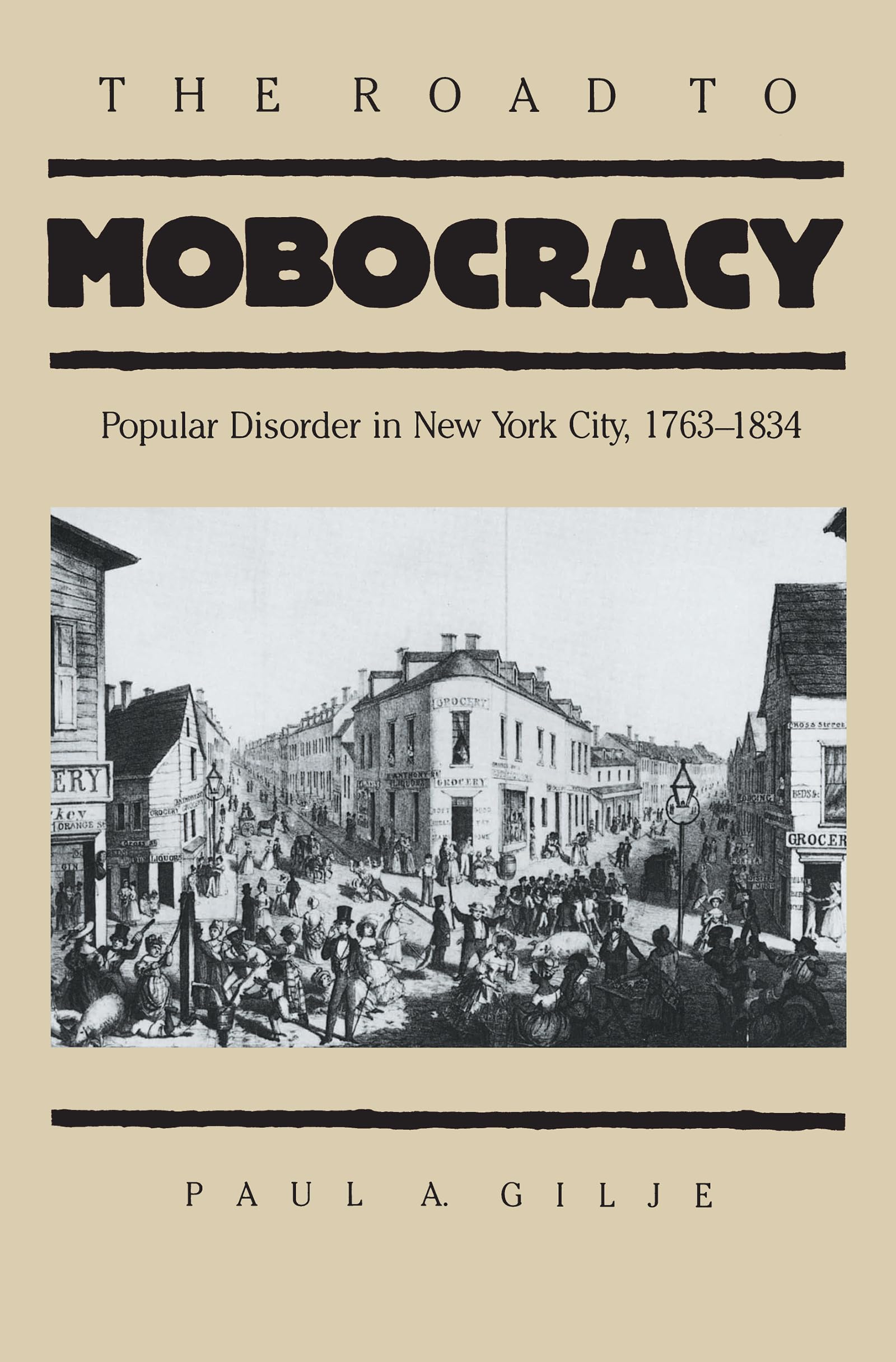
The Road to Mobocracy: Popular Disorder in New York City, 17631834 (Published by the Omohundro Institute of Early American Hist,Used
Sold by Ergodebooks, an authorized reseller.
Returns accepted within 30 days | support@ergodebooks.com
Shipping Information
- Free Standard Shipping — United States only
- Processing Time: 3–5 business days
- Estimated Delivery: 6–10 business days after dispatch
- Double-boxed, fully insured & discreetly packaged
- Tracking number sent via email once dispatched
Returns & Refund
Returns accepted within 30 days of delivery.
Damaged or Defective Item
Free return shipping + replacement or full refund
Wrong Item Received
Free return shipping + replacement or full refund
Change of Mind
Return shipping at customer's expense · 25% restocking fee applies
Payment Option

The Road to Mobocracy is the first major study of public disorder in New York City from the Revolutionary period through the Jacksonian era. During that time, the mob lost its traditional, institutional role as corporate safety valve and social corrective, tolerated by public officials. It became autonomous, a violent menace to individual and public good expressing the discordant urges and fears of a pluralistic society. Indeed, it tested the premises of democratic government.Paul Gilje relates the practices of New York mobs to their American and European roots and uses both historical and anthropological methods to show how those mobs adapted to local conditions. He questions many of the traditional assumptions about the nature of the mob and scrutinizes explanations of its transformation: among them, the loss of a singleinterest society, industrialization and changes in the workforce, increased immigration, and the rise of subclasses in American society. Gilje's findings can be extended to other cities.The lucid narrative incorporates meticulous and exhaustive archival research that unearths hundreds of New York City disturbances about the Revolution, bawdyhouses, theaters, dogs and hogs, politics, elections, ethnic conflict, labor actions, religion. Illustrations recreate the turbulent atmosphere of the city; maps, graphs, and tables define the spacial and statistical dimensions of its ferment. The book is a major contribution to our understanding of social change in the early Republic as well as to the history of early New York, urban studies, and rioting.
⚠️ WARNING (California Proposition 65):
This product may contain chemicals known to the State of California to cause cancer, birth defects, or other reproductive harm.
For more information, please visit www.P65Warnings.ca.gov.