
Title
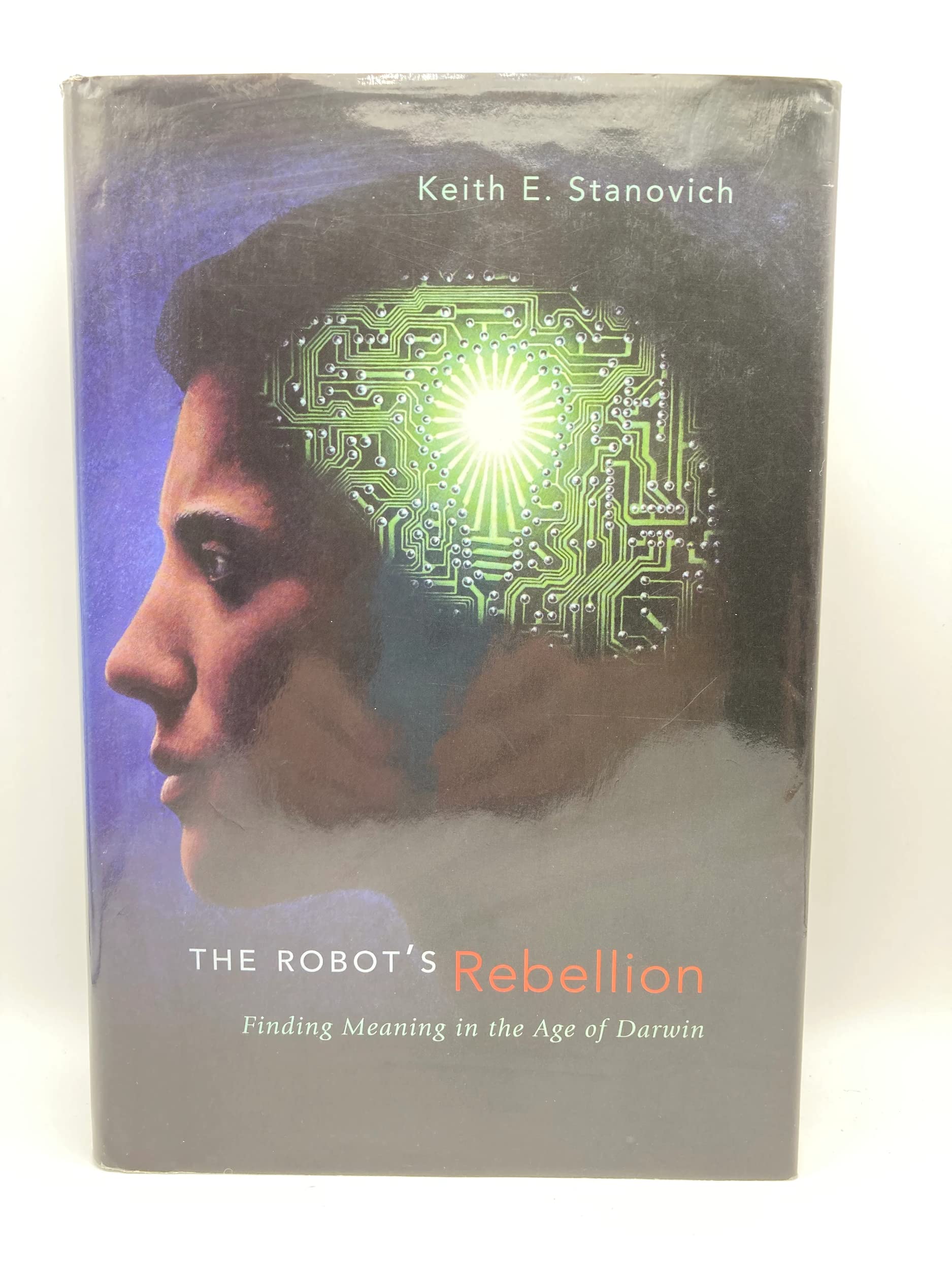
The Robot's Rebellion: Finding Meaning in the Age of Darwin,Used
Sold by Ergodebooks, an authorized reseller.
Returns accepted within 30 days | support@ergodebooks.com
Shipping Information
- Free Standard Shipping — United States only
- Processing Time: 3–5 business days
- Estimated Delivery: 6–10 business days after dispatch
- Double-boxed, fully insured & discreetly packaged
- Tracking number sent via email once dispatched
Returns & Refund
Returns accepted within 30 days of delivery.
Damaged or Defective Item
Free return shipping + replacement or full refund
Wrong Item Received
Free return shipping + replacement or full refund
Change of Mind
Return shipping at customer's expense · 25% restocking fee applies
Payment Option

The idea that we might be robots is no longer the stuff of science fiction; decades of research in evolutionary biology and cognitive science have led many esteemed scientists to the conclusion that, according to the precepts of universal Darwinism, humans are merely the hosts for two replicators (genes and memes) that have no interest in us except as conduits for replication. Richard Dawkins, for example, jolted us into realizing that we are just survival mechanisms for our own genes, sophisticated robots in service of huge colonies of replicators to whom concepts of rationality, intelligence, agency, and even the human soul are irrelevant.Accepting and now forcefully responding to this decentering and disturbing idea, Keith Stanovich here provides the tools for the 'robot's rebellion,' a program of cognitive reform necessary to advance human interests over the limited interest of the replicators and define our own autonomous goals as individual human beings. He shows how concepts of rational thinking from cognitive science interact with the logic of evolution to create opportunities for humans to structure their behavior to serve their own ends. These evaluative activities of the brain, he argues, fulfill the need that we have to ascribe significance to human life.We may well be robots, but we are the only robots who have discovered that fact. Only by recognizing ourselves as such, argues Stanovich, can we begin to construct a concept of self based on what is truly singular about humans: that they gain control of their lives in a way unique among life forms on Earththrough rational selfdetermination.
⚠️ WARNING (California Proposition 65):
This product may contain chemicals known to the State of California to cause cancer, birth defects, or other reproductive harm.
For more information, please visit www.P65Warnings.ca.gov.
- Q: What is the main theme of 'The Robot's Rebellion'? A: The main theme of 'The Robot's Rebellion' revolves around the idea that humans may be viewed as robots serving genetic and cultural replicators. The author, Keith Stanovich, explores how this perspective challenges our understanding of rationality, intelligence, and agency.
- Q: Who is the author of this book? A: The author of 'The Robot's Rebellion' is Keith E. Stanovich, a prominent psychologist known for his work in cognitive science and evolutionary psychology.
- Q: What is the publication date of the book? A: 'The Robot's Rebellion' was published on May 15, 2004.
- Q: How many pages are in 'The Robot's Rebellion'? A: The book consists of 374 pages.
- Q: What type of binding does this book have? A: 'The Robot's Rebellion' is available in a hardcover binding.
- Q: What category does this book fall under? A: This book is categorized under Evolutionary Psychology.
- Q: Is 'The Robot's Rebellion' suitable for beginners in psychology? A: While 'The Robot's Rebellion' addresses complex themes in psychology and cognitive science, it is accessible to readers who are new to the subject, especially those with an interest in evolutionary perspectives.
- Q: Does the book provide practical tools for cognitive reform? A: Yes, Keith Stanovich offers tools and methods for cognitive reform aimed at helping individuals prioritize their own interests over those of the replicators.
- Q: What are 'genes and memes' as discussed in the book? A: In the book, 'genes' refer to biological replicators that influence physical traits and behaviors, while 'memes' are cultural replicators that shape ideas and social behaviors.
- Q: Can you explain the concept of rational self-determination mentioned in the book? A: Rational self-determination is the idea that humans can gain control over their lives and decision-making processes, which is a unique trait among living beings, enabling them to set and pursue individual goals.