
Title

The Role of Death in the Ladder of Divine Ascent and the Greek Ascetic Tradition (Oxford Early Christian Studies),Used
Sold by Ergodebooks, an authorized reseller.
Returns accepted within 30 days | support@ergodebooks.com
Shipping Information
- Free Standard Shipping — United States only
- Processing Time: 3–5 business days
- Estimated Delivery: 6–10 business days after dispatch
- Double-boxed, fully insured & discreetly packaged
- Tracking number sent via email once dispatched
Returns & Refund
Returns accepted within 30 days of delivery.
Damaged or Defective Item
Free return shipping + replacement or full refund
Wrong Item Received
Free return shipping + replacement or full refund
Change of Mind
Return shipping at customer's expense · 25% restocking fee applies
Payment Option

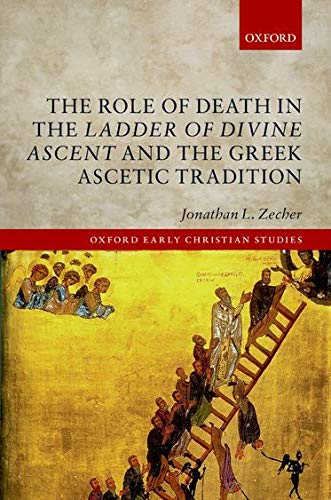
The Ladder of Divine Ascent, the work of an otherwise shadowy figure, John Climacus (meaning of the Ladder), abbot of St. Catherine's, Sinai (ca. 579649 CE), is one of the most popular and enduring classics of Greek ascetic spiritual direction. Hailed as the great synthesis of early ascetic writings, the Ladder presents a spirituality selfconsciously rooted in the literary and theological tradition of the Desert Fathers and the Great Old Men of Gaza. Despite its incredible popularity among monastic and lay readers, the Ladder is virtually unknown in scholarship. In this work, Jonathan L. Zecher offers a sustained study of the Ladder's spiritual vision, which is contextualized within an equally sustained genealogical survey of Climacus' own tradition.The Ladder is built up through the 'memory of death', a term referring to admonitions of early authors to remember one's inevitable but unknowable death and to contemplate the divine judgment which would follow to cultivate particular ascetic, Christian, lifestyles in their readers. In the literature that formed Climacus, every aspect of the 'memory of death' varied considerably, but Climacus draws these together in the Ladder so that death and the judgment which follows defines a symbolic framework within which monks reflect on their past and approach the future. Climacus also took up metaphorical practices of dying to oneself and others to craft an idea of spiritual progress in the imitation of Christ taking into account failure and frailty. At the heart of this study is the abiding question of how tradition forms, and in the Ladder is an outstanding example of how unflinching fidelity to tradition results in a creative, synthetic achievement.
⚠️ WARNING (California Proposition 65):
This product may contain chemicals known to the State of California to cause cancer, birth defects, or other reproductive harm.
For more information, please visit www.P65Warnings.ca.gov.