If you have any questions, you are always welcome to contact us. We'll get back to you as soon as possible, withing 24 hours on weekdays.
Customer service
All questions about your order, return and delivery must be sent to our customer service team by e-mail at yourstore@yourdomain.com
Sale & Press
If you are interested in selling our products, need more information about our brand or wish to make a collaboration, please contact us at press@yourdomain.com
Help
If you have any questions, you are always welcome to contact us. We'll get back to you as soon as possible, withing 24 hours on weekdays.
Customer service
All questions about your order, return and delivery must be sent to our customer service team by e-mail at yourstore@yourdomain.com
Sale & Press
If you are interested in selling our products, need more information about our brand or wish to make a collaboration, please contact us at press@yourdomain.com
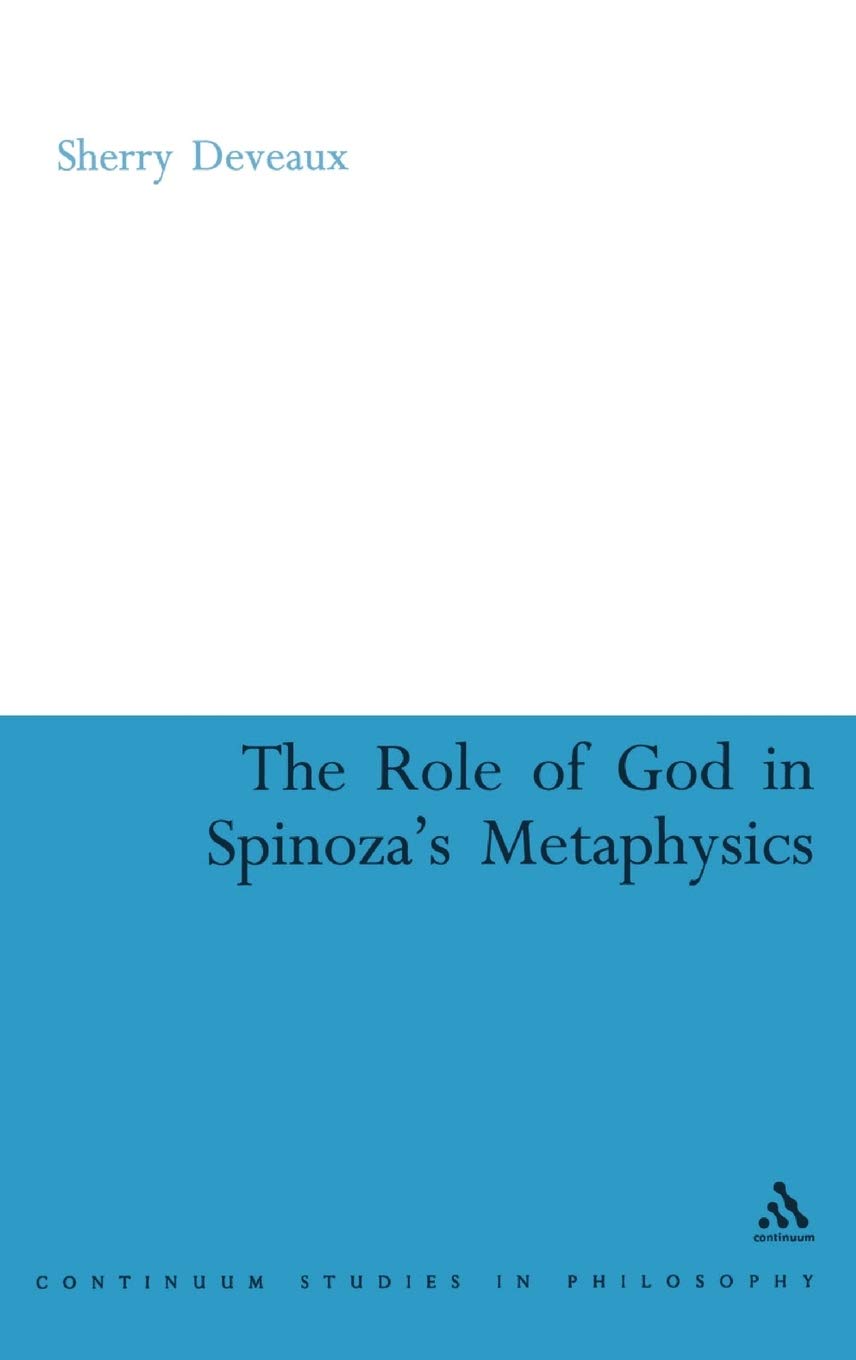
Baruch Spinoza began his studies learning Hebrew and the Talmud, only to be excommunicated at the age of twentyfour for supposed heresy. Throughout his life, Spinoza was simultaneously accused of being an atheist and a Godintoxicated man. Bertrand Russell said that, compared to others, Spinoza is ethically supreme, 'the noblest and most lovable of the great philosophers'. This book is an exploration of (a) what Spinoza understood God to be, (b) how, for him, the infinite and eternal power of God is expressed, and (c) how finite human beings can have a true idea of this greatest of all entities. Sherry Deveaux begins with an analytic discussion of these three questions, and an explication of three different views held by contemporary commentators on Spinoza. She then shows that the commonly held views about Spinoza are inconsistent with Spinoza's texts, especially his magnum opus, the Ethics. Next comes an analysis of topics in Spinoza that must be understood in order correctly to answer the three questions. For example, the notions of 'power' and 'true idea' are discussed, along with Spinoza's definition of the 'essence' of a thing, which is shown to be central to the discussion of Spinoza's God. Deveaux then claims that Spinoza defines God's essence as 'absolutely infinite and eternal power' and that, contrary to the commonly held view that God's essence is identical with the attributes (e.g., thought and extension), God's essence or 'power' is expressed through the attributes.
⚠️ WARNING (California Proposition 65):
This product may contain chemicals known to the State of California to cause cancer,
birth defects, or other reproductive harm.
For MAP (Minimum Advertised Price) violations and Intellectual Property (IP) or Trademark concerns, please contact:
support@ergodebooks.com
⚠️ California Proposition 65 Warning: Some products sold on this website may expose you to chemicals known to the State of California to cause cancer, birth defects, or other reproductive harm. For more information, visit www.P65Warnings.ca.gov.