
Title
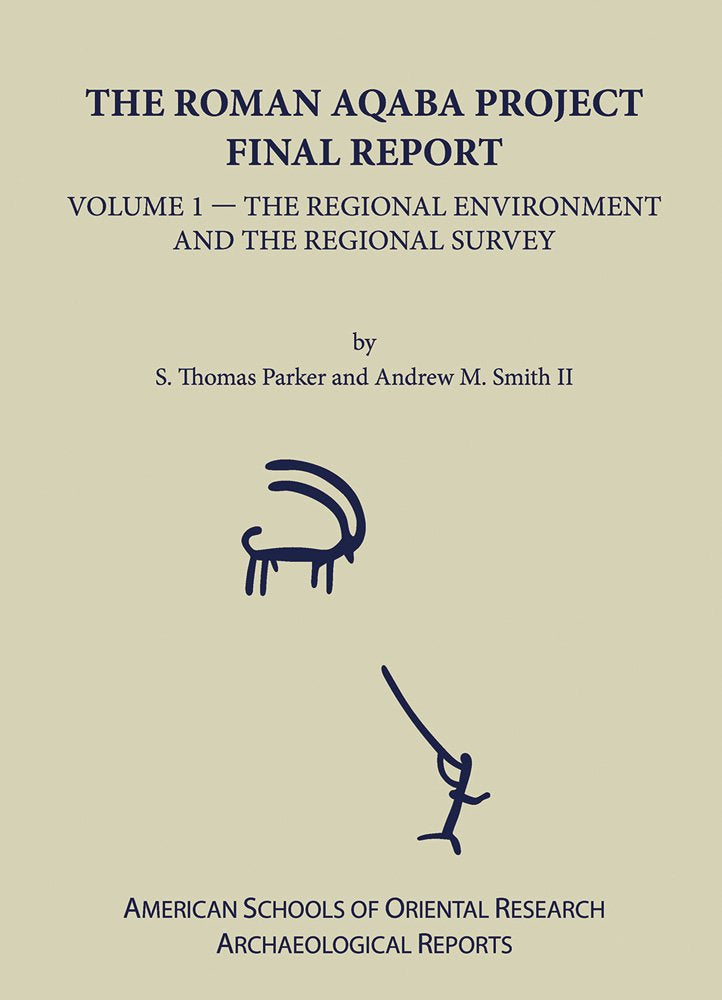
The Roman Aqaba Project Final Report, Volume 1: The Regional Environment and the Regional Survey (Archaeological Reports),Used
Sold by Ergodebooks, an authorized reseller.
Returns accepted within 30 days | support@ergodebooks.com
Shipping Information
- Free Standard Shipping — United States only
- Processing Time: 3–5 business days
- Estimated Delivery: 6–10 business days after dispatch
- Double-boxed, fully insured & discreetly packaged
- Tracking number sent via email once dispatched
Returns & Refund
Returns accepted within 30 days of delivery.
Damaged or Defective Item
Free return shipping + replacement or full refund
Wrong Item Received
Free return shipping + replacement or full refund
Change of Mind
Return shipping at customer's expense · 25% restocking fee applies
Payment Option

Recent scholarship on the Roman Empire has focused on the nature of its economy, including sites that served as nodules of commercial exchange. Aila was such a port city on the Red Sea on the southeastern frontier of the Empire, now within modern Aqaba in Jordan. The city of Aila emerged in the late 1st century BC within the Nabataean kingdom, a client state of the Roman Empire. The port continued to flourish into the early Islamic period, handling trade between the Empire and south Arabia, east Africa, and India. The Roman Aqaba Project aimed to reconstruct Aila's economy diachronically. The project research design included a regional archaeological and environmental survey, excavation of the ancient city, and analysis of material remains relevant to Aila's economy. Six field seasons were conducted between 1994 and 2002, providing a detailed picture of the economic history of the city. Excavation revealed major elements of the city, such as domestic quarters, industrial facilities, fortifications, and a monumental building interpreted as an early Christian church. This first of three projected volumes of the project's final report focuses on the regional environment and the regional survey. Analysis of the environment employs a wide range of evidence to analyze the physiography, geology, soils, seismic history, climate, and natural resources. Various lines of evidence are employed to reconstruct the paleoclimate, which seems to have remained essentially hyperarid since early historical times. The report also includes results of an intensive archaeological survey of Wadi Araba, the shallow valley extending north from Aqaba to the Dead Sea. The project surveyed the southeastern the valley, recording 334 archaeological sites, most previously unrecorded. These of these were small and unobtrusive and ranged in date from Paleolithic to Late Islamic, but especially common were sites of the Chalcolithic/Early Bronze Age and the Early Roman/Nabataean periods, suggesting more intensive occupation in these periods. The volume also includes chapters on artifacts collected by the survey, including chipped stone tools, pottery, and Nabataean inscriptions. Aila apparently lacked any significant agricultural hinterland. The city was largely dependent on imports from more distant sources.
⚠️ WARNING (California Proposition 65):
This product may contain chemicals known to the State of California to cause cancer, birth defects, or other reproductive harm.
For more information, please visit www.P65Warnings.ca.gov.