
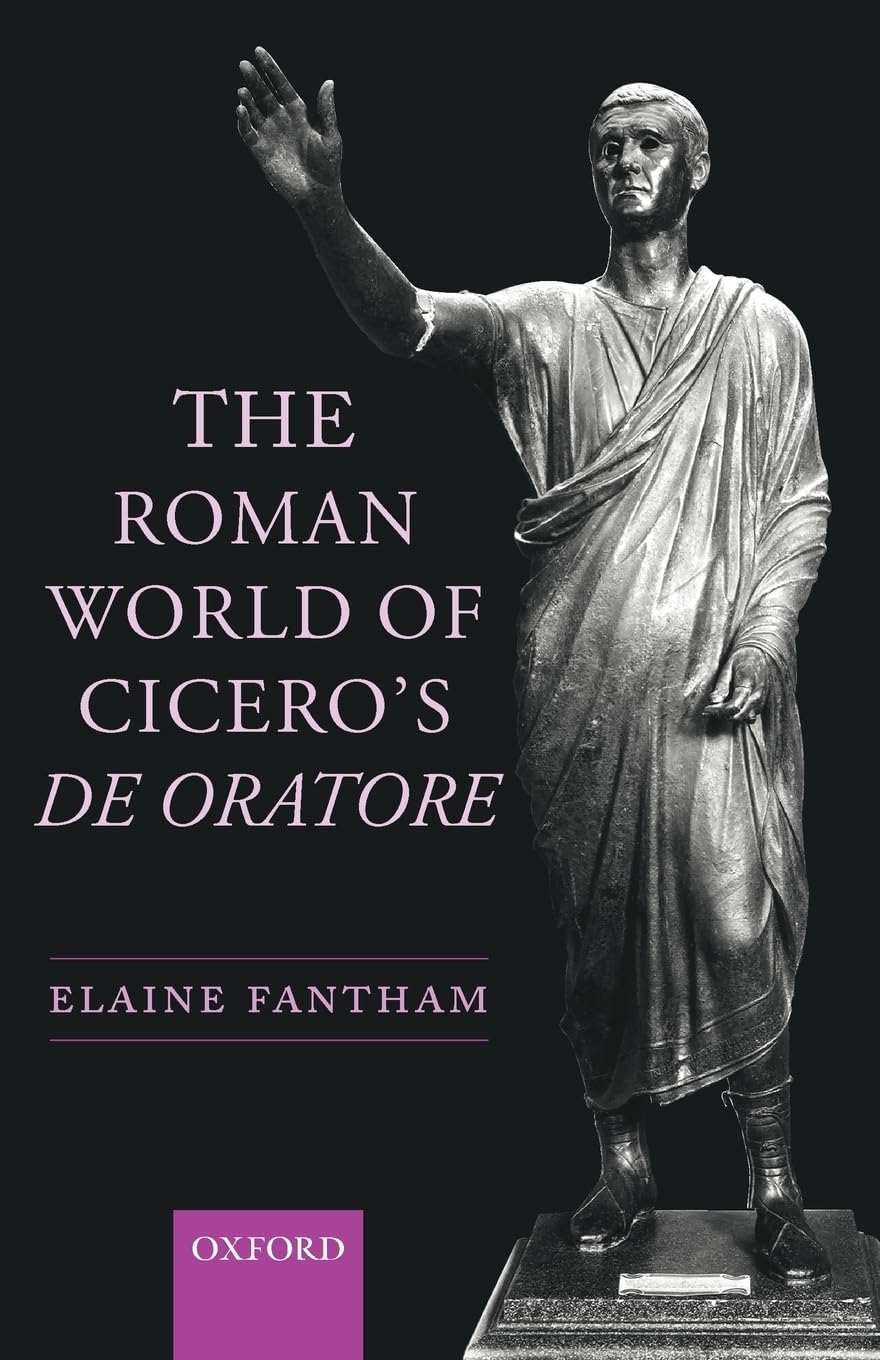
Title
The Roman World Of Cicero'S De Oratore
Sold by Ergodebooks, an authorized reseller.
Returns accepted within 30 days | support@ergodebooks.com
Shipping Information
- Free Standard Shipping — United States only
- Processing Time: 3–5 business days
- Estimated Delivery: 6–10 business days after dispatch
- Double-boxed, fully insured & discreetly packaged
- Tracking number sent via email once dispatched
Returns & Refund
Returns accepted within 30 days of delivery.
Damaged or Defective Item
Free return shipping + replacement or full refund
Wrong Item Received
Free return shipping + replacement or full refund
Change of Mind
Return shipping at customer's expense · 25% restocking fee applies
Payment Option

The Roman World of Cicero's De Oratore aims to provide an accessible study of Cicero's first and fullest dialogue, on the ideal oratorstatesman. It illustrates the dialogue's achievement as a reflection of a civilized way of life and a brilliantly constructed literary unity, and considers the contribution made by Cicero's recommendations to the development of rhetoric and higher education at Rome. Because Cicero deliberately set his extended conversation in the generation of his childhood teachers, a study of the dialogue in its historical setting can show how the political and cultural life of this earlier period differed from Cicero's personal experience of the collapse of senatorial government, when the overwhelming power of the 'first triumvirate' forced him into political silence in the last decade of the republic. After an introductory chapter reviewing Cicero's position on return from exile, chapters include a comparative study of the careers of M. Antonius and L. Licinius Crassus, protagonists of the dialogue, a discussion of Cicero's response to Plato's criticisms of rhetoric in the Gorgias and Phaedrus, and his debt to Aristotle's Rhetoric, analysis of the dialogue's treatment of Roman civil law, existing Latin literature and historical writing, Strabo's survey of the sources and application of humor, political eloquence in senate and contio, theories of diction and style, and the techniques of oral delivery. An epilogue looks briefly at Cicero's De re publica and Tacitus' Dialogus de oratoribus as reflections on the transformation of oratory and free (if oligarchic) republican government by debate to meet the context of the new autocracy.
⚠️ WARNING (California Proposition 65):
This product may contain chemicals known to the State of California to cause cancer, birth defects, or other reproductive harm.
For more information, please visit www.P65Warnings.ca.gov.