
Title
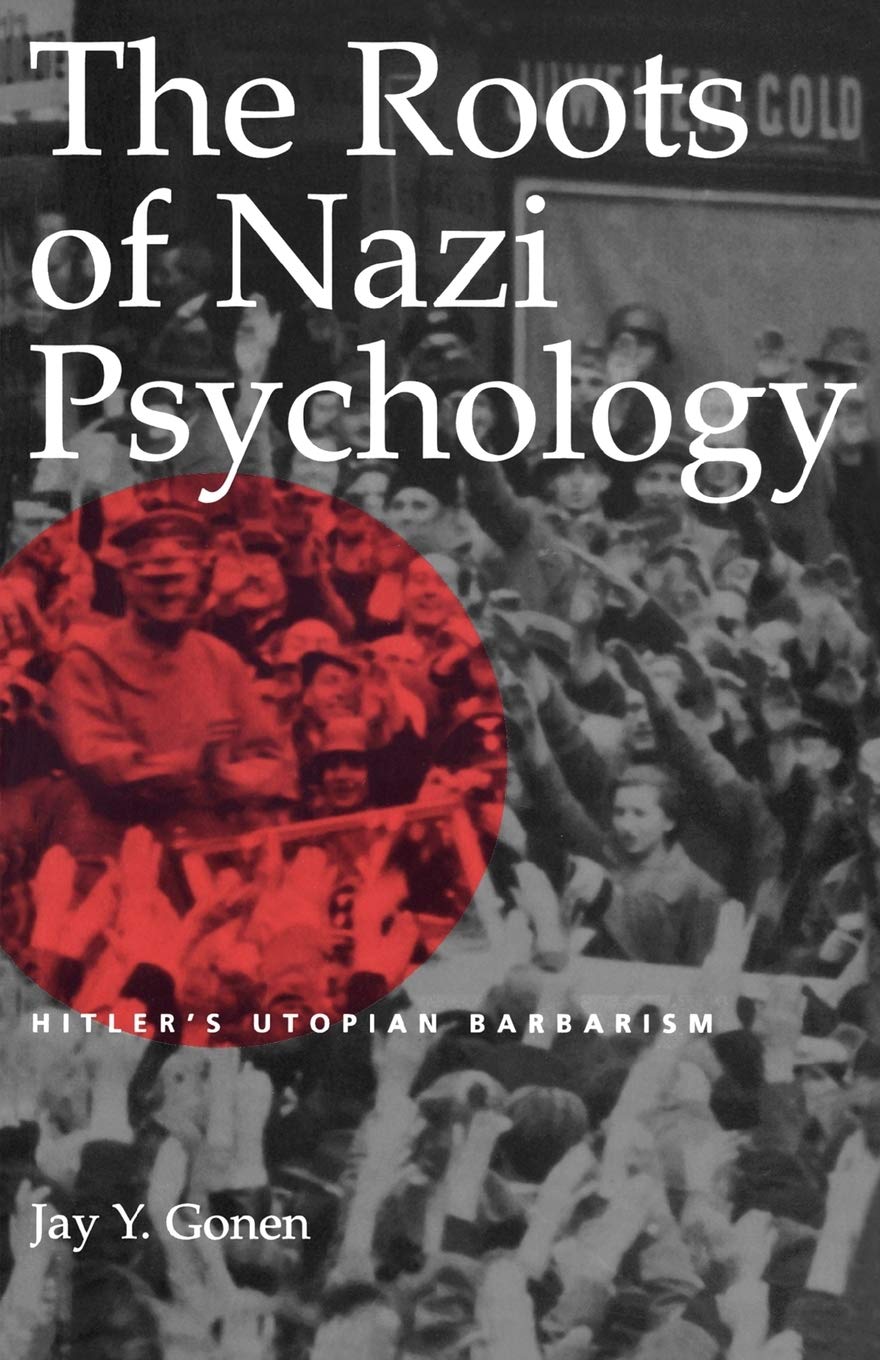
The Roots Of Nazi Psychology: Hitler'S Utopian Barbarism,Used
Sold by Ergodebooks, an authorized reseller.
Returns accepted within 30 days | support@ergodebooks.com
Shipping Information
- Free Standard Shipping — United States only
- Processing Time: 3–5 business days
- Estimated Delivery: 6–10 business days after dispatch
- Double-boxed, fully insured & discreetly packaged
- Tracking number sent via email once dispatched
Returns & Refund
Returns accepted within 30 days of delivery.
Damaged or Defective Item
Free return shipping + replacement or full refund
Wrong Item Received
Free return shipping + replacement or full refund
Change of Mind
Return shipping at customer's expense · 25% restocking fee applies
Payment Option

Was Hitler a moral aberration or a man of his people? This topic has been hotly argued in recent years, and now Jay Gonen brings new answers to the debate using a psychohistorical perspective, contending that Hitler reflected the psyche of many Germans of his time. Like any charismatic leader, Hitler was an expert scanner of the Zeitgeist. He possessed an uncanny ability to read the masses correctly and guide them with ''new'' ideas that were merely reflections of what the people already believed. Gonen argues that Hitler's notions grew from the general fabric of German culture in the years following World War I. Basing his work in the role of ideologies in group psychology, Gonen exposes the psychological underpinnings of Nazi Germany's desire to expand its living space and exterminate Jews. Hitler responded to the nation's group fantasy of renewing a Holy Roman Empire of the German nation. He presented the utopian ideal of one large state, where the nation represented one extended family. In reality, however, he desired the triumph of automatism and totalitarian practices that would preempt family autonomy and private action. Such a regimented state would become a war machine, designed to breed infantile soldiers brainwashed for sacrifice. To achieve that aim, he unleashed barbaric forces whose utopian features were the very aspects of the state that made it most cruel.
⚠️ WARNING (California Proposition 65):
This product may contain chemicals known to the State of California to cause cancer, birth defects, or other reproductive harm.
For more information, please visit www.P65Warnings.ca.gov.
- Q: How many pages does this book have? A: This book has two hundred forty pages. It provides a comprehensive exploration of Nazi psychology and its historical context.
- Q: What is the binding type of this book? A: The binding type is paperback. This makes it lightweight and easy to handle for readers.
- Q: What are the dimensions of the book? A: The dimensions are five point seventy-five inches by eight point eighty-two inches by zero point fifty-nine inches. This size makes it portable for reading.
- Q: Who is the author of this book? A: The author is Jay Gonen. He presents a psychohistorical analysis of Hitler and Nazi Germany.
- Q: What genre does this book belong to? A: This book belongs to the genre of Social Psychology and Interactions. It delves into the psychological aspects of Nazi ideology.
- Q: How do I read this book? A: You can read this book by simply opening it and following the text from front to back. It's suitable for anyone interested in psychology and history.
- Q: Is this book suitable for young readers? A: No, this book is not typically suitable for young readers. It covers complex and mature themes related to historical atrocities.
- Q: What themes are explored in this book? A: The book explores themes of ideology, group psychology, and the historical context of Nazi Germany. It provides insights into Hitler's motivations and the societal psyche.
- Q: Can this book be used for academic purposes? A: Yes, this book can be used for academic purposes. It offers a detailed psychohistorical perspective relevant for studies in psychology and history.
- Q: How should I store this book? A: Store this book in a cool, dry place away from direct sunlight. This will help preserve its condition over time.
- Q: Is there a warranty or return policy for this book? A: Typically, books do not come with a warranty. However, return policies may vary by retailer, so check with your seller.
- Q: What should I do if the book arrives damaged? A: If the book arrives damaged, contact the seller immediately for a return or exchange. Most retailers have customer support for such issues.
- Q: Are there any safety concerns with this book? A: No, there are no safety concerns with this book. It is a written work intended for educational purposes.
- Q: What if I find a typo or error in the book? A: If you find a typo or error, it's best to note it and contact the publisher. They may appreciate the feedback for future editions.
- Q: Is this book part of a series? A: No, this book is not part of a series. It stands alone as a comprehensive examination of its subject matter.
- Q: What age group is this book intended for? A: This book is intended for adults and mature audiences. It deals with complex historical and psychological topics.