
Title
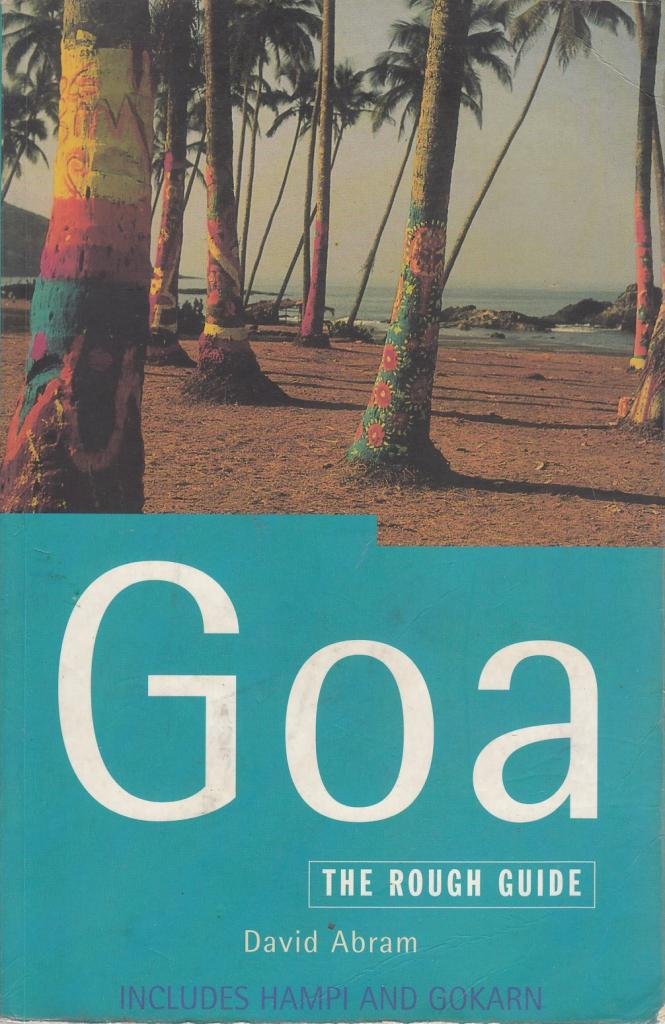
The Rough Guide to Goa, 3rd Edition,Used
Sold by Ergodebooks, an authorized reseller.
Returns accepted within 30 days | support@ergodebooks.com
Shipping Information
- Free Standard Shipping — United States only
- Processing Time: 3–5 business days
- Estimated Delivery: 6–10 business days after dispatch
- Double-boxed, fully insured & discreetly packaged
- Tracking number sent via email once dispatched
Returns & Refund
Returns accepted within 30 days of delivery.
Damaged or Defective Item
Free return shipping + replacement or full refund
Wrong Item Received
Free return shipping + replacement or full refund
Change of Mind
Return shipping at customer's expense · 25% restocking fee applies
Payment Option

IntroductionIf any word could be said to encapsulate the essence of GOA, it would have to be the Portuguese sossegarde, meaning "carefree". For Goan expatriates, the term conjures up memories of long, lazy evenings on pillared verandahs, surrounded by tropical vegetation and the heady scent of cashew and frangipani flowers, with the crash of surf drifting periodically through a curtain of coconut palms. The pace of life in this former colonial enclave, midway down India's southwest coast, has picked up over the past twenty years, but in spite of the increasing chaos of its capital, beach resorts and market towns, Goa has retained the laidback feel that has traditionally set it apart from the rest of the country. Its 1.4 million inhabitants are unequivocal about the roots of their distinctiveness; while most of the subcontinent was colonized by the stiffupperlipped British, Goa's European overlords were the dissolute Portuguese, a people far more inclined to enjoy the good things in life than their AngloSaxon counterparts.Goa was Portugal's first toe hold in Asia, brutally carved out by the explorer Alfonso Albuquerque in 1510, and served as the linchpin for a vast trade empire for over 450 years. However, when the Portuguese colonial mission began to flounder in the seventeenth century, so too did the fortunes of its capital. Cut off from the rest of India by a wall of mountains and hundreds of miles of unnavigable alluvial plain, it remained resolutely aloof from the wider subcontinent. While India was tearing itself to pieces in the runup to Independence in 1947, the only machetes being wielded here were cutting coconuts. Not until 1961, after an exasperated Indian Prime Minister, Jawaharlal Nehru, gave up trying to negotiate with the Portuguese dictator Salazar and sent in the army, was Goa finally absorbed into India. The overland travellers' trail wriggled its way south down the Konkan Coast from Mumbai a decade or so later, ensuring that this hitherto remote enclave of Latininfluenced culture would never be quite the same again.Those visitors who came here back in the late 1960s and 1970s found a way of life little changed in centuries: Portuguese was still very much the lingua franca of the welleducated elite, and the coastal settlements were mere fishing and coconut cultivation villages. Relieved to have found somewhere inexpensive and culturally undemanding to recover from the travails of Indian travel, the blowins got stoned, watched the mesmeric sunsets over the Arabian Sea and partied madly on fullmoon nights, giving rise to a holiday culture that soon made Goa synonymous with hedonistic hippies.Since then, the state has largely shaken off its reputation as a dropout zone, but hundreds of thousands of foreign visitors still flock here each winter, the vast majority of them to relax on Goa's beautiful beaches. Around two dozen stretches of soft white sand indent the region's coast, from spectacular 25kilometre sweeps to secluded palmbacked coves. The level of development on them varies wildly; while some are backed by ritzy Westernstyle resorts, the most sophisticated structures on others are palmleaf shacks and old wooden outriggers that have to be heaved into the sea each afternoon.Goa's beaches, however, are only a part of the picture. A short foray from the coast will take you into the state's real heart, the densely populated strip inland a lush patchwork of paddy fields, coconut and areca plantations, and gently meandering rivers. Further east, the junglecovered hills of the Western Ghats separate Goa from the drier Deccan plateau, scattered with tiny thatchroofed settlements and isolated communities of forestdwelling farmers direct descendants of the region's aboriginal peoples.Wherever you travel in Goa, you'll find traces of former Portuguese domination, creating an ambience that is at once exotic and strangely familiar. Gabled Baroque church facades nose tantalizingly above the t
⚠️ WARNING (California Proposition 65):
This product may contain chemicals known to the State of California to cause cancer, birth defects, or other reproductive harm.
For more information, please visit www.P65Warnings.ca.gov.