
Title
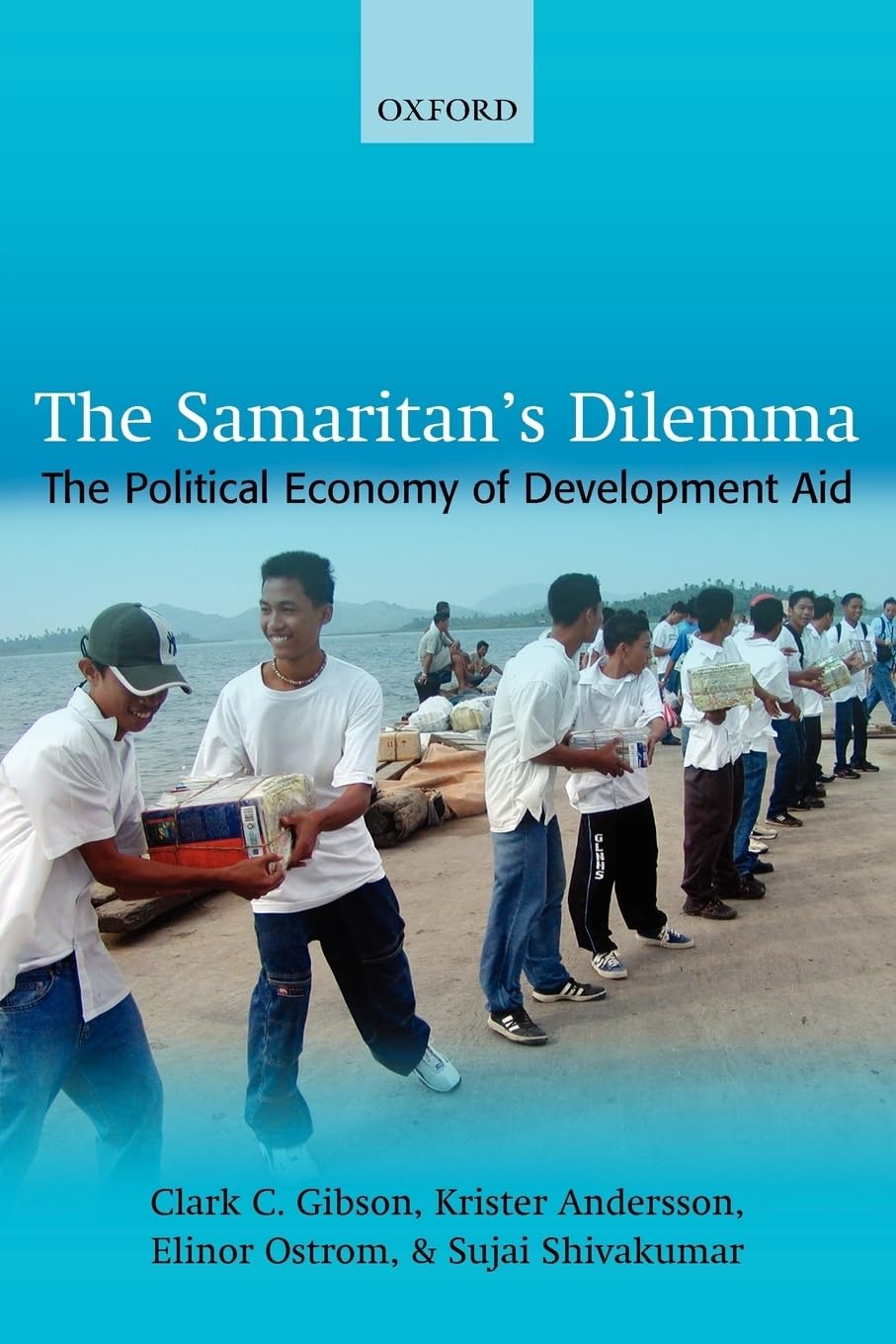
The Samaritan's Dilemma: The Political Economy of Development Aid,Used
Sold by Ergodebooks, an authorized reseller.
Returns accepted within 30 days | support@ergodebooks.com
Shipping Information
- Free Standard Shipping — United States only
- Processing Time: 3–5 business days
- Estimated Delivery: 6–10 business days after dispatch
- Double-boxed, fully insured & discreetly packaged
- Tracking number sent via email once dispatched
Returns & Refund
Returns accepted within 30 days of delivery.
Damaged or Defective Item
Free return shipping + replacement or full refund
Wrong Item Received
Free return shipping + replacement or full refund
Change of Mind
Return shipping at customer's expense · 25% restocking fee applies
Payment Option

What's wrong with foreign aid? Many policymakers, aid practitioners, and scholars have called into question its ability to increase economic growth, alleviate poverty, or promote social development. At the macro level, only tenuous links between development aid and improved living conditions have been found. At the micro level, only a few programs outlast donor support and even fewer appear to achieve lasting improvements. The authors of this book argue that much of aid's failure is related to the institutions that structure its delivery. These institutions govern the complex relationships between the main actors in the aid delivery system and often generate a series of perverse incentives that promote inefficient and unsustainable outcomes. In their analysis, the authors apply the theoretical insights of the new institutional economics to several settings. First, they investigate the institutions of Sida, the Swedish aid agency, to analyze how that aid agency's institutions can produce incentives inimical to desired outcomes, contrary to the desires of its own staff. Second, the authors use cases from India, a country with low aid dependence, and Zambia, a country with high aid dependence, to explore how institutions on the ground in recipient countries also mediate the effectiveness of aid. Throughout the book, the authors offer suggestions about how to improve aid's effectiveness. These suggestions include how to structure evaluations in order to improve outcomes, how to employ agency staff to gain from their ontheground experience, and how to engage stakeholders as 'owners' in the design, resource mobilization, learning, and evaluation processes of development assistance programs.
⚠️ WARNING (California Proposition 65):
This product may contain chemicals known to the State of California to cause cancer, birth defects, or other reproductive harm.
For more information, please visit www.P65Warnings.ca.gov.