
Title
The Scarlet Gang of Asakusa,Used
Sold by Ergodebooks, an authorized reseller.
Returns accepted within 30 days | support@ergodebooks.com
Shipping Information
- Free Standard Shipping — United States only
- Processing Time: 3–5 business days
- Estimated Delivery: 6–10 business days after dispatch
- Double-boxed, fully insured & discreetly packaged
- Tracking number sent via email once dispatched
Returns & Refund
Returns accepted within 30 days of delivery.
Damaged or Defective Item
Free return shipping + replacement or full refund
Wrong Item Received
Free return shipping + replacement or full refund
Change of Mind
Return shipping at customer's expense · 25% restocking fee applies
Payment Option

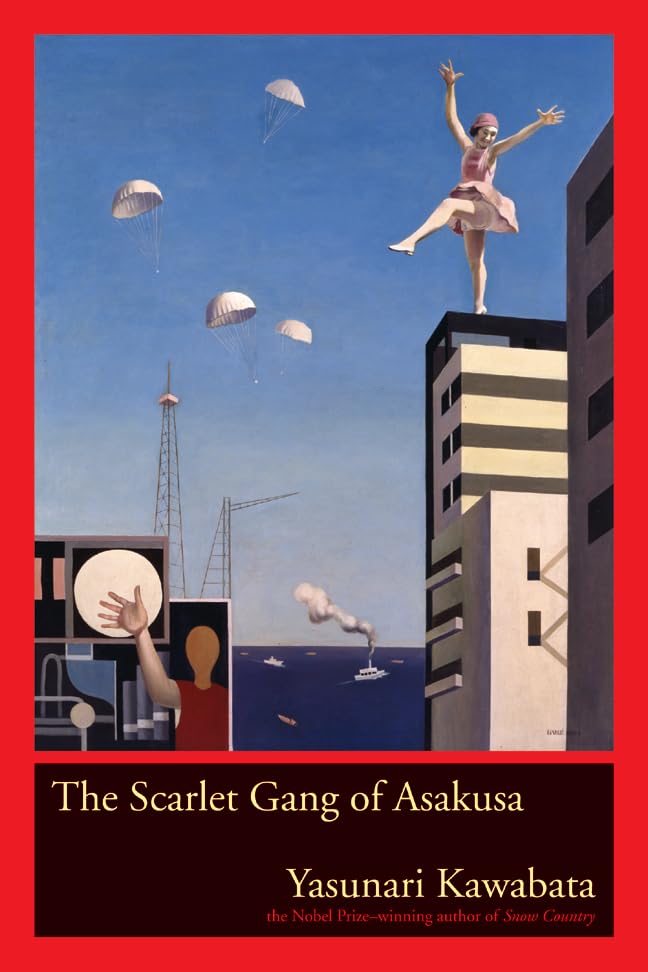
In the 1920s, Asakusa was to Tokyo what Montmartre had been to 1890s Paris and Times Square was to be to 1940s New York. Available in English for the first time, The Scarlet Gang of Asakusa, by Nobel Prize winner Yasunari Kawabata, captures the decadent allure of this entertainment district, where beggars and teenage prostitutes mixed with revue dancers and famous authors. Originally serialized in a Tokyo daily newspaper in 1929 and 1930, this vibrant novel uses unorthodox, kinetic literary techniques to reflect the raw energy of Asakusa, seen through the eyes of a wandering narrator and the cast of mostly female juvenile delinquents who show him their way of life. Markedly different from Kawabata's later work, The Scarlet Gang of Asakusa shows this important writer in a new light. The annotated edition of this littleknown literary gem includes the original illustrations by Ota Saburo. The annotations illuminate Tokyo society and Japanese literature, bringing this fascinating piece of Japanese modernism at last to a wide audience.
⚠️ WARNING (California Proposition 65):
This product may contain chemicals known to the State of California to cause cancer, birth defects, or other reproductive harm.
For more information, please visit www.P65Warnings.ca.gov.
- Q: What is the page count of The Scarlet Gang of Asakusa? A: The book has two hundred seventy-nine pages. It provides a comprehensive look at the vibrant life in Asakusa during the 1920s.
- Q: What are the dimensions of The Scarlet Gang of Asakusa? A: The book measures five point five inches in length, zero point seven one inches in width, and eight point two seven inches in height. This size makes it portable and easy to handle.
- Q: What type of binding does The Scarlet Gang of Asakusa have? A: The book is paperback bound. This binding is lightweight and flexible, making it suitable for casual reading.
- Q: Who is the author of The Scarlet Gang of Asakusa? A: The author is Yasunari Kawabata. He is a Nobel Prize-winning author known for his unique literary style.
- Q: What genre does The Scarlet Gang of Asakusa belong to? A: The book is classified as Genre Fiction. It explores themes of life in a historical entertainment district of Tokyo.
- Q: How should I read The Scarlet Gang of Asakusa? A: You can read The Scarlet Gang of Asakusa at your own pace. It's suitable for anyone interested in historical fiction and Japanese literature.
- Q: Is The Scarlet Gang of Asakusa appropriate for young readers? A: The book is intended for adult readers. It contains themes of social issues and may not be suitable for younger audiences.
- Q: What makes The Scarlet Gang of Asakusa unique? A: The novel showcases unorthodox literary techniques and reflects the energy of Asakusa. It offers a fresh perspective on Kawabata's work.
- Q: Are there illustrations in The Scarlet Gang of Asakusa? A: Yes, the book includes original illustrations by Ota Saburo. These enhance the reading experience and provide visual context.
- Q: How do I care for The Scarlet Gang of Asakusa? A: Keep the book in a dry place to prevent damage. Avoid exposure to direct sunlight to preserve its quality.
- Q: What is the return policy for The Scarlet Gang of Asakusa? A: The return policy generally allows returns within thirty days of purchase. Always check the specific retailer's policy for details.
- Q: What if The Scarlet Gang of Asakusa arrives damaged? A: If the book arrives damaged, contact the seller immediately. Most retailers will arrange a replacement or refund.
- Q: Can I find a digital version of The Scarlet Gang of Asakusa? A: Yes, digital versions may be available. Check eBook platforms for availability.
- Q: Is The Scarlet Gang of Asakusa suitable for book clubs? A: Yes, it is great for book clubs. The themes and narrative style provide ample discussion points.
- Q: How does The Scarlet Gang of Asakusa compare to Kawabata's later works? A: This novel is markedly different from Kawabata's later works. It showcases a more experimental style compared to his later, more refined writing.