
Title
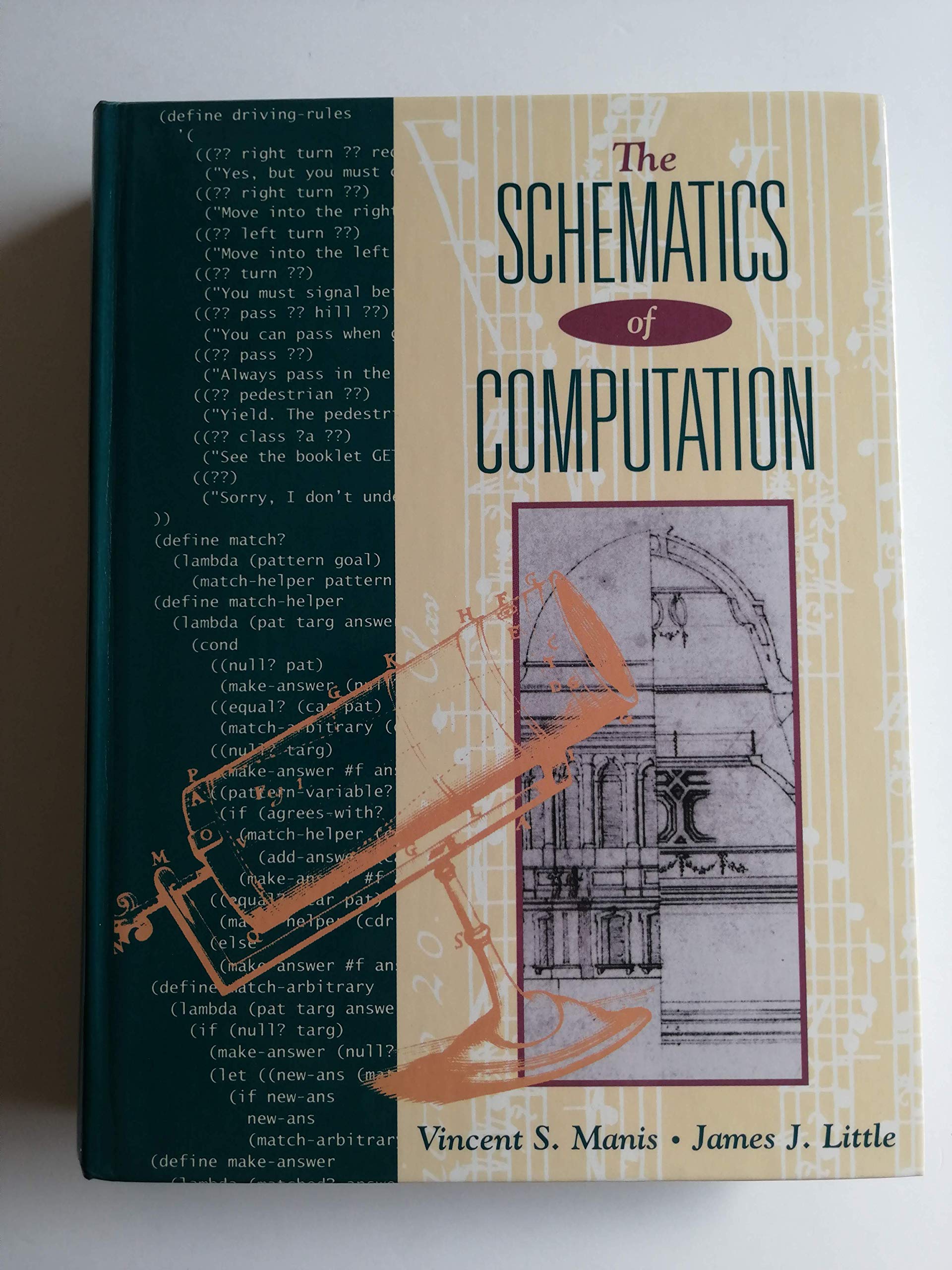
The Schematics Of Computation-used
Sold by Ergodebooks, an authorized reseller.
Returns accepted within 30 days | support@ergodebooks.com
Shipping Information
- Free Standard Shipping — United States only
- Processing Time: 3–5 business days
- Estimated Delivery: 6–10 business days after dispatch
- Double-boxed, fully insured & discreetly packaged
- Tracking number sent via email once dispatched
Returns & Refund
Returns accepted within 30 days of delivery.
Damaged or Defective Item
Free return shipping + replacement or full refund
Wrong Item Received
Free return shipping + replacement or full refund
Change of Mind
Return shipping at customer's expense · 25% restocking fee applies
Payment Option

Providing A Broad Overview Of Computer Science, This Book Goes Beyond The Usual Coverage Of Programming Skills To Show How The Field Of Computer Science Is Held Together By A Small Number Of Powerful Ideas. Explores Common Programming Paradigms (Functional, Imperative, And Objectoriented); Algorithms And Data Structures; Computer Hardware And Assembly Language Programming; Databases; Artificial Intelligence; And Logic Programming. For Those Interested In An Overview Of The Field Of Computer Science.
⚠️ WARNING (California Proposition 65):
This product may contain chemicals known to the State of California to cause cancer, birth defects, or other reproductive harm.
For more information, please visit www.P65Warnings.ca.gov.
- Q: How many pages does the book have? A: This book has six hundred eight pages. It provides a comprehensive overview of computer science concepts.
- Q: What is the binding type of this book? A: The binding type is paperback. This makes it lightweight and easy to handle.
- Q: What are the dimensions of the book? A: The book measures seven point twenty-five inches in length, one point five inches in width, and nine point seventy-six inches in height. These dimensions make it a convenient size for reading.
- Q: Who is the author of this book? A: The author of this book is Vincent C. Manis. He provides insights into various computer science topics.
- Q: What topics does the book cover? A: The book covers programming paradigms, algorithms, data structures, and artificial intelligence. It offers an extensive overview of the field.
- Q: Is this book suitable for beginners in computer science? A: Yes, this book is suitable for beginners. It provides foundational knowledge and a broad overview of computer science concepts.
- Q: Can this book be used as a textbook for a course? A: Yes, this book can be used as a textbook. It covers essential topics that are relevant for computer science courses.
- Q: What is the reading level for this book? A: The reading level is generally suitable for high school and college students. It introduces complex concepts in an accessible manner.
- Q: How should I store the book to keep it in good condition? A: Store the book in a cool, dry place away from direct sunlight. This will help maintain its condition for longer.
- Q: Can I clean the book if it gets dirty? A: Yes, you can clean the book gently with a soft, dry cloth. Avoid using water or cleaners that could damage the pages.
- Q: Is there a warranty or return policy for the book? A: Typically, books do not come with a warranty, but return policies may vary by retailer. Check the seller's return policy for details.
- Q: What should I do if the book arrives damaged? A: If the book arrives damaged, contact the retailer immediately for a return or exchange. Most retailers will assist with this issue.
- Q: Is this book appropriate for children? A: No, this book is not specifically aimed at children. It is designed for those interested in computer science, which may be more suitable for older students.
- Q: What is the main focus of the book? A: The main focus is to provide an overview of computer science through significant ideas and concepts. It emphasizes understanding over rote programming skills.
- Q: Does the book include examples or case studies? A: Yes, the book includes various examples to illustrate concepts. These help clarify complex topics in computer science.