If you have any questions, you are always welcome to contact us. We'll get back to you as soon as possible, withing 24 hours on weekdays.
Customer service
All questions about your order, return and delivery must be sent to our customer service team by e-mail at yourstore@yourdomain.com
Sale & Press
If you are interested in selling our products, need more information about our brand or wish to make a collaboration, please contact us at press@yourdomain.com
Help
If you have any questions, you are always welcome to contact us. We'll get back to you as soon as possible, withing 24 hours on weekdays.
Customer service
All questions about your order, return and delivery must be sent to our customer service team by e-mail at yourstore@yourdomain.com
Sale & Press
If you are interested in selling our products, need more information about our brand or wish to make a collaboration, please contact us at press@yourdomain.com
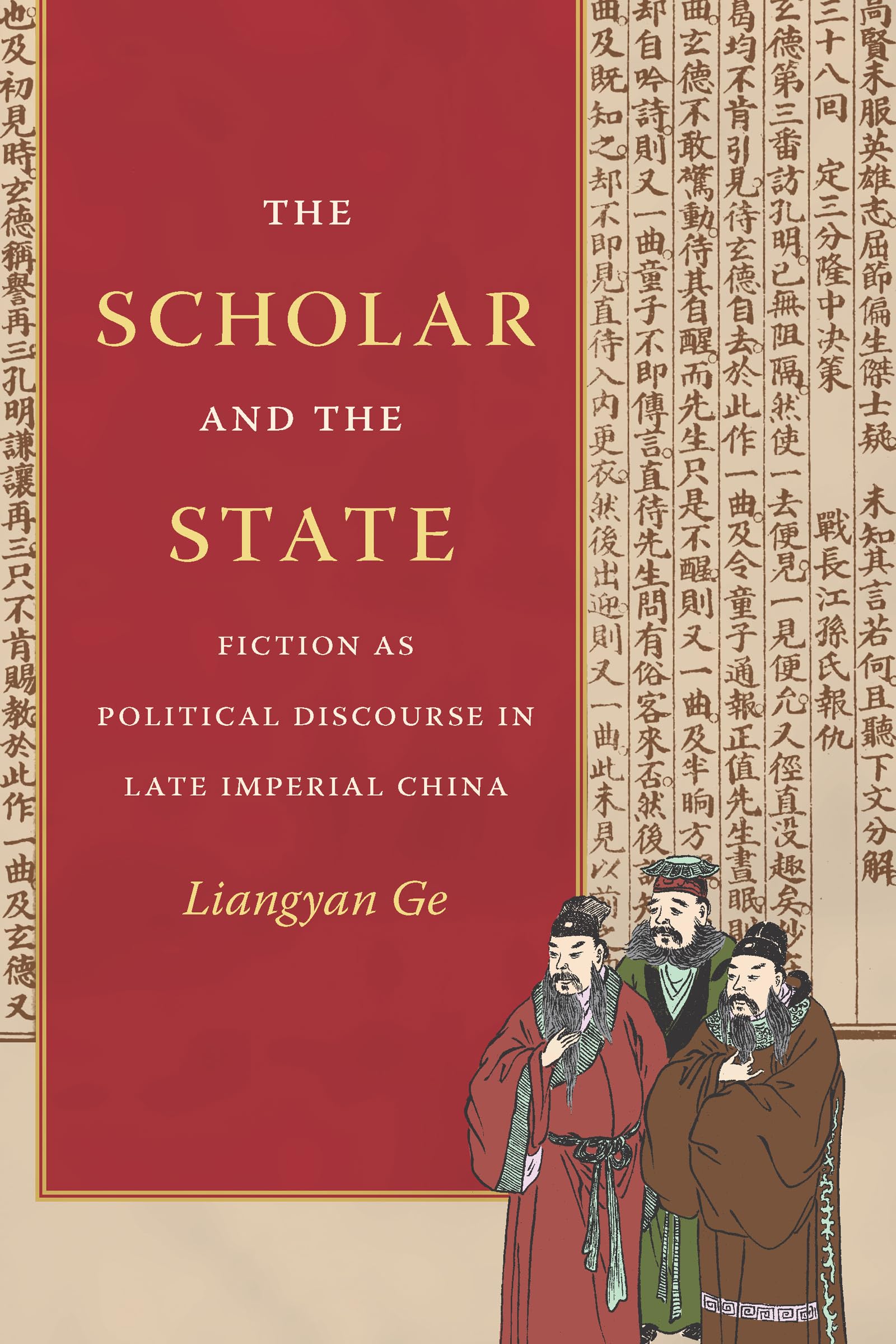
In imperial China, intellectuals devoted years of their lives to passing rigorous examinations in order to obtain a civil service position in the state bureaucracy. This traditional employment of the literati class conferred social power and moral legitimacy, but changing social and political circumstances in the Ming (13681644) and Qing (16441911) periods forced many to seek alternative careers. Politically engaged but excluded from their traditional bureaucratic roles, creative writers authored critiques of state power in the form of fiction written in the vernacular language.In this study, Liangyan Ge examines the novels Romance of the Three Kingdoms, The Scholars, Dream of the Red Chamber (also known as Story of the Stone), and a number of erotic pieces, showing that as the literati class grappled with its own increasing marginalization, its fiction reassessed the assumption that intellectuals' proper role was to serve state interests and began to imagine possibilities for a new political order.The open access publication of this book was made possible by a grant from the James P. Geiss and Margaret Y. Hsu Foundation.
⚠️ WARNING (California Proposition 65):
This product may contain chemicals known to the State of California to cause cancer,
birth defects, or other reproductive harm.
For MAP (Minimum Advertised Price) violations and Intellectual Property (IP) or Trademark concerns, please contact:
support@ergodebooks.com
⚠️ California Proposition 65 Warning: Some products sold on this website may expose you to chemicals known to the State of California to cause cancer, birth defects, or other reproductive harm. For more information, visit www.P65Warnings.ca.gov.