
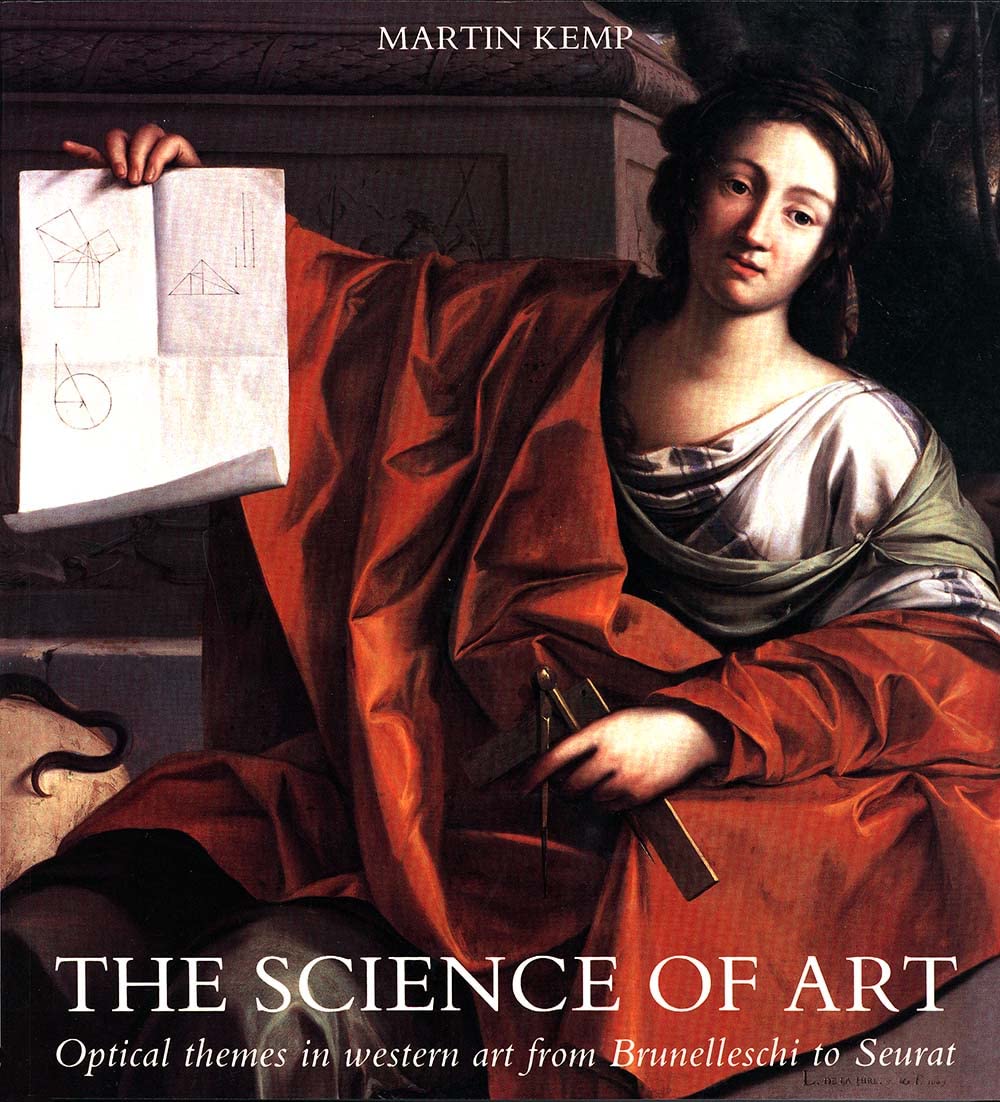
Title
The Science Of Art: Optical Themes In Western Art From Brunelleschi To Seurat
Sold by Ergodebooks, an authorized reseller.
Returns accepted within 30 days | support@ergodebooks.com
Shipping Information
- Free Standard Shipping — United States only
- Processing Time: 3–5 business days
- Estimated Delivery: 6–10 business days after dispatch
- Double-boxed, fully insured & discreetly packaged
- Tracking number sent via email once dispatched
Returns & Refund
Returns accepted within 30 days of delivery.
Damaged or Defective Item
Free return shipping + replacement or full refund
Wrong Item Received
Free return shipping + replacement or full refund
Change of Mind
Return shipping at customer's expense · 25% restocking fee applies
Payment Option

In This Pathbreaking And Richly Illustrated Book, Martin Kemp Examines The Major Optically Oriented Examples Of Artistic Theory And Practice From Brunelleschis Invention Of Perspective And Its Exploitation By Leonardo And Durer To The Beginnings Of Photography. In A Discussion Of Color Theory, Kemp Traces Two Main Traditions Of Color Science: The Aristotelian Tradition Of Primary Colors And Newtons Prismatic Theory That Influenced Runge, Turner, And Seurat. His Monumental Book Not Only Adds To Our Understanding Of A Large Group Of Individual Works Of Art But Also Provides Valuable Information For All Those Interested In The Interaction Between Science And Art. This Beautifully Made Volume . . . Shows Us The Unity Of The Visual Study Of Naturethe Exalted Mutual Task Of Renaissance Science And Art.Scientific American[A] Wonderful Book. . . . Martin Kemp Has Convincingly Demonstrated That Even The Most Diverse Styles Of Western Art From The Renaissance To Modern Times Remained Ever Enthralled By Scientific Optics. . . . [A] Handsome Volume.Samuel Y. Edgerton, American Scientist An Extraordinarily Ambitious, Even Daring, Enterprise. . . . The Book Leaves Us In No Doubt About Its Authors Expertise In Both Fields. It Includes The Most Comprehensive Account Of The Development Of Perspective Theory And Practice I Know.Thomas Puttfarken, Times Higher Education SupplementKemp Has Performed A Valuable Service. . . . His Style Is Lucid And He Emerges As An Honest Broker Who Judiciously Weighs The Historical Evidence. He Has An Impressive Command Of The Literature Of Both Art And Optical Science Across Much Of Europe And Over A Span Of Four Centuries. . . . Kemps Thesis Is Amply Illustrated With Several Hundred Plates, Including Many Of His Own Line Drawings. . . . The Reader Is Led Gently Through The History Of Art And The Details Of Optical Science To Appreciate Their Interrelationship.Geoffrey Cantor, Oxford Art Journal
⚠️ WARNING (California Proposition 65):
This product may contain chemicals known to the State of California to cause cancer, birth defects, or other reproductive harm.
For more information, please visit www.P65Warnings.ca.gov.
- Q: How many pages does this book have? A: This book has three hundred eighty-three pages. It provides a comprehensive exploration of optical themes in Western art.
- Q: What is the binding type of this book? A: The binding type is paperback. This makes it lightweight and easy to handle.
- Q: What are the dimensions of the book? A: The dimensions are approximately eleven point zero eight inches long, ten inches wide, and one point two two inches tall.
- Q: Who is the author of this book? A: The author is Martin Kemp, a prominent scholar in the field of art history and optical science.
- Q: What is the main subject of the book? A: The main subject is the intersection of art and optical science. It covers historical developments from the Renaissance to modern times.
- Q: Is this book suitable for art students? A: Yes, this book is suitable for art students. It provides valuable insights into the relationship between art theory and scientific principles.
- Q: Can this book be used for academic research? A: Yes, it can be used for academic research. The book is well-researched and includes comprehensive references in the field of art and optics.
- Q: Is there a discussion on color theory in the book? A: Yes, there is a discussion on color theory. It explores the Aristotelian and Newtonian traditions of color science.
- Q: What art periods does this book cover? A: The book covers multiple art periods, from the Renaissance through to the modern era. It highlights significant developments in artistic techniques.
- Q: How should I care for this book? A: To care for this book, keep it in a dry place away from direct sunlight. Avoid bending the spine to maintain its condition.
- Q: Is this book appropriate for children? A: No, this book is not specifically aimed at children. It is intended for readers interested in art history and optical science.
- Q: What if the book arrives damaged? A: If the book arrives damaged, you can typically return it for a replacement or refund. Check the return policy of the retailer.
- Q: Does the book contain illustrations? A: Yes, the book contains five hundred forty-nine black and white illustrations. These enhance the understanding of the discussed concepts.
- Q: What makes this book unique? A: This book is unique due to its interdisciplinary approach, blending art history with scientific analysis of optical themes.
- Q: Is this book a good choice for general readers? A: Yes, it is a good choice for general readers interested in art and science. It presents complex ideas in an accessible manner.
- Q: What publisher produced this book? A: This book is published by Yale University Press. The publisher is known for its quality academic publications.