
Title


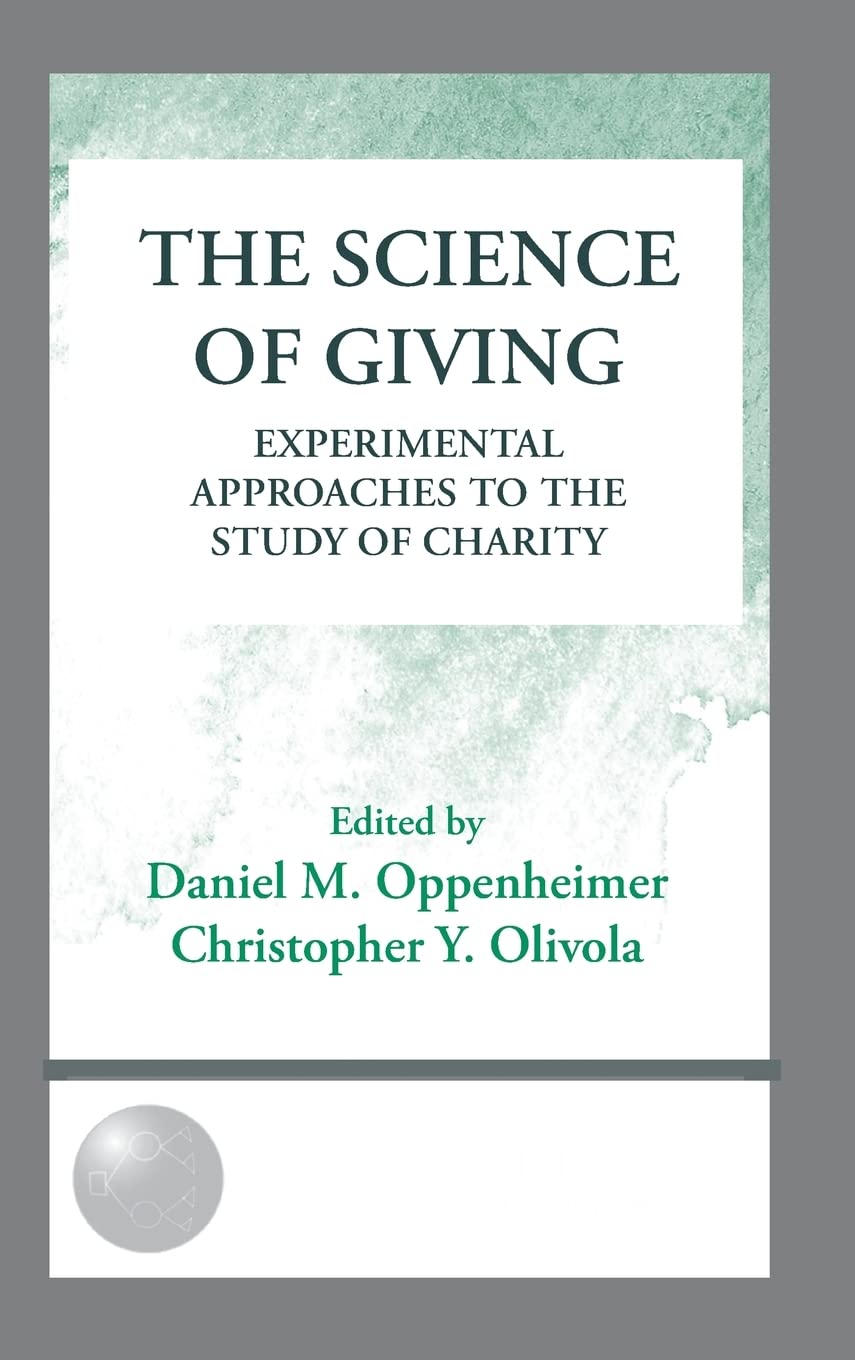
The Science of Giving: Experimental Approaches to the Study of Charity (The Society for Judgment and Decision Making Series),Used
Sold by Ergodebooks, an authorized reseller.
Returns accepted within 30 days | support@ergodebooks.com
Shipping Information
- Free Standard Shipping — United States only
- Processing Time: 3–5 business days
- Estimated Delivery: 6–10 business days after dispatch
- Double-boxed, fully insured & discreetly packaged
- Tracking number sent via email once dispatched
Returns & Refund
Returns accepted within 30 days of delivery.
Damaged or Defective Item
Free return shipping + replacement or full refund
Wrong Item Received
Free return shipping + replacement or full refund
Change of Mind
Return shipping at customer's expense · 25% restocking fee applies
Payment Option

Americans donate over 300 billion dollars a year to charity, but the psychological factors that govern whether to give, and how much to give, are still not well understood. Our understanding of charitable giving is based primarily upon the intuitions of fundraisers or correlational data which cannot establish causal relationships. By contrast, the chapters in this book study charity using experimental methods in which the variables of interest are experimentally manipulated. As a result, it becomes possible to identify the causal factors that underlie giving, and to design effective intervention programs that can help increase the likelihood and amount that people contribute to a cause.For charitable organizations, this book examines the efficacy of fundraising strategies commonly used by nonprofits and makes concrete recommendations about how to make capital campaigns more efficient and effective. Moreover, a number of novel factors that influence giving are identified and explored, opening the door to exciting new avenues in fundraising.For researchers, this book breaks novel theoretical ground in our understanding of how charitable decisions are made. While the chapters focus on applications to charity, the emotional, social, and cognitive mechanisms explored herein all have more general implications for the study of psychology and behavioral economics.This book highlights some of the most intriguing, surprising, and enlightening experimental studies on the topic of donation behavior, opening up exciting pathways to crosscutting the divide between theory and practice.
⚠️ WARNING (California Proposition 65):
This product may contain chemicals known to the State of California to cause cancer, birth defects, or other reproductive harm.
For more information, please visit www.P65Warnings.ca.gov.