
Title
The Science Of Illusions
Sold by Ergodebooks, an authorized reseller.
Returns accepted within 30 days | support@ergodebooks.com
Shipping Information
- Free Standard Shipping — United States only
- Processing Time: 3–5 business days
- Estimated Delivery: 6–10 business days after dispatch
- Double-boxed, fully insured & discreetly packaged
- Tracking number sent via email once dispatched
Returns & Refund
Returns accepted within 30 days of delivery.
Damaged or Defective Item
Free return shipping + replacement or full refund
Wrong Item Received
Free return shipping + replacement or full refund
Change of Mind
Return shipping at customer's expense · 25% restocking fee applies
Payment Option

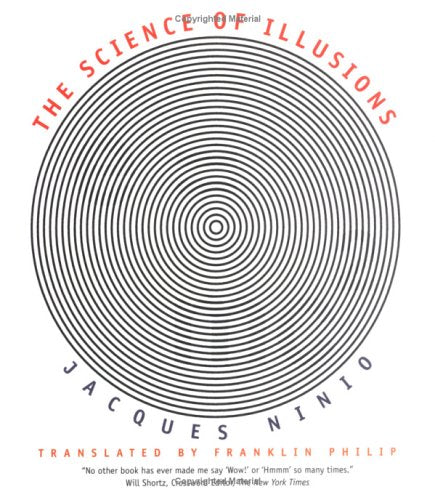
Jacques Ninio, An International Authority On Visual Perception, Here Explores The Fascinating World Of Illusions. His Book Features A Stunning Array Of Illustrations Including Many Images Seldom Seen In Books On The Topic. The Art Ranges From Classical Illusions Inspired By Rainbows, Mirages, And Other Oddities Of Nature; To Figures From Seventeenthcentury Physics Texts Which Ninio Himself Unearthed; To Spectacular New Illustrations In Which Motion Is Perceived In Fixed Images. Clearly And Engagingly Written, The Book Advances Human Understanding Of Phenomena That Puzzle Our Vision Or Confuse The Other Senses.For The Nonscientist, Illusions Show That The Senses Are Unreliable. Ninio Demonstrates That Paradoxical Images And Auditory Effects Are In Fact Clues That Reveal The Methods Used By The Brain To Interpret Sensory Data. He Gives Examples Of The Various Types Of Illusions, Explains Their Underlying Logic, And Shows Their Value For Neurological And Physiological Research. Ninio Also Considers The Reasons People Have, For Centuries, Created Illusions. He Discusses The Long History Of Scientific And Philosophical Scholarship Involving These Phenomena And Provides Insights On Their Cultural Significance. Ninio'S Richly Rewarding Book Will Satisfy Professional Scientists And Readers Of Popular Science Alike.
⚠️ WARNING (California Proposition 65):
This product may contain chemicals known to the State of California to cause cancer, birth defects, or other reproductive harm.
For more information, please visit www.P65Warnings.ca.gov.
- Q: How many pages does 'The Science of Illusions' have? A: This book has three hundred forty-four pages. It provides an extensive exploration of visual perception and illusions.
- Q: What is the binding type of this book? A: The binding type is paperback. This makes it lightweight and easy to handle for reading.
- Q: Who is the author of 'The Science of Illusions'? A: The author is Jacques Ninio. He is recognized as an authority on visual perception.
- Q: What is the size of 'The Science of Illusions'? A: The dimensions are seven point twenty-five inches in length, zero point seventy-five inches in width, and eight inches in height. This size makes it convenient for reading.
- Q: Is 'The Science of Illusions' suitable for general audiences? A: Yes, it is suitable for general audiences. The book is engagingly written for both professional scientists and popular science readers.
- Q: What subjects does 'The Science of Illusions' cover? A: The book covers visual perception, illusions, and their neurological and physiological implications. It also discusses their cultural significance.
- Q: How should I store 'The Science of Illusions'? A: Store it in a cool, dry place away from direct sunlight. This will help maintain its condition over time.
- Q: Can I read 'The Science of Illusions' if I have no background in science? A: Yes, it is accessible for readers without a scientific background. Jacques Ninio explains complex ideas in an engaging way.
- Q: What should I do if the book arrives damaged? A: If the book arrives damaged, contact the seller for a return or replacement. Most sellers offer customer support for such issues.
- Q: Is 'The Science of Illusions' a good gift for science enthusiasts? A: Yes, it makes an excellent gift for science enthusiasts. The book combines art and science, appealing to a wide range of interests.
- Q: Are there illustrations in 'The Science of Illusions'? A: Yes, the book features a stunning array of illustrations. These include classical illusions and new designs that enhance the content.
- Q: What is the main theme of 'The Science of Illusions'? A: The main theme is exploring how illusions reveal the brain’s methods of interpreting sensory data. It delves into both scientific and philosophical perspectives.
- Q: Is 'The Science of Illusions' suitable for academic purposes? A: Yes, it is suitable for academic purposes. It provides insights valuable for neurological and physiological research.
- Q: How can I clean 'The Science of Illusions'? A: To clean it, use a soft, dry cloth to wipe the surface. Avoid using liquids that could damage the pages.
- Q: Is this book part of a series? A: No, 'The Science of Illusions' is a standalone book. It does not belong to a series but is comprehensive in its subject matter.