
Title
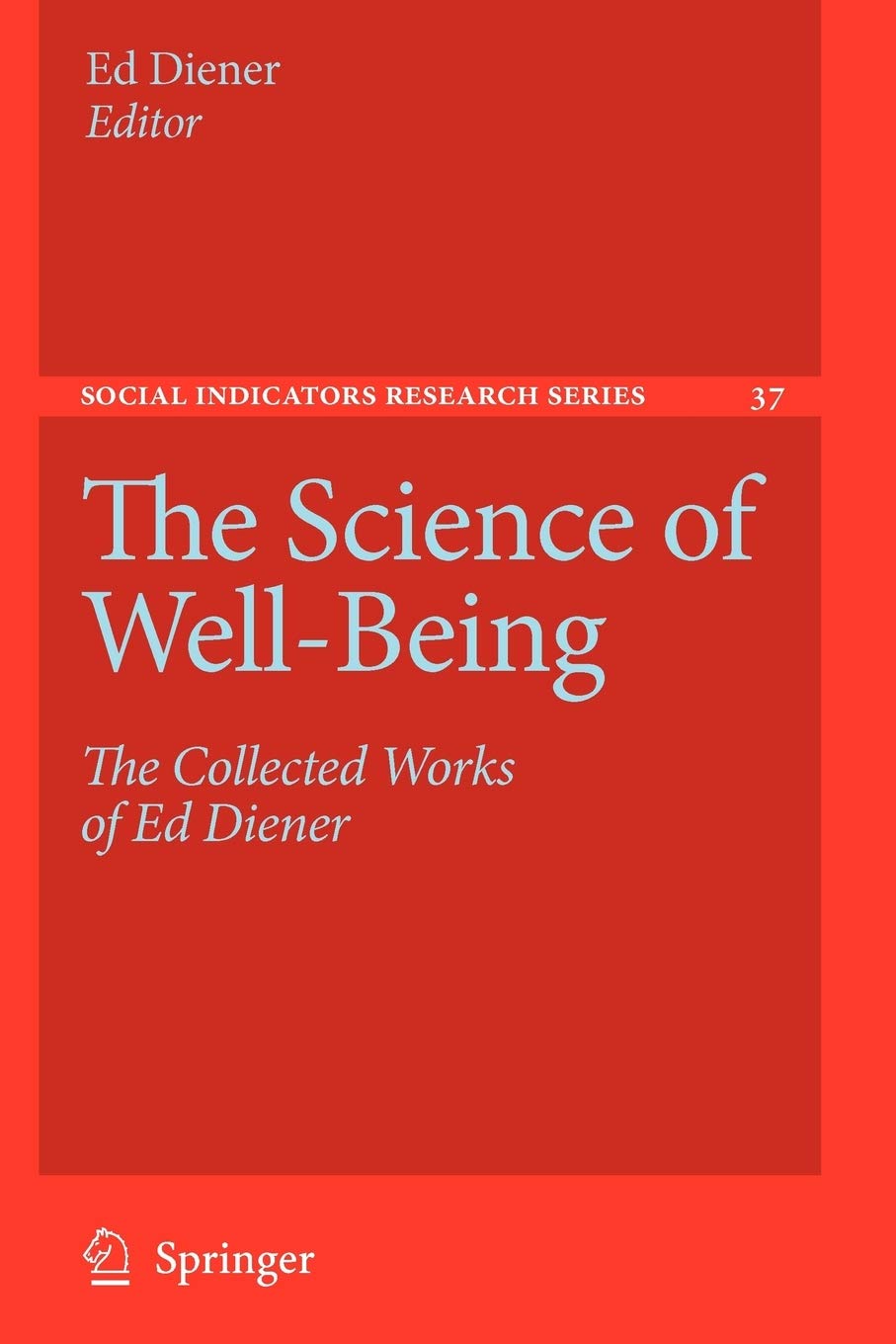
The Science of WellBeing: The Collected Works of Ed Diener (Social Indicators Research Series, 37),New
Sold by Ergodebooks, an authorized reseller.
Returns accepted within 30 days | support@ergodebooks.com
Shipping Information
- Free Standard Shipping — United States only
- Processing Time: 3–5 business days
- Estimated Delivery: 6–10 business days after dispatch
- Double-boxed, fully insured & discreetly packaged
- Tracking number sent via email once dispatched
Returns & Refund
Returns accepted within 30 days of delivery.
Damaged or Defective Item
Free return shipping + replacement or full refund
Wrong Item Received
Free return shipping + replacement or full refund
Change of Mind
Return shipping at customer's expense · 25% restocking fee applies
Payment Option

Major Theoretical Questions Theories about subjective wellbeing have grown over the past several decades, but have been re ned only slowly as adequate data have been compiled to test them. We can characterize the theories describing happiness along several dimensions. The rst dimension is whether the theory places the locus of happiness in external conditions such as income and status, as many sociological theories do, or within the attitudes and temperament of the individual, as many psychological theories do. Some have maintained that people adapt to all circumstances over time, so that only individual personality matters for producing happiness, whereas others believe that economicandothersocietalfactorsarethedominantforcesinproducingwellbeing. Throughout my writings there is a mix of both the internal and external factors that in uence wellbeing. A second dimension that characterizes scholarship on wellbeing is the issue of whether the factors affecting wellbeing are relative or absolute. That is, are there standards used by people at all times and places in judging their lives and in reacting to events? Or are standards dependent on what other people possess, on expec tions,andonadaptationlevelsbasedonpastcircumstances?Again,thereisevidence supporting the role of both universal and relative standards. People around the globe are probably in uenced by common factors such as friendship versus loneliness, but even these universal in uences on happiness are probably subject to some degree of comparison depending on what the person is used to and what others have. However, some factors might be much more comparative than other in uences, as Hsee, Yang, Li, and Shen (in press) have described.
⚠️ WARNING (California Proposition 65):
This product may contain chemicals known to the State of California to cause cancer, birth defects, or other reproductive harm.
For more information, please visit www.P65Warnings.ca.gov.