
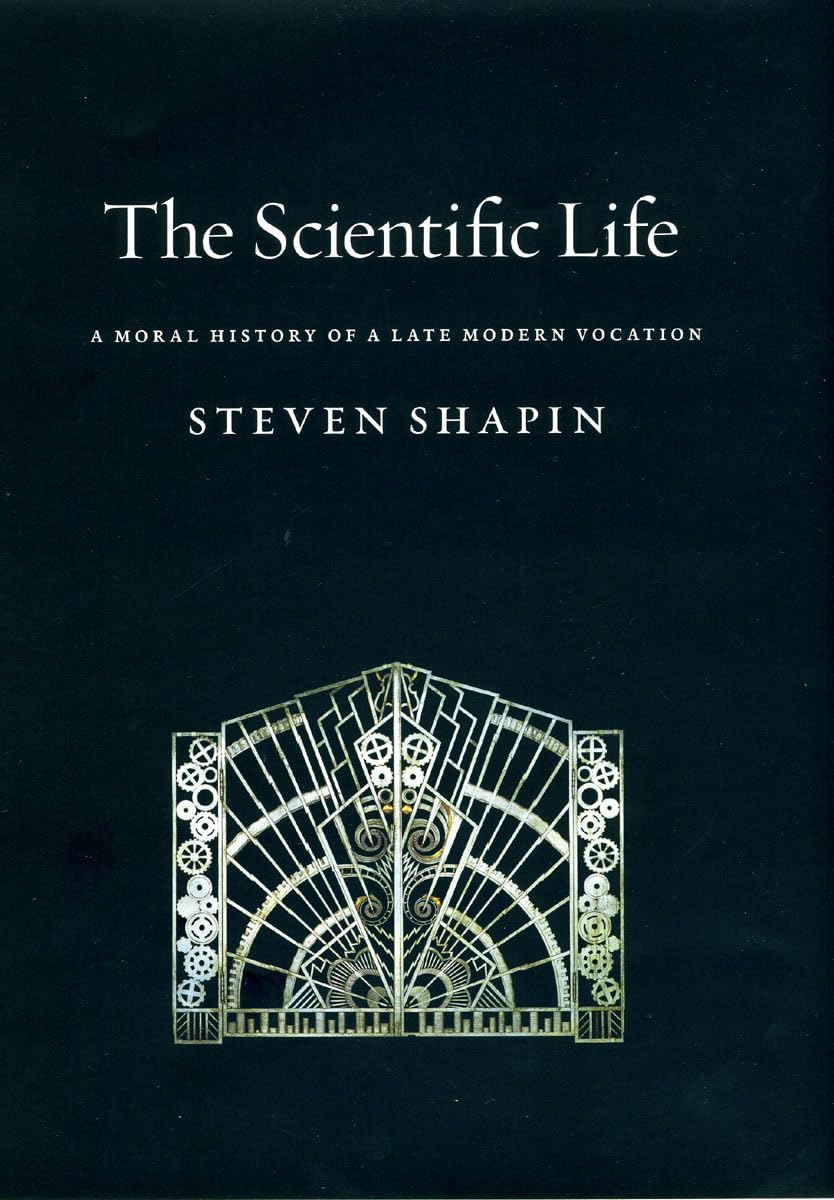
Title
The Scientific Life: A Moral History of a Late Modern Vocation,New
Sold by Ergodebooks, an authorized reseller.
Returns accepted within 30 days | support@ergodebooks.com
Shipping Information
- Free Standard Shipping — United States only
- Processing Time: 3–5 business days
- Estimated Delivery: 6–10 business days after dispatch
- Double-boxed, fully insured & discreetly packaged
- Tracking number sent via email once dispatched
Returns & Refund
Returns accepted within 30 days of delivery.
Damaged or Defective Item
Free return shipping + replacement or full refund
Wrong Item Received
Free return shipping + replacement or full refund
Change of Mind
Return shipping at customer's expense · 25% restocking fee applies
Payment Option

Who are scientists? What kind of people are they? What capacities and virtues are thought to stand behind their considerable authority? They are expertsindeed, highly respected expertsauthorized to describe and interpret the natural world and widely trusted to help transform knowledge into power and profit. But are they morally different from other people? The Scientific Life is historian Steven Shapins story about who scientists are, who we think they are, and why our sensibilities about such things matter.Conventional wisdom has long held that scientists are neither better nor worse than anyone else, that personal virtue does not necessarily accompany technical expertise, and that scientific practice is profoundly impersonal. Shapin, however, here shows how the uncertainties attending scientific research make the virtues of individual researchers intrinsic to scientific work. From the early twentiethcentury origins of corporate research laboratories to the highflying scientific entrepreneurship of the present, Shapin argues that the radical uncertainties of much contemporary science have made personal virtues more central to its practice than ever before, and he also reveals how radically novel aspects of late modern science have unexpectedly deep historical roots. His elegantly conceived history of the scientific career and character ultimately encourages us to reconsider the very nature of the technical and moral worlds in which we now live.Building on the insights of Shapins last three influential books, featuring an utterly fascinating cast of characters, and brimming with bold and original claims, The Scientific Life is essential reading for anyone wanting to reflect on late modern American culture and how it has been shaped.
⚠️ WARNING (California Proposition 65):
This product may contain chemicals known to the State of California to cause cancer, birth defects, or other reproductive harm.
For more information, please visit www.P65Warnings.ca.gov.
- Q: What is the page count of 'The Scientific Life'? A: The book has four hundred sixty-eight pages. This length allows for an in-depth exploration of the author's arguments and historical context.
- Q: What type of binding does 'The Scientific Life' have? A: This book is available in hardcover binding. The hardcover format provides durability and a premium feel for readers.
- Q: Who is the author of 'The Scientific Life'? A: The author is Steven Shapin. He is a historian renowned for his work on the history of science.
- Q: What topics are covered in 'The Scientific Life'? A: The book discusses the nature of scientists and their moral responsibilities. It examines how personal virtues influence scientific practice.
- Q: How does 'The Scientific Life' approach the subject of scientists? A: The book presents a moral history of scientists and their vocation. It challenges conventional beliefs about the moral character of scientists.
- Q: Is 'The Scientific Life' suitable for casual readers? A: Yes, it is suitable for casual readers. The engaging narrative style makes complex historical themes accessible to a wide audience.
- Q: What is the main argument of 'The Scientific Life'? A: The main argument is that personal virtues are crucial to scientific practice. Shapin illustrates how uncertainties in research heighten the importance of individual character.
- Q: Does 'The Scientific Life' feature real historical figures? A: Yes, the book features a fascinating cast of historical characters. These figures help illustrate the evolution of the scientific vocation.
- Q: Is 'The Scientific Life' appropriate for academic study? A: Yes, it is appropriate for academic study. The book is well-researched and offers valuable insights into the history and ethics of science.
- Q: What genre does 'The Scientific Life' belong to? A: The book belongs to the genre of history and philosophy of science. It combines historical analysis with moral reflections.
- Q: What themes are explored in 'The Scientific Life'? A: The book explores themes of authority, expertise, and ethics in science. It questions how societal views shape our understanding of scientists.
- Q: How does the author support his claims in 'The Scientific Life'? A: The author supports his claims with historical evidence and analysis. He draws on past and present examples of scientific practice.
- Q: What kind of readers might enjoy 'The Scientific Life'? A: Readers interested in science, history, and ethics might enjoy this book. It appeals to those wanting to explore the moral dimensions of scientific work.
- Q: Can 'The Scientific Life' be used in educational settings? A: Yes, it can be used in educational settings. Its insights make it a valuable resource for discussions on science and ethics.
- Q: Does the book contain any illustrations or photographs? A: No, 'The Scientific Life' does not contain illustrations or photographs. It focuses on text and historical narrative.
- Q: Is 'The Scientific Life' part of a series? A: No, this book is a standalone work. However, it builds on themes from Steven Shapin's previous influential books.