
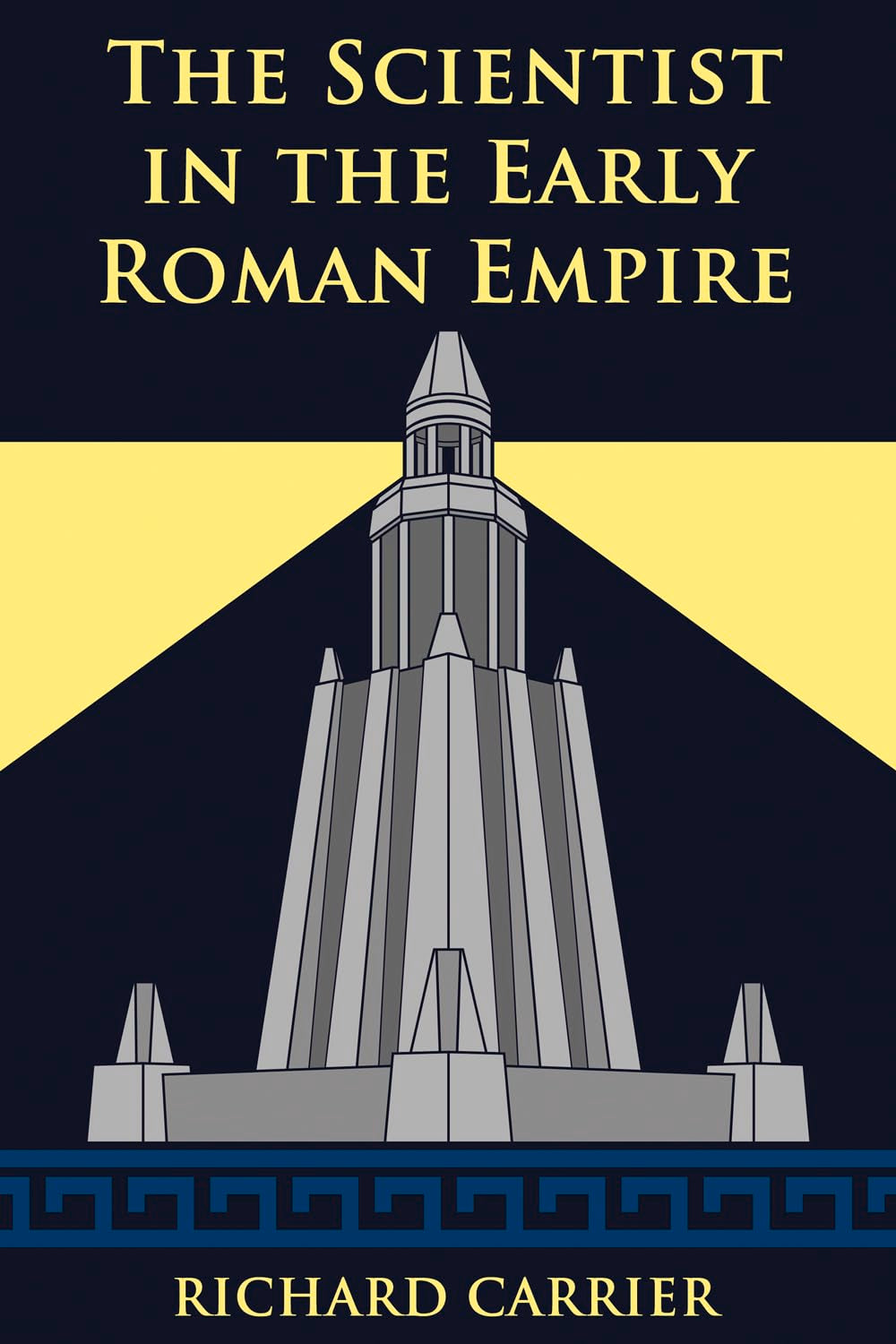
Title
The Scientist in the Early Roman Empire,Used
Sold by Ergodebooks, an authorized reseller.
Returns accepted within 30 days | support@ergodebooks.com
Shipping Information
- Free Standard Shipping — United States only
- Processing Time: 3–5 business days
- Estimated Delivery: 6–10 business days after dispatch
- Double-boxed, fully insured & discreetly packaged
- Tracking number sent via email once dispatched
Returns & Refund
Returns accepted within 30 days of delivery.
Damaged or Defective Item
Free return shipping + replacement or full refund
Wrong Item Received
Free return shipping + replacement or full refund
Change of Mind
Return shipping at customer's expense · 25% restocking fee applies
Payment Option

In this extensive sequel to Science Education in the Early Roman Empire, Dr. Richard Carrier explores the social history of scientists in the Roman era. Was science in decline or experiencing a revival under the Romans? What was an ancient scientist thought to be and do? Who were they, and who funded their research? And how did pagans differ from their Christian peers in their views toward science and scientists? Some have claimed Christianity valued them more than their pagan forebears. In fact the reverse is the case. And this difference in values had a catastrophic effect on the future of humanity. The Romans may have been just a century or two away from experiencing a scientific revolution. But once in power, Christianity kept that progress on hold for a thousand yearswhile forgetting most of what the pagans had achieved and discovered, from an empirical anatomy, physiology, and brain science to an experimental physics of water, gravity, and air. Thoroughly referenced and painstakingly researched, this volume is a must for anyone who wants to learn how far we once got, and why we took so long to get to where we are today.
⚠️ WARNING (California Proposition 65):
This product may contain chemicals known to the State of California to cause cancer, birth defects, or other reproductive harm.
For more information, please visit www.P65Warnings.ca.gov.