
Title
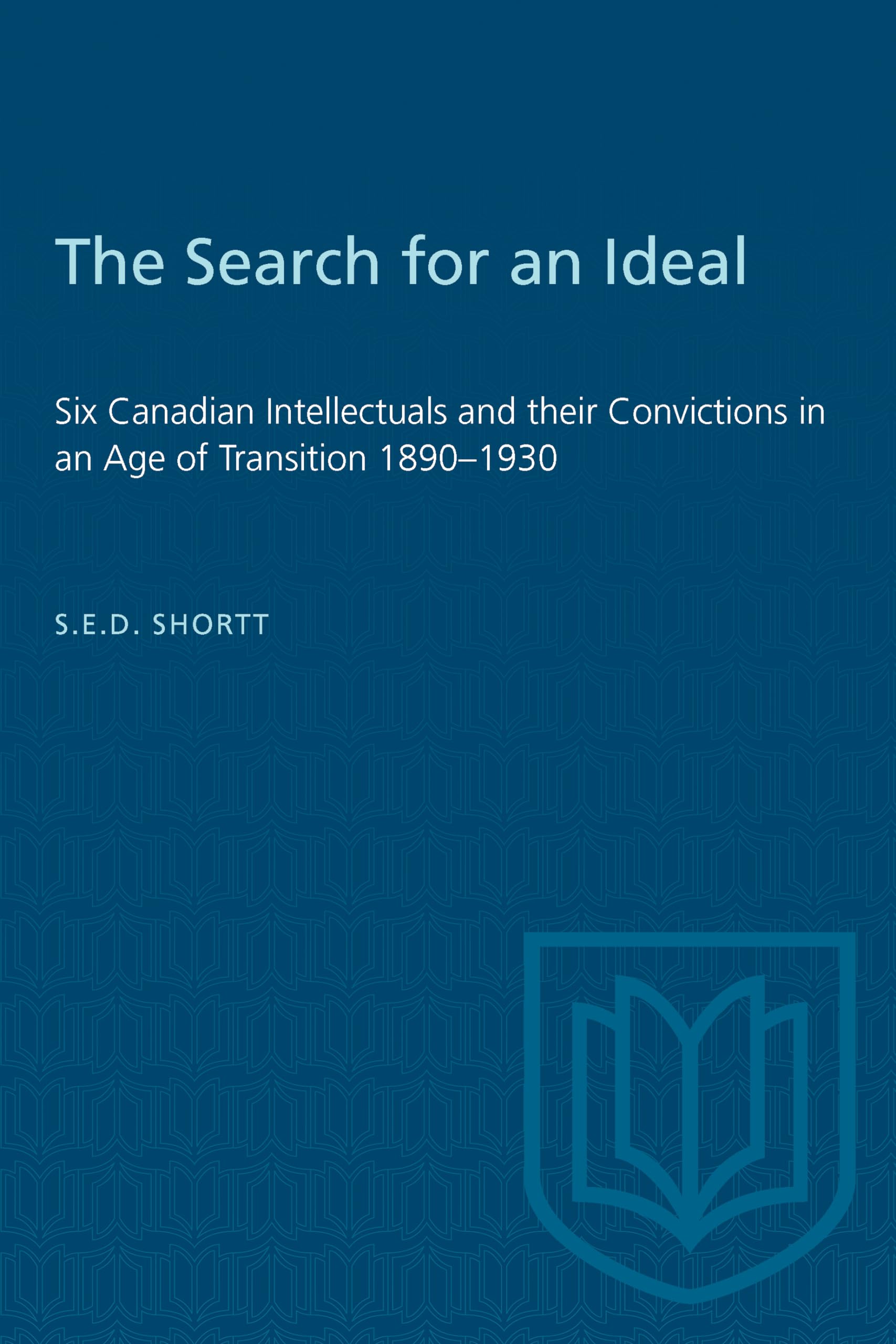
The Search for an Ideal: Six Canadian Intellectuals and their Convictions in an Age of Transition 18901930 (Heritage),Used
Sold by Ergodebooks, an authorized reseller.
Returns accepted within 30 days | support@ergodebooks.com
Shipping Information
- Free Standard Shipping — United States only
- Processing Time: 3–5 business days
- Estimated Delivery: 6–10 business days after dispatch
- Double-boxed, fully insured & discreetly packaged
- Tracking number sent via email once dispatched
Returns & Refund
Returns accepted within 30 days of delivery.
Damaged or Defective Item
Free return shipping + replacement or full refund
Wrong Item Received
Free return shipping + replacement or full refund
Change of Mind
Return shipping at customer's expense · 25% restocking fee applies
Payment Option

Product Description Within the context of the debate between idealism and empiricism, this book studies the ideas of six representative Canadian intellectuals of the late Victorian era. These six were chosen primarily because of their ideas on contemporary social questions views which may cast disconcerting light on certain aspects of presentday Canadian society. All were academics, and shared a common recognition of social issues and a similar selfimage, yet they were hardly a homogenous group: they were individuals who expressed their own unique attitudes rather than a collective viewpoint.Sir Andrew Macphail, professor of the history of medicine at McGill, was fascinated by the social implications of evolutionary naturalism. For Archibald MacMechan, professor of English at Dalhousie, British authors of the nineteenth century provided a romantic idealism that accurately defined man's place in the universe. Another professor English, James Cappon of Queen's, built much of his thought, whether on imperialism or on literature, around a concept of culture similar to that of Matthew Arnold. Plato tempered with Christianity appeared to be a reliable philosophical guide to Maurice Hutton, professor of classics at the University of Toronto. Political economist Adam Shortt of Queen's University found much to admire in the ideas of John Stuart Mill; his counterpart at Toronto, James Mavor, borrowed many of his attitudes from British and French positivism.Each man is the subject of a chapter constituting of three parts: a biographical section, a consideration of the essential core of his belief his view of man, God, and the universe and an examination of how his background and philosophy fround express in his ideas about culture and society. No attempt is made to document the influence of the ideas of these academics for, as they themselves asserted, they were essentially moralists, not men of action. About the Author SAMUEL EDWARD DOLE SHORTT was born in London, Ontario, in 1947 and educated at McGill, Carleton, and Queen's universities, and the University of Western Ontario. He holds a doctorate in history and has been a sessional lecturer at Queen's and a visiting assistant professor at McGill. His current academic interest is medicine.
⚠️ WARNING (California Proposition 65):
This product may contain chemicals known to the State of California to cause cancer, birth defects, or other reproductive harm.
For more information, please visit www.P65Warnings.ca.gov.