
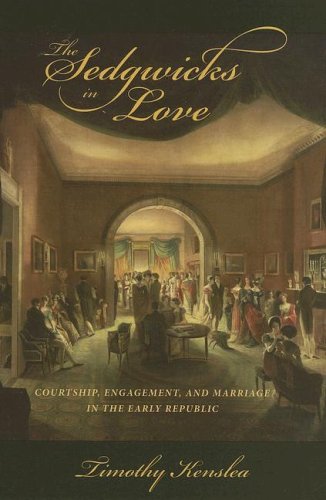
Title
The Sedgwicks In Love: Courtship, Engagement, And Marriage In The Early Republic
Sold by Ergodebooks, an authorized reseller.
Returns accepted within 30 days | support@ergodebooks.com
Shipping Information
- Free Standard Shipping — United States only
- Processing Time: 3–5 business days
- Estimated Delivery: 6–10 business days after dispatch
- Double-boxed, fully insured & discreetly packaged
- Tracking number sent via email once dispatched
Returns & Refund
Returns accepted within 30 days of delivery.
Damaged or Defective Item
Free return shipping + replacement or full refund
Wrong Item Received
Free return shipping + replacement or full refund
Change of Mind
Return shipping at customer's expense · 25% restocking fee applies
Payment Option

On A Spring Day In 1774, In Western Massachusetts' Berkshire County, Pamela Dwight And Theodore Sedgwick Were Married. Theodoredestined To Become One Of The Federalist Party'S Leaders In The U.S. Congress In The 1790S And Later An Influential Judge On Massachusetts' Highest Courtwas Almost Twentyeight, And Three Years A Widower. Pamela, Not Quite Twentyone, Was Marrying Theodore Sedgwick Over The Clearly Stated Objections Of Her Widowed Mother. In The Course Of Her Thirtythreeyear Marriage To Theodore, Pamela Gave Birth To Ten Children, Seven Of Whomfour Sons And Three Daughterssurvived To Adulthood. All But One Of Them Would Marry. The Courtships, Engagements, And Marriages Of The Sons And Daughters Of Theodore And Pamela Are The Subject Of This Book.Kenslea'S Richly Researched Account Of Sedgwicks In And Out Of Love Comprises Three Parts. In Part 1, He Examines Theodore And Pamela'S Marriage, Characterized By Theodore'S Long Absences And Pamela'S Depression And Mental Illness. He Also Looks At The Courtships And Marriages Of Their Three Oldest Children, Eliza, Frances, And Theodore. These Complex Sets Of Relationships Illuminate, Among Other Things, The Changing Perceptions Of The Parental Role In Matchmaking, The Vulnerability Of Wives Abused By Husbands, And The Tenuous Financial Situation Of Widows In The Early Republic.In Part 2, Kenslea Turns To The Bostonbased Courtships Of Harry And Robert Sedgwick, When The Brothers Courted The Friendlies, A Group Of Young Women Who Taught Them Some Important Lessons, Including The Difficulties Of Navigating The Subtle Rules Of Social Etiquette Among The Boston Elite. Harry Met His Future Wife Jane Among The Friendlies. At The End Of 1816, The Two Began A Sevenmonth Engagement, During Which They Were Separated But Kept Up A Voluminous Correspondence. Part 3 Highlights This Correspondence, Which Shows A Young Couple Envisioning For Themselves A Relationship Of Equals, Despite The Legal And Cultural Impediments Of The Day.Kenslea'S Epilogue Considers Catharine Maria Sedgwick, The Youngest Sister And The Bestknown Member Of This Generation Of Sedgwicks. Catharine'S Reflections On Her Single State, Both Published And Private, Enrich This History Of The Married Sedgwicks By Offering An Early Nineteenthcentury Alternative To The Marriage Plot.
⚠️ WARNING (California Proposition 65):
This product may contain chemicals known to the State of California to cause cancer, birth defects, or other reproductive harm.
For more information, please visit www.P65Warnings.ca.gov.