
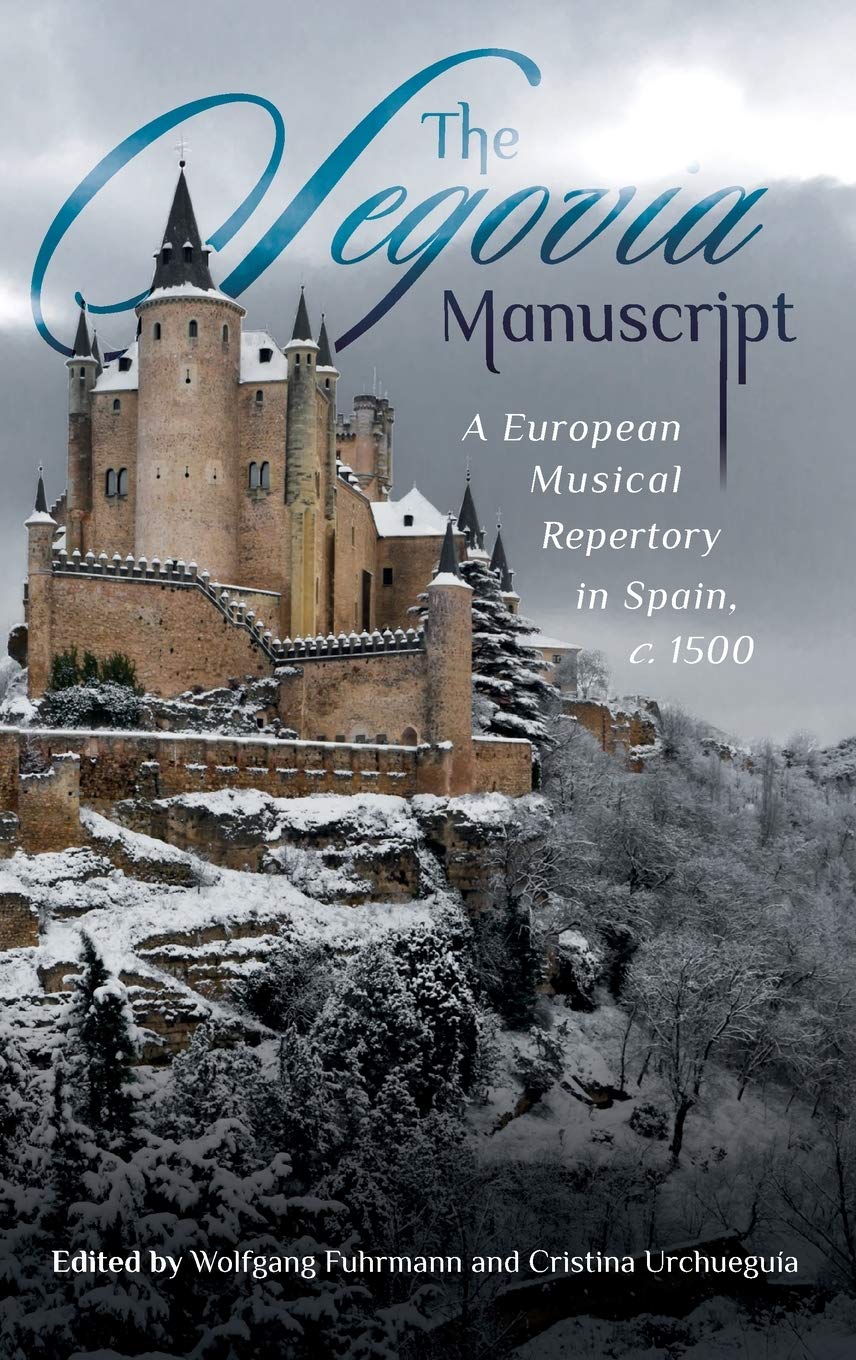
Title
The Segovia Manuscript: A European Musical Repertory in Spain, c.1500 (Studies in Medieval and Renaissance Music, 20),New
Sold by Ergodebooks, an authorized reseller.
Returns accepted within 30 days | support@ergodebooks.com
Shipping Information
- Free Standard Shipping — United States only
- Processing Time: 3–5 business days
- Estimated Delivery: 6–10 business days after dispatch
- Double-boxed, fully insured & discreetly packaged
- Tracking number sent via email once dispatched
Returns & Refund
Returns accepted within 30 days of delivery.
Damaged or Defective Item
Free return shipping + replacement or full refund
Wrong Item Received
Free return shipping + replacement or full refund
Change of Mind
Return shipping at customer's expense · 25% restocking fee applies
Payment Option

Essays illuminating a complex and sophisticated musical manuscript.The Segovia Manuscript (Cathedral of Segovia, Archivo Capitular) has puzzled musicologists ever since its rediscovery at the beginning of the twentieth century. It is unique: no other manuscript of the period transmits a comparable blend of late fifteenthcentury music, consisting of 204 sacred works and vernacular pieces in Flemish, French, Italian, and Spanish. An important group of pedagogical pieces by French and Flemish composers may preserve transcriptions of instrumental improvisation. This summary might suggest a messy collection, but on the contrary the manuscript is arranged with care, copied by one proficient scribe (except perhaps for the Spanish texts), who obviously followed a predetermined master plan. But which plan, who designed it, and why was the person responsible so interested in this combination?The essays here aim to treat every dimension of this fascinating source. New discoveries help date the manuscript and explain how it came to Segovia; particular attention is paid to the main scribe, now determined to be Flemish, and his relation with northern composers and repertory, above all that of Jacob Obrecht, Alexander Agricola, and Henricus Isaac; and the vexed question of the conflicting attributions is considered afresh and found to affect only a few of the fascicles. The contributors also look at questions of ownership and function. .WOLFGANG FUHRMANN is Professor of Musicology at Leipzig University; CRISTINA URCHUEGUA is Professor of Musicology at the University of Bern.Contributors: Bonnie J. Blackburn, Wolfgang Fuhrmann, Leofranc HolfordStrevens, Tess Knighton, Kenneth Kreitner, Honey Meconi, Emilio RosFbregas, Cristina Urchuegua, Rob C. Wegman
⚠️ WARNING (California Proposition 65):
This product may contain chemicals known to the State of California to cause cancer, birth defects, or other reproductive harm.
For more information, please visit www.P65Warnings.ca.gov.