If you have any questions, you are always welcome to contact us. We'll get back to you as soon as possible, withing 24 hours on weekdays.
Customer service
All questions about your order, return and delivery must be sent to our customer service team by e-mail at yourstore@yourdomain.com
Sale & Press
If you are interested in selling our products, need more information about our brand or wish to make a collaboration, please contact us at press@yourdomain.com
Help
If you have any questions, you are always welcome to contact us. We'll get back to you as soon as possible, withing 24 hours on weekdays.
Customer service
All questions about your order, return and delivery must be sent to our customer service team by e-mail at yourstore@yourdomain.com
Sale & Press
If you are interested in selling our products, need more information about our brand or wish to make a collaboration, please contact us at press@yourdomain.com
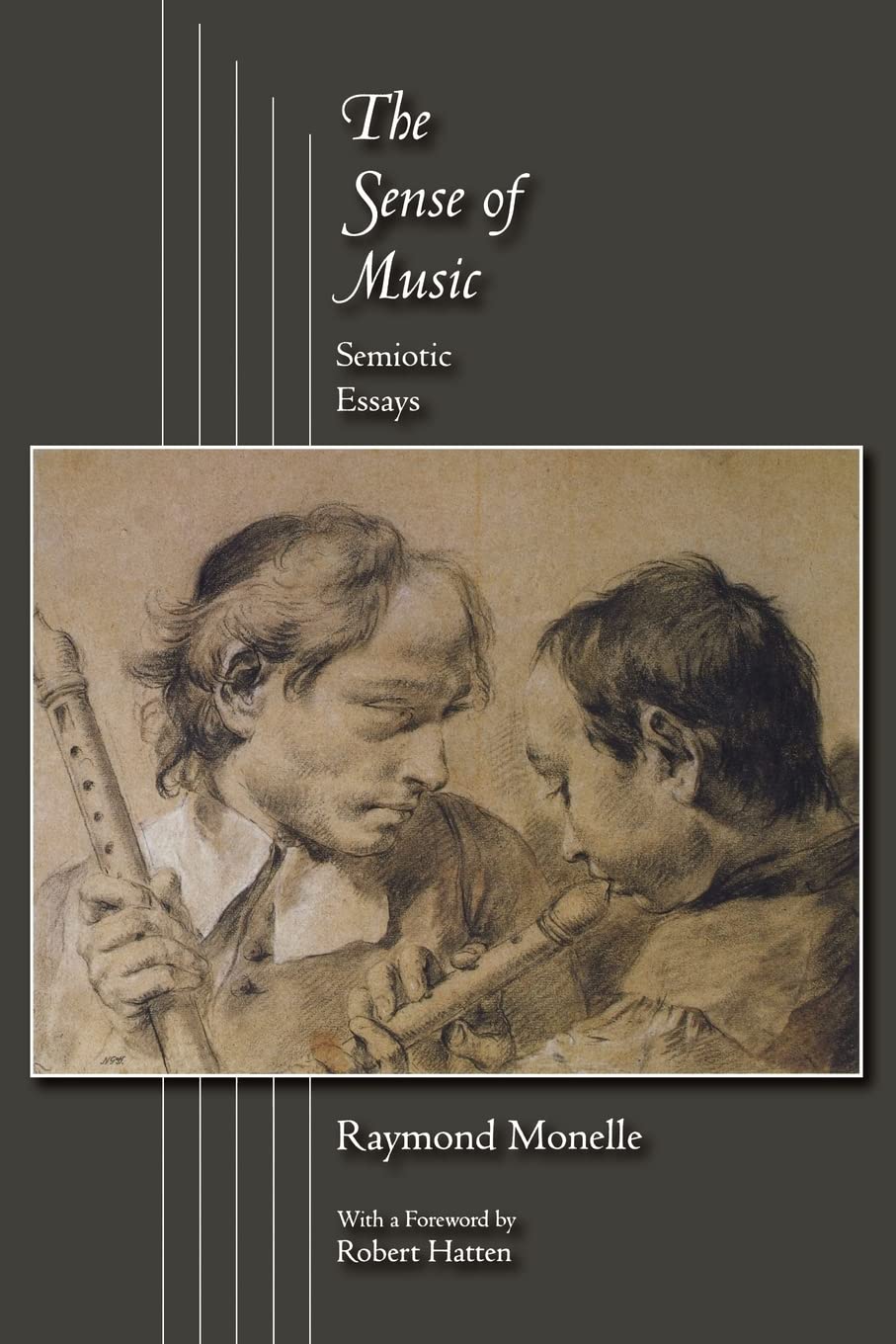
The fictional Dr. Strabismus sets out to write a new comprehensive theory of music. But music's tendency to deconstruct itself combined with the complexities of postmodernism doom him to failure. This is the parable that frames The Sense of Music, a novel treatment of music theory that reinterprets the modern history of Western music in the terms of semiotics.Based on the assumption that music cannot be described without reference to its meaning, Raymond Monelle proposes that works of the Western classical tradition be analyzed in terms of temporality, subjectivity, and topic theory. Critical of the abstract analysis of musical scores, Monelle argues that the score does not reveal music's sense. That sensewhat a piece of music says and signifiescan be understood only with reference to history, culture, and the other arts. Thus, music is meaningful in that it signifies cultural temporalities and themes, from the traditional manly heroism of the hunt to military power to postmodern 'polyvocality.'This theoretical innovation allows Monelle to describe how the Classical style of the eighteenth centurywhich he reads as a balance of lyric and progressive timegave way to the Romantic need for emotional realism. He argues that irony and ambiguity subsequently eroded the domination of personal emotion in Western music as well as literature, killing the composer's subjectivity with that of the author. This leaves Dr. Strabismus suffering from the postmodern condition, and Raymond Monelle with an exciting, controversial new approach to understanding music and its history.
⚠️ WARNING (California Proposition 65):
This product may contain chemicals known to the State of California to cause cancer,
birth defects, or other reproductive harm.
For MAP (Minimum Advertised Price) violations and Intellectual Property (IP) or Trademark concerns, please contact:
support@ergodebooks.com
⚠️ California Proposition 65 Warning: Some products sold on this website may expose you to chemicals known to the State of California to cause cancer, birth defects, or other reproductive harm. For more information, visit www.P65Warnings.ca.gov.