If you have any questions, you are always welcome to contact us. We'll get back to you as soon as possible, withing 24 hours on weekdays.
Customer service
All questions about your order, return and delivery must be sent to our customer service team by e-mail at yourstore@yourdomain.com
Sale & Press
If you are interested in selling our products, need more information about our brand or wish to make a collaboration, please contact us at press@yourdomain.com
Help
If you have any questions, you are always welcome to contact us. We'll get back to you as soon as possible, withing 24 hours on weekdays.
Customer service
All questions about your order, return and delivery must be sent to our customer service team by e-mail at yourstore@yourdomain.com
Sale & Press
If you are interested in selling our products, need more information about our brand or wish to make a collaboration, please contact us at press@yourdomain.com
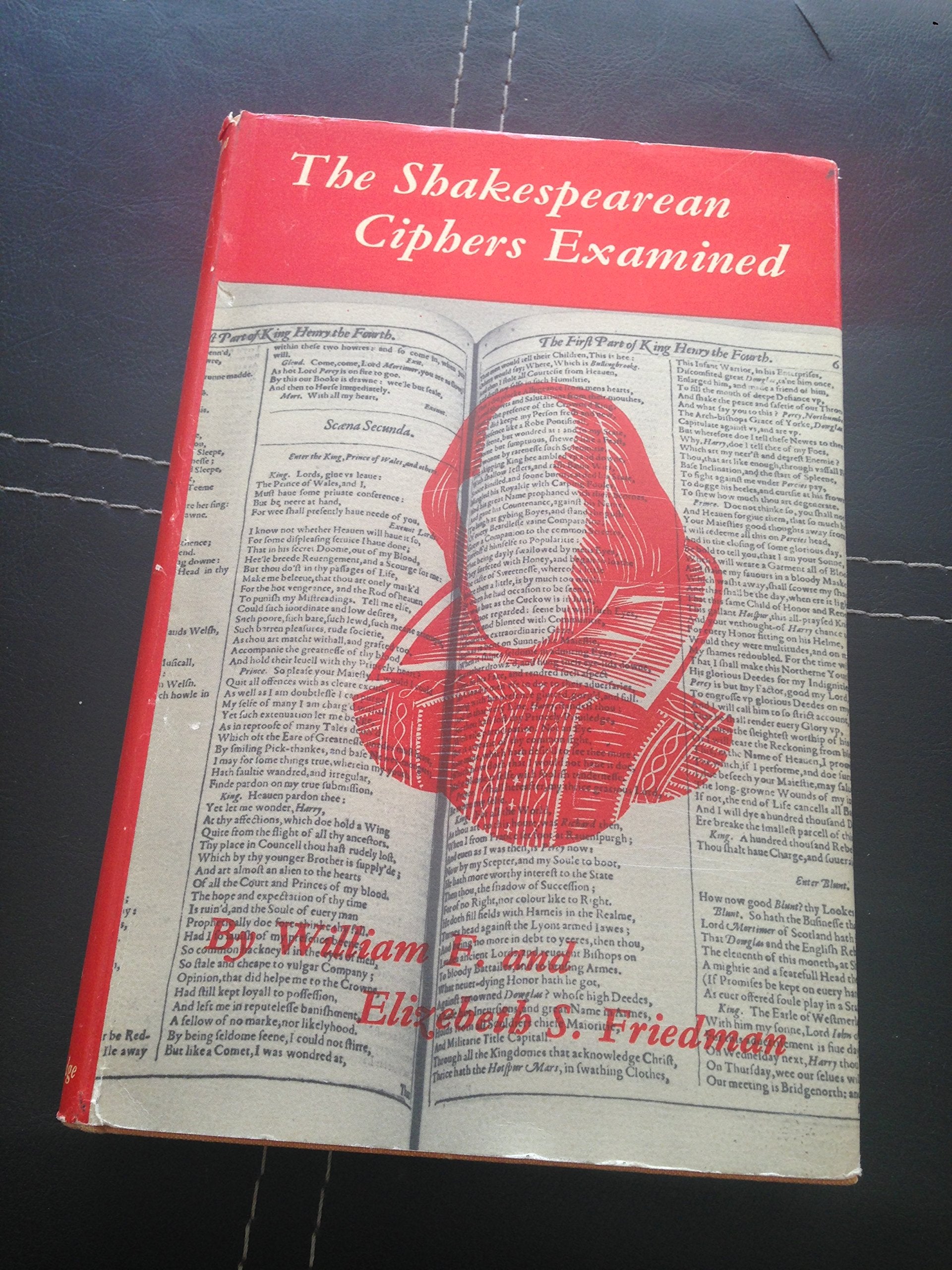
William and Elizebeth Friedman were both researchers in cryptography at The Riverbank Laboratories. This 1957 book is the result of an insightful report that won the Friedmans the Folger Shakespeare Library literary prize. Within it, the Friedmans address theories, which, through the identification of hidden codes, call the authorship of Shakespeare's plays into question. As ciphers were abundantly used in the sixteenth century, such coding is far from impossible. Accordingly, this work gives a fair and scientific hearing to those antiStratfordians whose theories were often dismissed completely. The Friedmans document the history and foundations of such theories, before thoroughly examining and critiquing a great number of them. Indeed, it has even been suggested that this text itself contains ciphers, making it of even greater interest to scholars of literary codes and cryptography, as well as those wishing to discover more about the various debates surrounding the authorship of Shakespeare's plays.
⚠️ WARNING (California Proposition 65):
This product may contain chemicals known to the State of California to cause cancer,
birth defects, or other reproductive harm.
For MAP (Minimum Advertised Price) violations and Intellectual Property (IP) or Trademark concerns, please contact:
support@ergodebooks.com
⚠️ California Proposition 65 Warning: Some products sold on this website may expose you to chemicals known to the State of California to cause cancer, birth defects, or other reproductive harm. For more information, visit www.P65Warnings.ca.gov.