If you have any questions, you are always welcome to contact us. We'll get back to you as soon as possible, withing 24 hours on weekdays.
Customer service
All questions about your order, return and delivery must be sent to our customer service team by e-mail at yourstore@yourdomain.com
Sale & Press
If you are interested in selling our products, need more information about our brand or wish to make a collaboration, please contact us at press@yourdomain.com
Help
If you have any questions, you are always welcome to contact us. We'll get back to you as soon as possible, withing 24 hours on weekdays.
Customer service
All questions about your order, return and delivery must be sent to our customer service team by e-mail at yourstore@yourdomain.com
Sale & Press
If you are interested in selling our products, need more information about our brand or wish to make a collaboration, please contact us at press@yourdomain.com
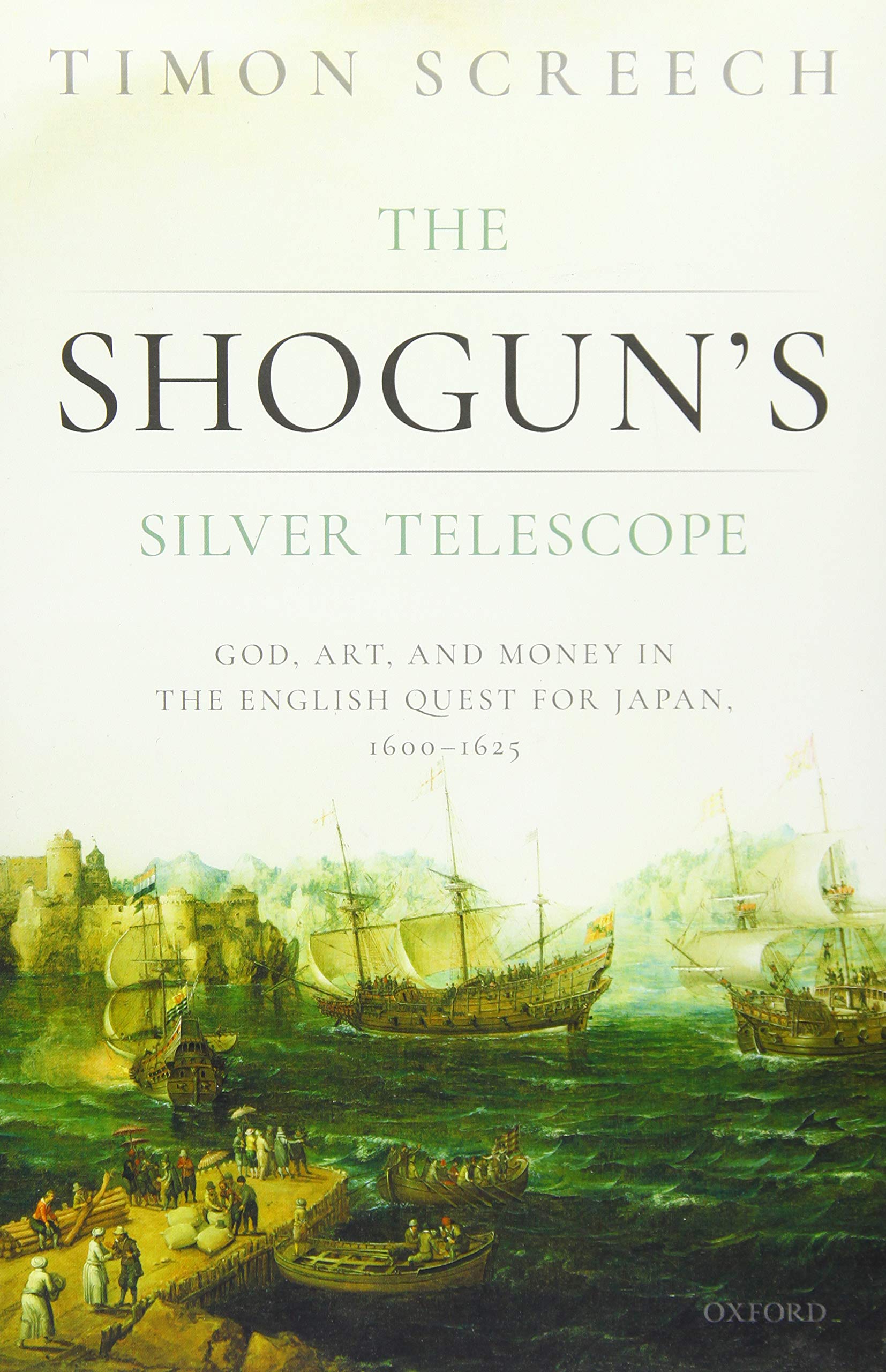
The East India Company, founded in London in 1600, was a spice trading organisation. But its governors soon began to think bigger. After a decade, they started to plan voyages to more fabulous places, notably India and Japan. India had cotton cloth, while Japan had silver, and crucially was cold in winter. England's main export was woollen cloth (which will not sell in hot places), so the Company envisaged adding to its spiceruns, sailings back and forth to Japan, exchanging wool for silver. This could be done quickly, over the top of Russia, as maps suggested. Maps also made Japan twenty times too large, the size of India in fact.Knowing the Spanish and Portuguese had preceded them, the Company prepared a special present for its first extended sailing. In the end this missed India, but got to Japan, in 1613. The Shogun was presented with a silver telescope in the name of King James. It was the first telescope ever to leave Europe and the first made as a presentation item. Before this voyage had even returned, the Company dispatched another, under the New Year's Gift with an equally stunning cargo: almost 100 oil paintings. Not yet able to go over Russia, these would be given and sold to the India and the Japanese courts.This book looks at formation of the Company, but mostly asks the meaning of these two extraordinary cargoes. What were they supposed to mean, and what effect did they have on quizzical Asian rulers?
⚠️ WARNING (California Proposition 65):
This product may contain chemicals known to the State of California to cause cancer,
birth defects, or other reproductive harm.
For MAP (Minimum Advertised Price) violations and Intellectual Property (IP) or Trademark concerns, please contact:
support@ergodebooks.com
⚠️ California Proposition 65 Warning: Some products sold on this website may expose you to chemicals known to the State of California to cause cancer, birth defects, or other reproductive harm. For more information, visit www.P65Warnings.ca.gov.