
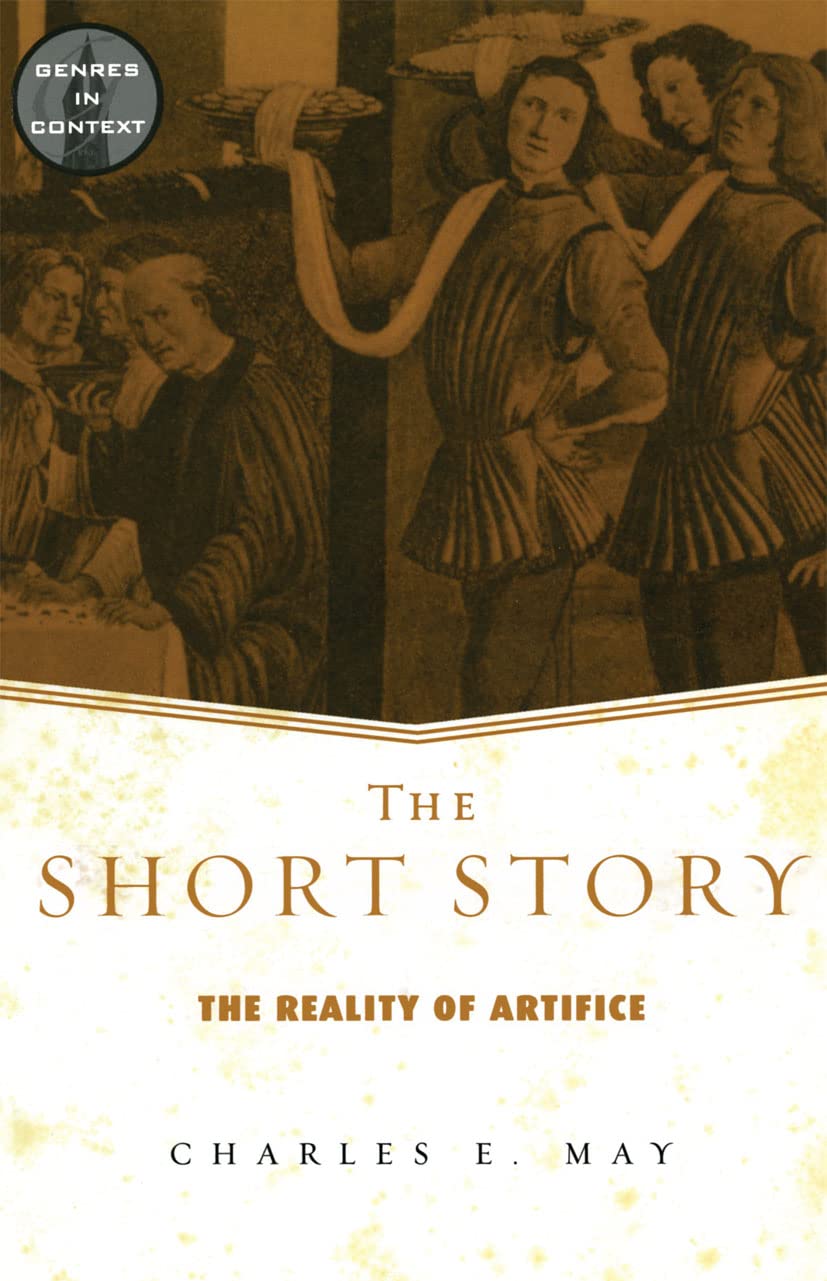
Title
The Short Story: The Reality Of Artifice
Sold by Ergodebooks, an authorized reseller.
Returns accepted within 30 days | support@ergodebooks.com
Shipping Information
- Free Standard Shipping — United States only
- Processing Time: 3–5 business days
- Estimated Delivery: 6–10 business days after dispatch
- Double-boxed, fully insured & discreetly packaged
- Tracking number sent via email once dispatched
Returns & Refund
Returns accepted within 30 days of delivery.
Damaged or Defective Item
Free return shipping + replacement or full refund
Wrong Item Received
Free return shipping + replacement or full refund
Change of Mind
Return shipping at customer's expense · 25% restocking fee applies
Payment Option

The Short Story Is One Of The Most Difficult Types Of Prose To Write And One Of The Most Pleasurable To Read. From Boccaccio'S Decameron To The Collected Stories Ofreynolds Price, Charles May Gives Us An Understanding Of The History And Structure Of This Demanding Form Of Fiction. Beginning With A General History Of The Genre, He Moves On To Focus On The Nineteenthcentury When The Modern Short Story Began To Come Into Focus. From There He Moves On To Later Nineteenthcentury Realism And Early Twentiethcentury Formalism And Finally To The Modern Renaissance Of The Form That Shows No Signs Of Abating. A Chronology Of Significant Events, Works And Figures From The Genre'S History, Notes And References And An Extensive Bibliographic Essay With Recommended Reading Round Out The Volume.
⚠️ WARNING (California Proposition 65):
This product may contain chemicals known to the State of California to cause cancer, birth defects, or other reproductive harm.
For more information, please visit www.P65Warnings.ca.gov.
- Q: How many pages are in this book? A: This book has one hundred eighty-two pages. It provides a comprehensive look at the history and structure of short stories.
- Q: What is the binding type of this book? A: The binding of this book is paperback. This makes it lightweight and easy to handle for reading.
- Q: What are the dimensions of this book? A: The dimensions are six inches in length, zero point four one inches in width, and nine inches in height. These measurements make it a convenient size for holding.
- Q: Who is the author of this book? A: The author is Charles May. He is known for his expertise in the field of short story criticism and theory.
- Q: What is the main genre of this book? A: This book falls under the category of Criticism and Theory. It analyzes the short story as a significant literary form.
- Q: What historical aspects does this book cover? A: The book covers the genre's history from Boccaccio's Decameron to modern short stories. It highlights significant events and works in the short story's evolution.
- Q: Is this book suitable for beginners in literature? A: Yes, this book is suitable for beginners. It provides foundational knowledge about short stories and their development.
- Q: How can I benefit from reading this book? A: You can gain a deeper understanding of short stories and their critical elements. It offers insights into various styles and historical contexts.
- Q: Is there a recommended reading list in this book? A: Yes, the book includes an extensive bibliographic essay with recommended reading. This helps guide further exploration of the genre.
- Q: Can this book be used for academic purposes? A: Yes, it is ideal for academic study. Its thorough analysis is beneficial for students and scholars of literature.
- Q: What should I do to keep this book in good condition? A: To keep this book in good condition, store it in a cool, dry place and avoid exposure to direct sunlight. Handling it carefully will also help preserve its quality.
- Q: Is this book safe for all ages? A: Yes, this book is generally safe for all ages. However, it is more suited for those interested in literary criticism.
- Q: What if I receive a damaged copy of the book? A: If you receive a damaged copy, contact the seller for a return or exchange. Most sellers have policies in place for such situations.
- Q: How do I find more information about the author? A: You can research Charles May online or look for interviews and articles where he discusses short stories. This will provide more context about his expertise.
- Q: Is this book available in digital format? A: Yes, this book may be available in digital format. Check with online retailers for eBook options.
- Q: What are the notable themes discussed in this book? A: The book discusses themes such as realism, formalism, and the modern renaissance of short stories. It explores how these themes have evolved over time.