
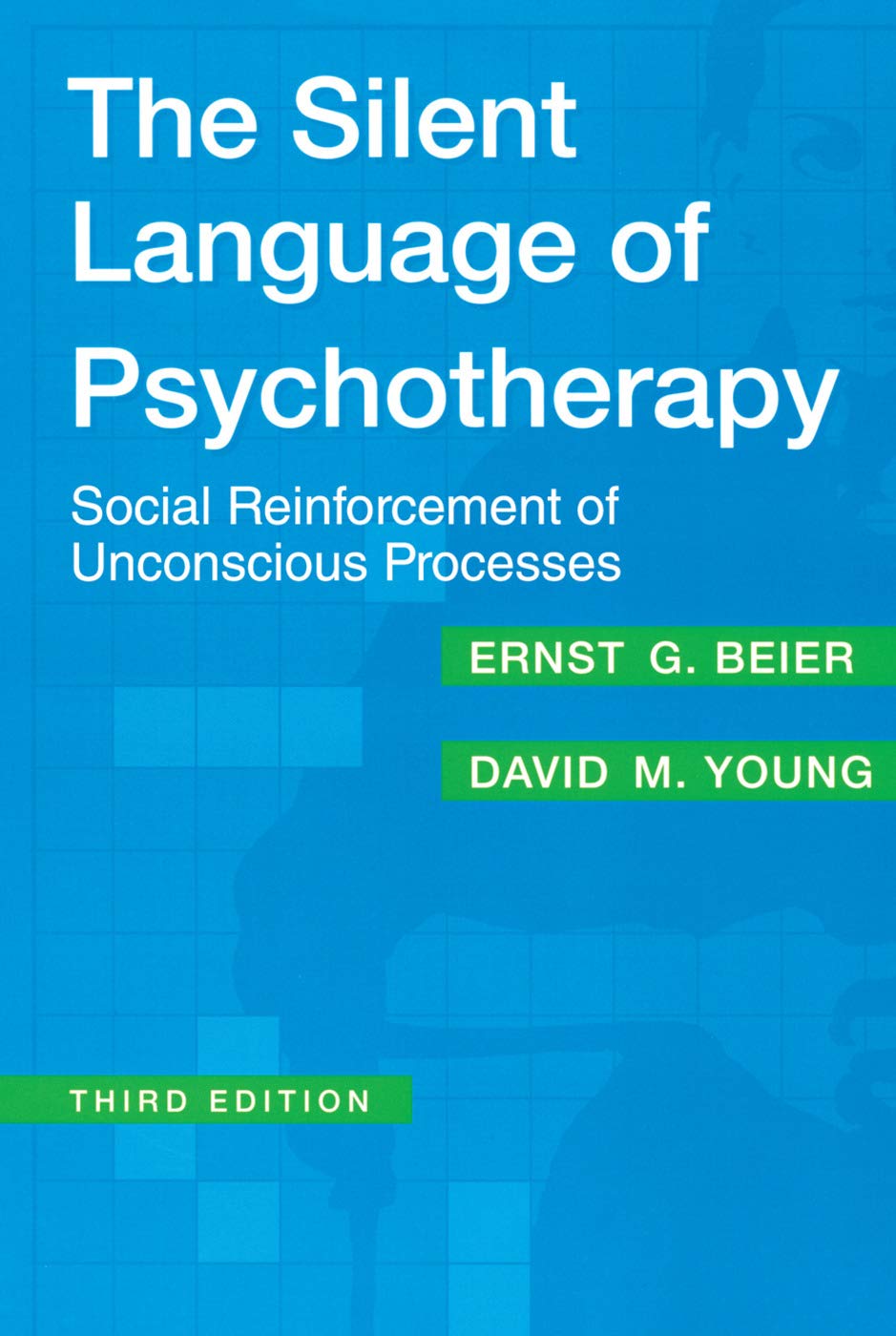
Title
The Silent Language of Psychotherapy,Used
Sold by Ergodebooks, an authorized reseller.
Returns accepted within 30 days | support@ergodebooks.com
Shipping Information
- Free Standard Shipping — United States only
- Processing Time: 3–5 business days
- Estimated Delivery: 6–10 business days after dispatch
- Double-boxed, fully insured & discreetly packaged
- Tracking number sent via email once dispatched
Returns & Refund
Returns accepted within 30 days of delivery.
Damaged or Defective Item
Free return shipping + replacement or full refund
Wrong Item Received
Free return shipping + replacement or full refund
Change of Mind
Return shipping at customer's expense · 25% restocking fee applies
Payment Option

Therapeutic changes occur in many places, and among animals as well as humans. A theory that attempts to explain therapeutic changes should be based on principles that apply not only to those changes occurring during the hour, but also to those observed in the educational process, in interpersonal relations, and in the social milieu, as well as with animals. It would be desirable to discover principles broad enough to provide a deeper understanding of therapeutic change in this wide variety of situations. Experienced therapists appear to be similar in what they are doing, although they may disagree as to why they do it. In spite of the arguments about theoretical formulations, it can be observed that during an hour with a patient many psychotherapists may not follow their own theories too well. There probably is some relevance in a comparison of psychotherapy with a concept formation the subject gives the correct answers but is unable to state why he did so or what principles he followed in making his choices. The therapist, too, may help a patient but he is often uncertain as to 'why' and 'how.' It is very likely that the effective principles in therapeutic work rest on processes that are more general than the specific principles advanced by different schools. This volume combines the elements of psychodynamic and cognitive behavioral therapy in a theoretical system that focuses on the importance of patienttherapist interaction, especially in terms of the exchange of subtle or covert communication cues. In this significantly updated and expanded edition of their classic text, Beier and Young analyze recent developments in new areas of practice facing today's managed care and the clinical impact of the control of healthcare delivery; and biological intervention and other issues related to psychotropic medication.
⚠️ WARNING (California Proposition 65):
This product may contain chemicals known to the State of California to cause cancer, birth defects, or other reproductive harm.
For more information, please visit www.P65Warnings.ca.gov.