If you have any questions, you are always welcome to contact us. We'll get back to you as soon as possible, withing 24 hours on weekdays.
Customer service
All questions about your order, return and delivery must be sent to our customer service team by e-mail at yourstore@yourdomain.com
Sale & Press
If you are interested in selling our products, need more information about our brand or wish to make a collaboration, please contact us at press@yourdomain.com
Help
If you have any questions, you are always welcome to contact us. We'll get back to you as soon as possible, withing 24 hours on weekdays.
Customer service
All questions about your order, return and delivery must be sent to our customer service team by e-mail at yourstore@yourdomain.com
Sale & Press
If you are interested in selling our products, need more information about our brand or wish to make a collaboration, please contact us at press@yourdomain.com
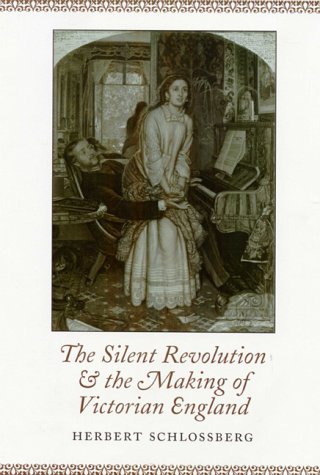
Herbert Schlossberg argues that by the time Victoria became queen in 1837, Victorian culture was already essentially in place. Focusing on the period between the 1790s and the 1840s, Schlossberg shows how the religious revival that took hold of England's culture in the early years of the nineteenth century constituted a 'silent revolution' as opposed to the violent political revolutions taking place in France and other European countries that formed the basis of Victorian culture. Among other effects, this revolution effectively addressed the dislocation brought about by rapid economic change and population growth, which were producing strains in the already shaky moral and religious foundation of the English nation.After an opening discussion of the spiritual condition of England in the eighteenth century, Schlossberg describes the various manifestations of the religious revival, focusing on the main renewal movements in the Church of England and the spread of evangelicalism to dissenting religious groups. He looks next at the relationship between the religious revival and aspects of society not often linked to religion, ranging from the roles played by intellectuals (Coleridge, Carlyle), to the place of religious activity during periods of social and economic change, to the struggle between evangelicalism and utilitarianism for intellectual domination. The final section looks at changes in the ways people thought and felt, changes in moral sensibility and practice, and the remaking of English restitutions.
⚠️ WARNING (California Proposition 65):
This product may contain chemicals known to the State of California to cause cancer,
birth defects, or other reproductive harm.
For MAP (Minimum Advertised Price) violations and Intellectual Property (IP) or Trademark concerns, please contact:
support@ergodebooks.com
⚠️ California Proposition 65 Warning: Some products sold on this website may expose you to chemicals known to the State of California to cause cancer, birth defects, or other reproductive harm. For more information, visit www.P65Warnings.ca.gov.