
Title
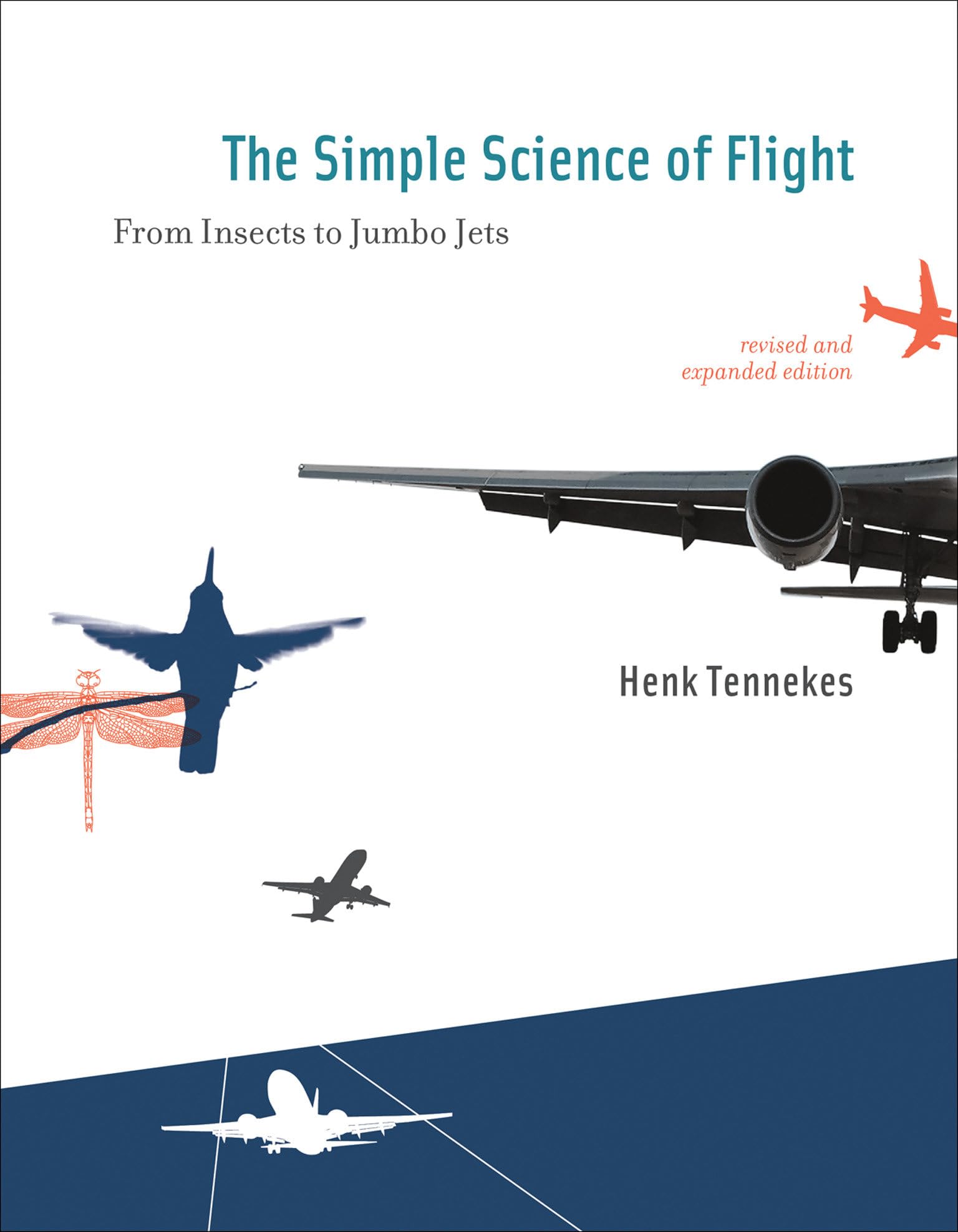
The Simple Science Of Flight, Revised And Expanded Edition: From Insects To Jumbo Jets (Mit Press)
Sold by Ergodebooks, an authorized reseller.
Returns accepted within 30 days | support@ergodebooks.com
Shipping Information
- Free Standard Shipping — United States only
- Processing Time: 3–5 business days
- Estimated Delivery: 6–10 business days after dispatch
- Double-boxed, fully insured & discreetly packaged
- Tracking number sent via email once dispatched
Returns & Refund
Returns accepted within 30 days of delivery.
Damaged or Defective Item
Free return shipping + replacement or full refund
Wrong Item Received
Free return shipping + replacement or full refund
Change of Mind
Return shipping at customer's expense · 25% restocking fee applies
Payment Option

An Investigation Into How Machines And Living Creatures Fly, And Of The Similarities Between Butterflies And Boeings, Paper Airplanes And Plovers.From The Smallest Gnat To The Largest Aircraft, All Things That Fly Obey The Same Aerodynamic Principles. In The Simple Science Of Flight, Henk Tennekes Investigates Just How Machines And Creatures Fly: What Size Wings They Need, How Much Energy Is Required For Their Journeys, How They Cross Deserts And Oceans, How They Take Off, Climb, And Soar. Fascinated By The Similarities Between Nature And Technology, Tennekes Offers An Introduction To Flight That Teaches By Association. Swans And Boeings Differ In Numerous Ways, But They Follow The Same Aerodynamic Principles. Biological Evolution And Its Technical Counterpart Exhibit Exciting Parallels. What Makes Some Airplanes Successful And Others Misfits? Why Does The Boeing 747 Endure But The Concorde Now Seem A Fluke? Tennekes Explains The Science Of Flight Through Comparisons, Examples, Equations, And Anecdotes. The New Edition Of This Popular Book Has Been Thoroughly Revised And Much Expanded. Highlights Of The New Material Include A Description Of The Incredible Performance Of Bartailed Godwits (7,000 Miles Nonstop From Alaska To New Zealand), An Analysis Of The Convergence Of Modern Jetliners (From Both Boeing And Airbus), A Discussion Of The Metabolization Of Energy Featuring Lance Armstrong, A Novel Treatment Of The Aerodynamics Of Drag And Trailing Vortices, And An Emphasis Throughout On Evolution, In Nature And In Engineering. Tennekes Draws On New Evidence On Bird Migration, New Windtunnel Studies, And Data On New Airliners. And His Analysis Of The Relative Efficiency Of Planes, Trains, And Automobiles Is Newly Relevant. (On A Costperseat Scale, A 747 Is More Efficient Than A Passenger Car.)
⚠️ WARNING (California Proposition 65):
This product may contain chemicals known to the State of California to cause cancer, birth defects, or other reproductive harm.
For more information, please visit www.P65Warnings.ca.gov.
- Q: What is the page count of the book? A: The book has two hundred one pages. It covers a variety of topics related to flight and aerodynamics.
- Q: What are the dimensions of this book? A: The book measures eight point eight six inches in length, seven point zero nine inches in width, and zero point five five inches in height.
- Q: What type of binding does this book have? A: This book is published in paperback binding. This makes it lightweight and easy to handle.
- Q: Who is the author of this book? A: The author of the book is Henk Tennekes. He presents insightful comparisons between nature and technology.
- Q: What is the main theme of this book? A: The main theme is the science of flight. It explores how both machines and living creatures achieve flight.
- Q: What is the intended audience for this book? A: The book is suitable for readers interested in aviation and biology. It appeals to both enthusiasts and students.
- Q: How can I use this book for learning? A: You can use this book as a foundational text on aerodynamics. It features comparisons and examples to enhance understanding.
- Q: Is this book suitable for young readers? A: Yes, this book is suitable for young readers with an interest in science. It presents complex ideas in an accessible manner.
- Q: Can this book be used as a textbook? A: Yes, it can be used as a textbook for introductory courses on flight and aerodynamics. It covers fundamental concepts clearly.
- Q: How do I care for this book? A: To care for this book, keep it in a dry place and handle it gently. Avoid exposing it to moisture or direct sunlight.
- Q: Is there a recommended storage method for this book? A: Store this book upright on a shelf or in a bookcase. This helps maintain its shape and prevents damage.
- Q: What should I do if the book arrives damaged? A: If the book arrives damaged, contact the retailer for a return or replacement. Most retailers have straightforward return policies.
- Q: How can I ensure the book remains in good condition? A: To ensure the book remains in good condition, avoid bending the cover or pages. Use a bookmark instead of folding pages.
- Q: Is this book available in other formats? A: Currently, the book is available only in paperback format. There may be digital formats available through various platforms.
- Q: What makes this book different from other books on flight? A: This book uniquely compares biological and technological aspects of flight. It emphasizes the similarities between living creatures and aircraft.
- Q: Does this book include any illustrations or diagrams? A: Yes, the book includes illustrations and diagrams that help explain aerodynamic principles. These visuals enhance comprehension.