
Title
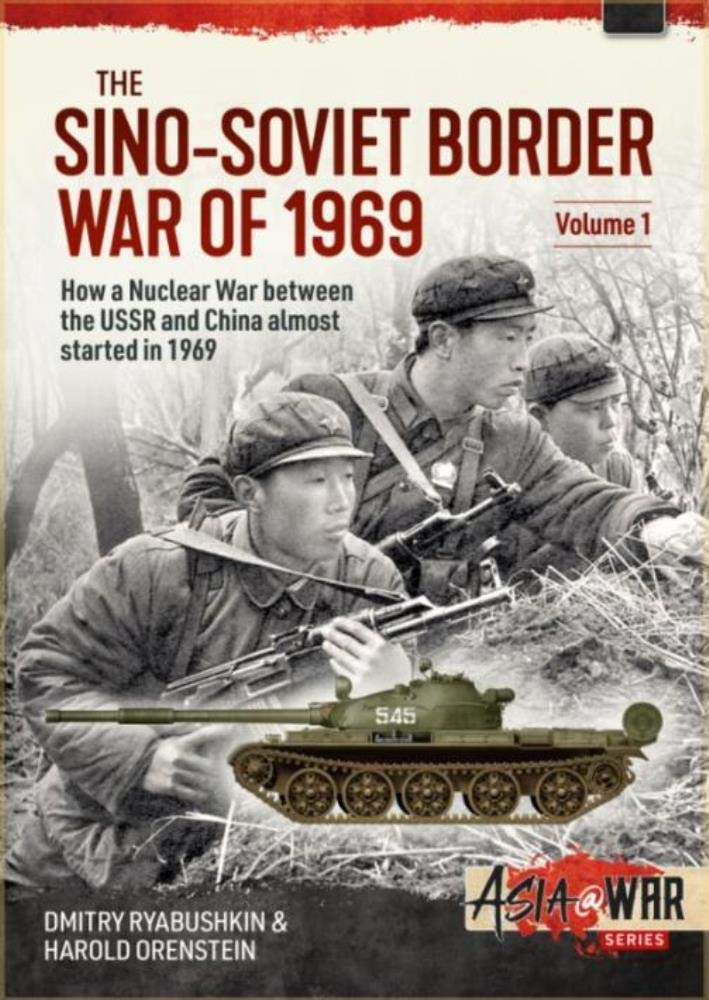
The Sinosoviet Border War Of 1969: Volume 1 First Clash At Damansky Island (Asia@War)
Sold by Ergodebooks, an authorized reseller.
Returns accepted within 30 days | support@ergodebooks.com
Shipping Information
- Free Standard Shipping — United States only
- Processing Time: 3–5 business days
- Estimated Delivery: 6–10 business days after dispatch
- Double-boxed, fully insured & discreetly packaged
- Tracking number sent via email once dispatched
Returns & Refund
Returns accepted within 30 days of delivery.
Damaged or Defective Item
Free return shipping + replacement or full refund
Wrong Item Received
Free return shipping + replacement or full refund
Change of Mind
Return shipping at customer's expense · 25% restocking fee applies
Payment Option

The Victory Of The Communists In The Chinese Civil War Resulted In The Formation Of A New Socialist State In Asia The Peoples Republic Of China (Prc). The Soviet Leadership Was The First To Recognize The Prc, And Subsequently Provided China With Considerable Economic, Scientific, And Military Assistance. After Stalins Death, However, Relations Between Moscow And Peking Began To Rapidly Deteriorate, The Main Reasons Being The Disagreements Regarding Stalins Legacy And The Principles Of Coexistence With Capitalist States.With The Beginning Of The Socalled Cultural Revolution In The Prc, These Disagreements Intensified: The Two Sides In The Ideological Conflict Accused Each Other Of Revisionism, Dogmatism And Nationalism. Economic Failures And Social Chaos Forced The Prc Leadership (First And Foremost, Mao Zedong Personally) To Seek A Method For Divesting Itself Of The Responsibility For What Had Taken Place. As A Solution, They Organized A Military Conflict On The Border With The Soviet Union One That Was Adequate Enough To Mobilize And Rally The People Around The Prc Leadership, While At The Same Time Insignificant Enough In Scale To Prevent It From Escalating Into A Fullfledged War.On 2 March 1969, A Specially Prepared Chinese Army Detachment Made A Surprise Attack On The Soviet Border Guards Who Were Patrolling The Border Sector In The Area Of Damansky Island On The Ussuri River. In The Subsequent Battle, The Dead Alone On Both Sides Numbered More Than 50. Two Weeks Later, On 15 March 1969, A Much Larger Battle Took Place In This Same Area, In Which The Two Sides Used Artillery And Armored Vehicles; The Casualties Numbered In The Hundreds.There Were Conflicts Along The Entire Sinosoviet Border From Primorye To Central Asia In The Following Weeks And Months. Although Smaller In Scale Than The Damansky Events, Men Still Died In Them. Shooting On Damansky Continued Practically Into Midseptember.On 13 August 1969 There Occurred One More Largescale Military Clash, In The Area Of Lake Zhalanashkol, After Which The Political Leadership Of The Ussr And Prc Recognised The Very Real Possibility That The Border War Might Escalate Into A Fullscale War, With The Potential Use Of Nuclear Weapons.The First Volume Of This Twopart Miniseries Examines, Among Other Things, The Historical And Political Precursors Of The 1969 Events, The Reaction To Them In Different Countries, And The Battle Of 2 March 1969. Principal Attention Is Focused On A Detailed Chronological Description Of The Battle, Soviet And Chinese Tactics, And The Weapons Used. Inasmuch As The Present State Policies In Russia And China Are Aimed Not Only At Keeping Silent About The 1969 Events, But Also Opposing Any Attempts To Study What Happened In Detail, The Authors Have Relied On Finding Veterans Of The Battles And Obtaining From Them Documentary Evidence Of Those Distant Events. The Authors Believe That This Study Is The Most Detailed And Objective Work On The Theme Of The 1969 Sinosoviet Border War.
⚠️ WARNING (California Proposition 65):
This product may contain chemicals known to the State of California to cause cancer, birth defects, or other reproductive harm.
For more information, please visit www.P65Warnings.ca.gov.
- Q: How many pages does this book have? A: This book has seventy-six pages. It provides a detailed exploration of the Sino-Soviet Border War, making it a concise yet informative read.
- Q: What is the binding type of 'The Sino-Soviet Border War of 1969'? A: This book is published in paperback binding. This format is lightweight and flexible, suitable for easy reading.
- Q: What are the dimensions of the book? A: The book measures eight point five six inches in length, zero point two five inches in width, and twelve point zero one inches in height. This size makes it portable for readers.
- Q: Who is the author of this book? A: The author of this book is Dmitry Ryabushkin. He provides a detailed account of the historical events surrounding the Sino-Soviet conflict.
- Q: What is the genre of this book? A: The book falls under the historical and military genre. It examines the events of the Sino-Soviet Border War and its implications.
- Q: Is this book suitable for children? A: No, this book is not specifically aimed at children. It discusses military conflict and political tensions, which may not be appropriate for younger audiences.
- Q: How can I connect with the historical events discussed in the book? A: You can connect by understanding the socio-political context of the Sino-Soviet Border War. The book provides insights into the ideological conflicts of the era.
- Q: What themes are explored in the book? A: The book explores themes of conflict, ideology, and historical narratives. It delves into the political maneuvers leading to the military clashes.
- Q: Is there a sequel to this book? A: Yes, this book is the first volume of a two-part series. The second volume continues the examination of the Sino-Soviet Border War.
- Q: How should I store this book? A: Store this book in a cool, dry place away from direct sunlight. This will help preserve the paper quality and prevent fading.
- Q: Can I return the book if I don't like it? A: Yes, you can return the book under the retailer's return policy. Make sure to check the specific return conditions for the seller.
- Q: What if the book arrives damaged? A: If the book arrives damaged, contact the seller immediately for a replacement or refund. Most sellers have policies for damaged items.
- Q: Is there any adult content in this book? A: No, there is no adult content in this book. It focuses on historical events and military strategies without inappropriate material.
- Q: Where was this book published? A: The book is published by Helion and Company. This publisher specializes in military history and related subjects.
- Q: What is the significance of the Sino-Soviet Border War? A: The Sino-Soviet Border War was significant as it marked a critical point of tension between China and the Soviet Union during the Cold War. It had lasting implications for both nations.
- Q: Are there illustrations or maps in the book? A: The book primarily contains text detailing the events and strategies of the Sino-Soviet Border War. There may be some maps or illustrations to support the narrative.