
Title
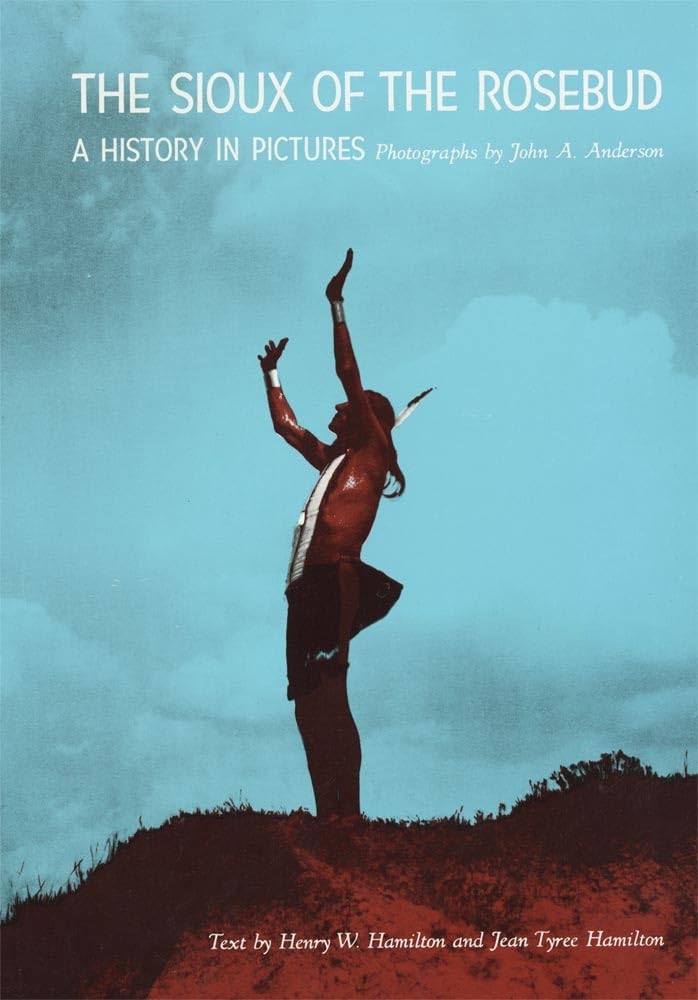
The Sioux of the Rosebud: A History in Pictures (Volume 111) (The Civilization of the American Indian Series),New
Sold by Ergodebooks, an authorized reseller.
Returns accepted within 30 days | support@ergodebooks.com
Shipping Information
- Free Standard Shipping — United States only
- Processing Time: 3–5 business days
- Estimated Delivery: 6–10 business days after dispatch
- Double-boxed, fully insured & discreetly packaged
- Tracking number sent via email once dispatched
Returns & Refund
Returns accepted within 30 days of delivery.
Damaged or Defective Item
Free return shipping + replacement or full refund
Wrong Item Received
Free return shipping + replacement or full refund
Change of Mind
Return shipping at customer's expense · 25% restocking fee applies
Payment Option

In the late 1880s, John A. Anderson, a young Swedishborn settler near Fort Niobrara, Nebraska, bought a camera with earnings from carpentry work. He soon became a fullfledged photographer, and in 1889 General George Crook asked him to serve as official photographer to the Crook Treaty Commission on its visit to the Brul Sioux Indians on the Rosebud Reservation in South Dakota. Anderson agreedand thereby moved into a poignant and oftentimes tragic era in the history of the Sioux. From 1891 until his death in 1948, Anderson lived on the Rosebud, recording the painful adjustment of the proud Bruls to life on the reservation.This was a particularly hard time for the Bruls. Nomadic warriors by nature, they had been subjugated following their greatest triumph at the Battle of the Little Big Horn in 1876 and were living like captives on what had once been their buffalo hunting grounds. The buffaloes were dead, and the Indians had been forced to accept white mens ways and white mens provender. To help feed themselves, they were compelled to farmto scratch the ground, as they scornfully expressed ita way of life they regarded as shameful.Anderson became a sincere friend of the Indian, who learned to trust him and allowed him to record their daily lives and their ceremonies. Anderson photographed Sioux camps, villages, and day schools; recorded councils between whites and Indians; and portrayed the Indians as they received their beef rations and annuity payments. When Buffalo Bill Cody and Charles P. Jordan organized their wildwest shows, he photographed the Sioux who joined the shows. Anderson was afforded the rare privilege of attending and photographing the White Buffalo, Sun dance, and Omaha Dance ceremonies. Anderson gave many of the photographs to his Sioux friends, who proudly displayed them in their cabins on the Rosebud.Over the years many other photographs found their way into museums and state historical societies. Henry W. Hamilton and his wife, Jean Tyree Hamilton, first became aware of Anderson and his work through the papers of Remington Schuyler, the wellknown artist and writer, who also lived on the Rosebud. The Hamiltons searched out prints and glassplate negatives and, with the help of Indian consultants on the reservation, painstakingly dated the photographs and identified the subjects.The wealth of photographs Anderson took is represented here by more than 200 reproductionsthe largest number ever published in a single collection. They are presented not as works of art (though many of them are indeed triumphs of the photographic art) but as important historical documents in the ongoing story of the American Indian.
⚠️ WARNING (California Proposition 65):
This product may contain chemicals known to the State of California to cause cancer, birth defects, or other reproductive harm.
For more information, please visit www.P65Warnings.ca.gov.
- Q: What is the subject of 'The Sioux of the Rosebud: A History in Pictures'? A: The book focuses on the history and daily lives of the Brulé Sioux Indians during a challenging era, illustrated through over 200 photographs taken by John A. Anderson.
- Q: Who is the author of this book? A: The author is Mr. Henry W. Hamilton, who compiled and curated the photographs taken by John A. Anderson.
- Q: What time period does the book cover? A: The book covers the late 19th century to the mid-20th century, specifically from 1891 until Anderson's death in 1948.
- Q: What type of book is it? A: This is a history book that combines photography with historical narratives to depict the Sioux Indians' experiences.
- Q: Is this book suitable for educational purposes? A: Yes, it serves as an important historical document and can be used for educational purposes regarding Native American history.
- Q: What is the condition of the book? A: The book is listed as a 'Used Book in Good Condition'.
- Q: How many pages does the book contain? A: The book contains 356 pages.
- Q: What is the binding type of this book? A: The book is available in paperback binding.
- Q: When was this book published? A: It was published on March 15, 1980.
- Q: Can I find photographs in this book? A: Yes, the book includes more than 200 reproductions of photographs taken by John A. Anderson, documenting the Sioux's way of life.