
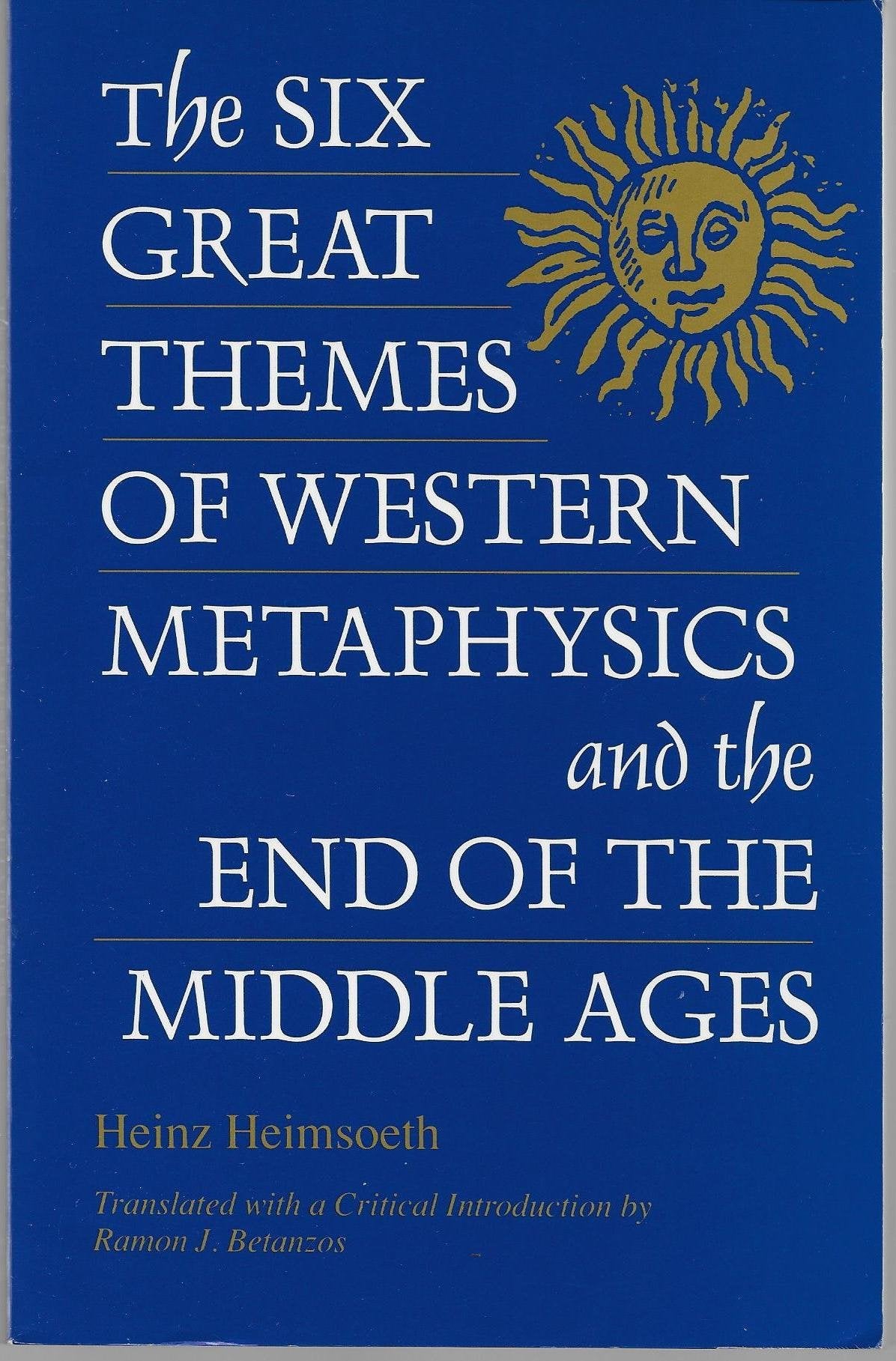
Title
The Six Great Themes of Western Metaphysics and the End of the Middle Ages,Used
Sold by Ergodebooks, an authorized reseller.
Returns accepted within 30 days | support@ergodebooks.com
Shipping Information
- Free Standard Shipping — United States only
- Processing Time: 3–5 business days
- Estimated Delivery: 6–10 business days after dispatch
- Double-boxed, fully insured & discreetly packaged
- Tracking number sent via email once dispatched
Returns & Refund
Returns accepted within 30 days of delivery.
Damaged or Defective Item
Free return shipping + replacement or full refund
Wrong Item Received
Free return shipping + replacement or full refund
Change of Mind
Return shipping at customer's expense · 25% restocking fee applies
Payment Option

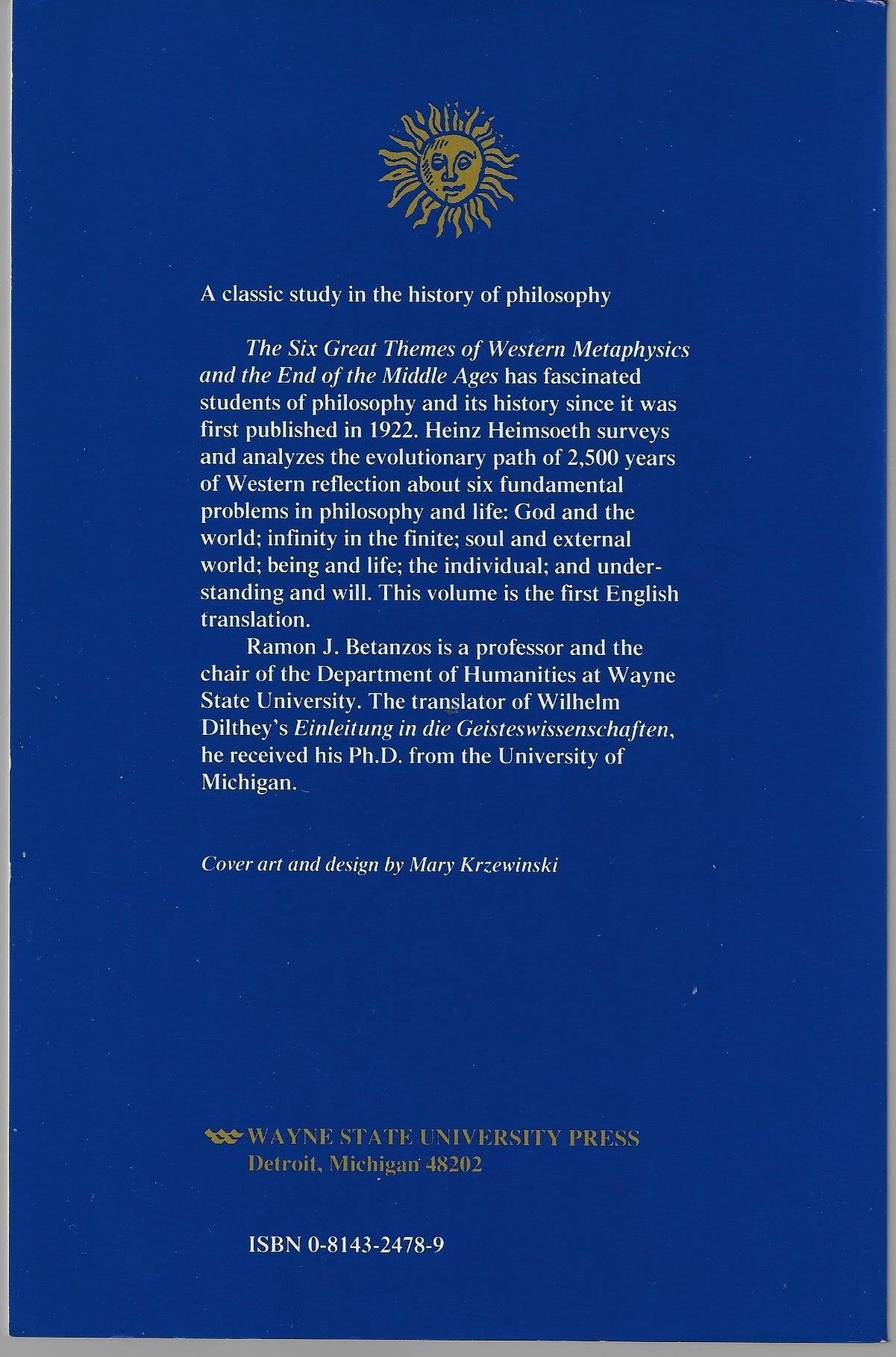
Heinz Heimsoeth (18861975) is one of the premier historians of philosophy of the twentieth century. Most of his eminent scholarly career focused on modern European philosophers; Immanuel Kant, in particular; and German Idealists, in general. He is perhaps best known for his wideranging work, The Six Great Themes of Western Metaphysics and the End of the Middle Ages, which has fascinated students of philosophy and its history since it was first published in 1922. This book is dramatically different from customary surveys of philosophers and systems of the past. Heimsoeth does not view the history of philosophy primarily as a collection of biographies, or systems, or ultimate solutions; rather he sees it mainly as a history of problems. In reading this book one genuinely encounters what is meant by Problemgeschichte, a longitudinal history of some of the most basic metaphysical issues in philosophy and life: God and the world, infinity in the finite, soul and external world, being and life, the individual, and understanding and will. In his introduction Heimsoeth advances a bold thesis about historical periodization, namely that the roots of modern philosophical thought lie not in the Renaissance, as was commonly believed, but rather in the period of late Scholasticism, commonly called the 'decline' of Scholasticism. Instead of adopting the usual tripartite schema of ancient, medieval, and modern philosophy, Heimsoeth adopted a twopart schema consisting of ancient and modern metaphysics: ancient metaphysics dominates philosophy right through the period of the High Middle Ages and Scholasticism. His main thesis is that the roots of modern thought lie specifically in Christianity, especially the nominalism and German mysticism of the late Middle Ages. The great key to Christian thought, as Heimsoeth sees it, lies in the discovery of the soul, of genuine inwardness and spirituality, which stood in dramatic contrast with the ancient concept of soul as simply a kin
⚠️ WARNING (California Proposition 65):
This product may contain chemicals known to the State of California to cause cancer, birth defects, or other reproductive harm.
For more information, please visit www.P65Warnings.ca.gov.