
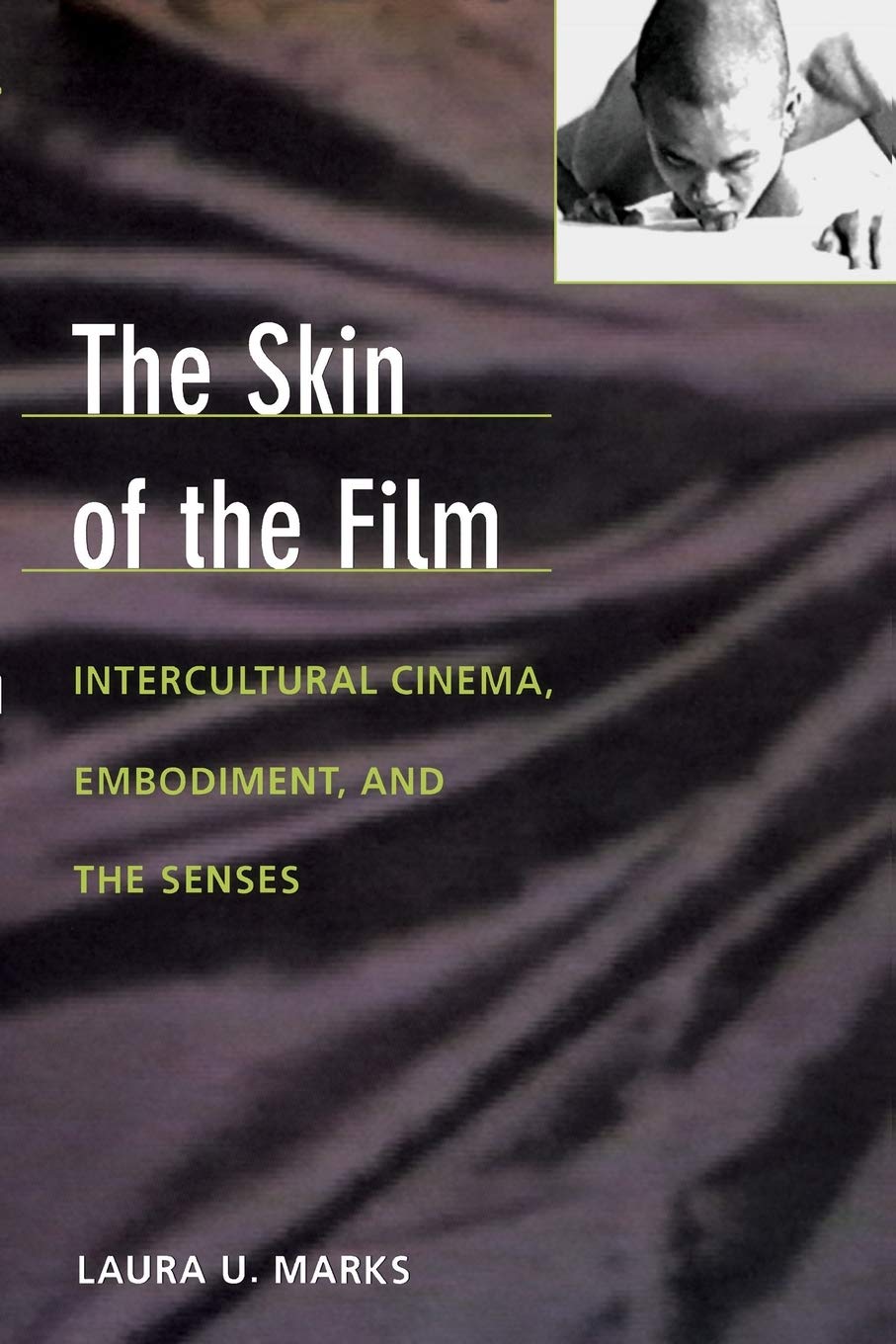
Title
The Skin Of The Film: Intercultural Cinema, Embodiment, And The Senses,New
Sold by Ergodebooks, an authorized reseller.
Returns accepted within 30 days | support@ergodebooks.com
Shipping Information
- Free Standard Shipping — United States only
- Processing Time: 3–5 business days
- Estimated Delivery: 6–10 business days after dispatch
- Double-boxed, fully insured & discreetly packaged
- Tracking number sent via email once dispatched
Returns & Refund
Returns accepted within 30 days of delivery.
Damaged or Defective Item
Free return shipping + replacement or full refund
Wrong Item Received
Free return shipping + replacement or full refund
Change of Mind
Return shipping at customer's expense · 25% restocking fee applies
Payment Option

Memories that evoke the physical awareness of touch, smell, and bodily presence can be vital links to home for people living in diaspora from their culture of origin. How can filmmakers working between cultures use cinema, a visual medium, to transmit that physical sense of place and culture? In The Skin of the Film Laura U. Marks offers an answer, building on the theories of Gilles Deleuze and others to explain how and why intercultural cinema represents embodied experience in a postcolonial, transnational world.Much of intercultural cinema, Marks argues, has its origin in silence, in the gaps left by recorded history. Filmmakers seeking to represent their native cultures have had to develop new forms of cinematic expression. Marks offers a theory of haptic visualitya visuality that functions like the sense of touch by triggering physical memories of smell, touch, and tasteto explain the newfound ways in which intercultural cinema engages the viewer bodily to convey cultural experience and memory. Using close to two hundred examples of intercultural film and video, she shows how the image allows viewers to experience cinema as a physical and multisensory embodiment of culture, not just as a visual representation of experience. Finally, this book offers a guide to many hardtofind works of independent film and video made by Third World diasporic filmmakers now living in the United States, Great Britain, and Canada.The Skin of the Film draws on phenomenology, postcolonial and feminist theory, anthropology, and cognitive science. It will be essential reading for those interested in film theory, experimental cinema, the experience of diaspora, and the role of the sensuous in culture.
⚠️ WARNING (California Proposition 65):
This product may contain chemicals known to the State of California to cause cancer, birth defects, or other reproductive harm.
For more information, please visit www.P65Warnings.ca.gov.