
Title
The Smart Neanderthal: Cave Art, Bird Catching, And The Cognitive Revolution,Used
Sold by Ergodebooks, an authorized reseller.
Returns accepted within 30 days | support@ergodebooks.com
Shipping Information
- Free Standard Shipping — United States only
- Processing Time: 3–5 business days
- Estimated Delivery: 6–10 business days after dispatch
- Double-boxed, fully insured & discreetly packaged
- Tracking number sent via email once dispatched
Returns & Refund
Returns accepted within 30 days of delivery.
Damaged or Defective Item
Free return shipping + replacement or full refund
Wrong Item Received
Free return shipping + replacement or full refund
Change of Mind
Return shipping at customer's expense · 25% restocking fee applies
Payment Option

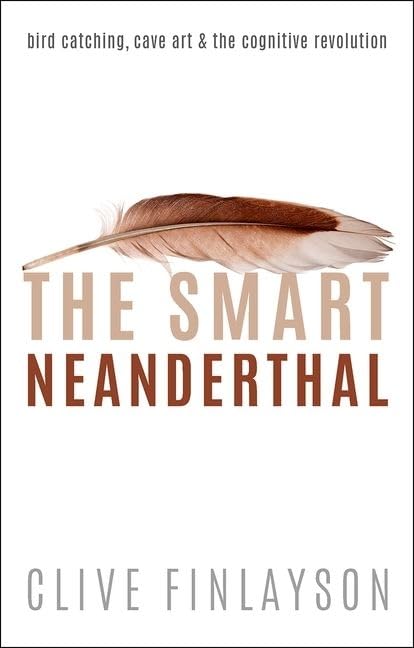
Since The Late 1980S The Dominant Theory Of Human Origins Has Been That A 'Cognitive Revolution' (C.50,000 Years Ago) Led To The Advent Of Our Species, Homo Sapiens. As A Result Of This Revolution Our Species Spread And Eventually Replaced All Existing Archaic Homo Species, Ultimately Leading To The Superiority Of Modern Humans.Or So We Thought.As Clive Finlayson Explains, The Latest Advances In Genetics Prove That There Was Significant Interbreeding Between Modern Humans And The Neanderthals. All Nonafricans Today Carry Some Neanderthal Genes. We Have Also Discovered Aspects Of Neanderthal Behaviour That Indicate That They Were Not Cognitively Inferior To Modern Humans, As We Once Thought, And In Fact Had Their Own Rituals And Art. Finlayson, Who Is At The Forefront Of This Research, Recounts The Discoveries Of His Team, Providing Evidence That Neanderthals Caught Birds Of Prey, And Used Their Feathers For Symbolic Purposes. There Is Also Evidence That Neanderthals Practised Other Forms Of Art, As The Recently Discovered Engravings In Gorham'S Cave Gibraltar Indicate.Linking All The Recent Evidence, The Smart Neanderthal Casts A New Light On The Neanderthals And The 'Cognitive Revolution'. Finlayson Argues That There Was No Revolution And, Instead, Modern Behaviour Arose Gradually And Independently Among Different Populations Of Modern Humans And Neanderthals. Some Practices Were Even Adopted By Modern Humans From The Neanderthals. Finlayson Overturns Classic Narratives Of Human Origins, And Raises Important Questions About Who We Really Are.
⚠️ WARNING (California Proposition 65):
This product may contain chemicals known to the State of California to cause cancer, birth defects, or other reproductive harm.
For more information, please visit www.P65Warnings.ca.gov.
- Q: What is the binding type of this book? A: This book is a hardcover edition. Hardcover bindings are durable and provide a sturdy structure for long-term use.
- Q: How many pages does this book have? A: This book has two hundred forty pages. This length offers a comprehensive exploration of the subject matter.
- Q: What are the dimensions of this book? A: The dimensions of this book are eight point six two inches in length, zero point nine six inches in width, and five point six eight inches in height. These dimensions make it portable and easy to handle.
- Q: Who is the author of this book? A: The author of this book is Clive Finlayson. He is a renowned researcher in the field of human origins and Neanderthal studies.
- Q: What is the main topic covered in this book? A: The main topic of this book is the cognitive abilities of Neanderthals and their interactions with early modern humans. It challenges traditional narratives about human evolution.
- Q: Is this book suitable for academic use? A: Yes, this book is suitable for academic use. It presents research findings and theories relevant to anthropology and human evolution.
- Q: Is this book appropriate for children? A: This book is not specifically designed for children. It contains complex themes about human evolution that may be better suited for older readers.
- Q: What kind of research does this book include? A: This book includes recent genetic research and archaeological findings about Neanderthals. It discusses interbreeding and cultural behaviors of Neanderthals.
- Q: Does this book contain illustrations or images? A: No, this book does not specifically mention illustrations or images. It focuses more on textual information and research findings.
- Q: How does this book differ from other books on human evolution? A: This book differs by offering a new perspective on the cognitive abilities of Neanderthals. It emphasizes gradual behavioral developments rather than a sudden revolution.
- Q: What questions does the author raise about human identity? A: The author raises important questions about the nature of modern humans and their relationship with Neanderthals. He challenges the notion of a singular evolutionary path.
- Q: What key concepts does the author discuss? A: The author discusses concepts such as cognitive capabilities, cultural practices, and interbreeding between Neanderthals and modern humans. These concepts provide insight into human evolution.
- Q: Is there a bibliography or references in this book? A: Yes, this book includes references to support its claims. The bibliography provides sources for further reading and research.
- Q: What is the publishing company behind this book? A: The publishing company is Oxford University Press, USA. They are known for their academic and educational publications.
- Q: Can this book serve as a general introduction to human evolution? A: Yes, this book can serve as a general introduction. It presents accessible discussions on complex topics in human evolution.