
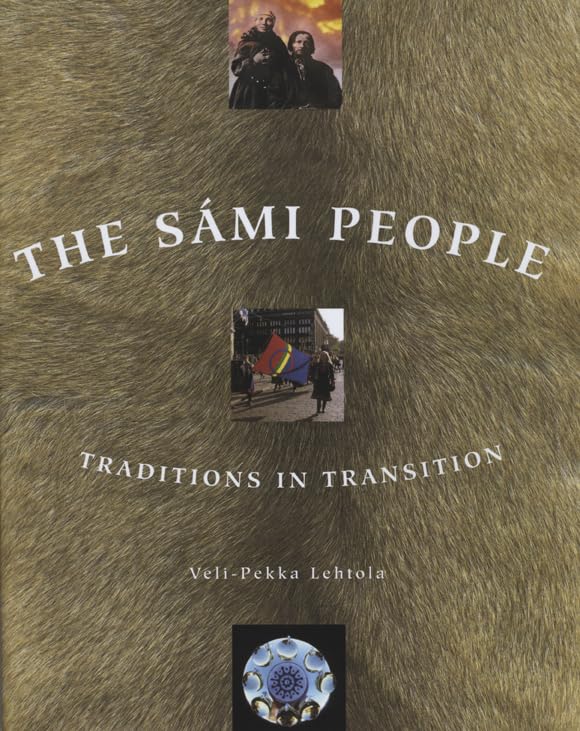
Title
The Smi People: Traditions In Transitions
Sold by Ergodebooks, an authorized reseller.
Returns accepted within 30 days | support@ergodebooks.com
Shipping Information
- Free Standard Shipping — United States only
- Processing Time: 3–5 business days
- Estimated Delivery: 6–10 business days after dispatch
- Double-boxed, fully insured & discreetly packaged
- Tracking number sent via email once dispatched
Returns & Refund
Returns accepted within 30 days of delivery.
Damaged or Defective Item
Free return shipping + replacement or full refund
Wrong Item Received
Free return shipping + replacement or full refund
Change of Mind
Return shipping at customer's expense · 25% restocking fee applies
Payment Option

Smi Culture Has Undergone Powerful Changes Recently. Traditions Have Been Integrated With Contemporary Influences And Perspectives. New Kinds Of Smi Participation And Activism Have Evolved Including Innovative Politics, Informative Media, Expressive Art And Literature.Accommodating Internal And External Changes Is Nothing Novel To The Smi. The Dialogue Between What Is Traditional And What Is Modern Is A Natural Part Of Their Development Towards The Maintenance Of Smi Cultural Distinctness.
⚠️ WARNING (California Proposition 65):
This product may contain chemicals known to the State of California to cause cancer, birth defects, or other reproductive harm.
For more information, please visit www.P65Warnings.ca.gov.
- Q: What is the page count of 'The Sámi People: Traditions in Transitions'? A: The book contains one hundred forty-four pages. It provides a comprehensive overview of Sámi culture and traditions.
- Q: What are the dimensions of this book? A: The dimensions are eight inches in length, ten inches in height, and two-tenths of an inch in width. This size makes it easy to handle and read.
- Q: What type of binding does this book have? A: This book is paperback bound. Paperback bindings are lightweight and flexible, making them convenient for travel.
- Q: Who is the author of this book? A: The author is Veli-Pekka Lehtola. He is known for his work on Sámi culture and traditions.
- Q: What is the genre of 'The Sámi People: Traditions in Transitions'? A: The genre is Customs and Traditions. It explores the evolution of Sámi culture and the impact of modern influences.
- Q: How can I use this book for educational purposes? A: You can use this book as a resource for studying Sámi culture and its historical context. It's suitable for academic settings and personal exploration.
- Q: Is this book suitable for children? A: Yes, this book is appropriate for older children and young adults. It contains educational content about cultural traditions.
- Q: How do I incorporate this book into a lesson plan? A: You can use this book to discuss cultural diversity and activism in classrooms. It offers a modern perspective on traditional practices.
- Q: Can this book be used for research projects? A: Yes, it is an excellent source for research on Sámi culture. Its insights into contemporary activism provide valuable context.
- Q: What is the best way to store this book? A: Store this book in a cool, dry place away from direct sunlight. Proper storage will help maintain its condition over time.
- Q: How should I clean the pages of this book? A: To clean the pages, gently wipe them with a soft, dry cloth. Avoid using water or cleaning solutions to prevent damage.
- Q: What are the safety considerations for handling this book? A: There are no specific safety concerns for handling this book. It is a standard paperback and safe for general use.
- Q: Can I return this book if I am not satisfied? A: Yes, you can return the book if it is in good condition. Check the retailer's return policy for specific instructions.
- Q: What if the book arrives damaged? A: If the book arrives damaged, contact the seller immediately for a replacement or refund. Most retailers have policies for such issues.
- Q: How does this book compare to others on Sámi culture? A: This book offers a unique perspective by focusing on contemporary changes in Sámi traditions. It stands out from more historical texts.
- Q: Is there a glossary or index in this book? A: No, this book does not include a glossary or index. However, the content is organized thematically for easier navigation.