
Title
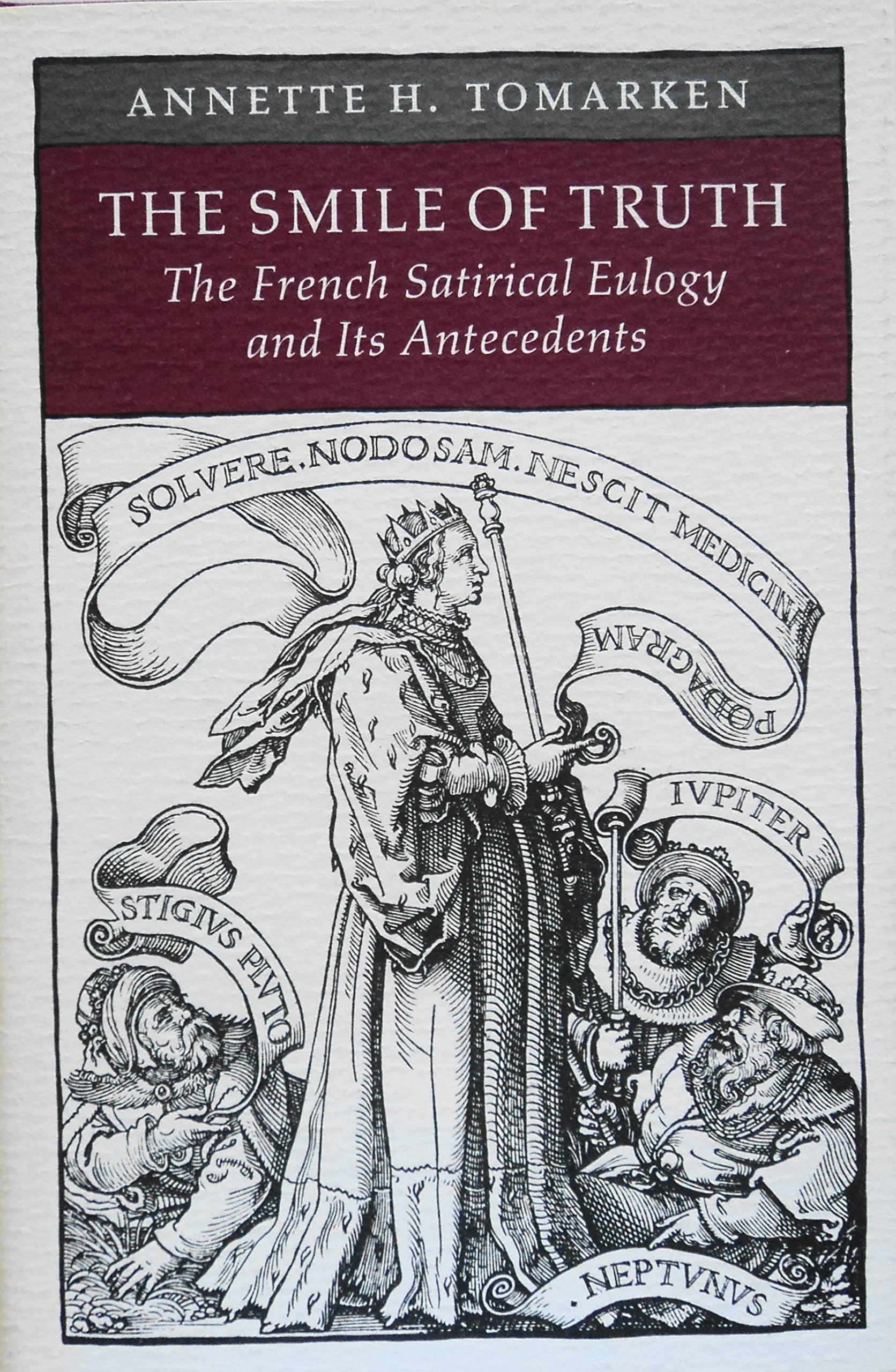
The Smile of Truth: The French Satirical Eulogy and Its Antecedents (Princeton Legacy Library, 1074),Used
Sold by Ergodebooks, an authorized reseller.
Returns accepted within 30 days | support@ergodebooks.com
Shipping Information
- Free Standard Shipping — United States only
- Processing Time: 3–5 business days
- Estimated Delivery: 6–10 business days after dispatch
- Double-boxed, fully insured & discreetly packaged
- Tracking number sent via email once dispatched
Returns & Refund
Returns accepted within 30 days of delivery.
Damaged or Defective Item
Free return shipping + replacement or full refund
Wrong Item Received
Free return shipping + replacement or full refund
Change of Mind
Return shipping at customer's expense · 25% restocking fee applies
Payment Option

To teach the truth smilingly was, during the Renaissance, a frequently expressed goal among prose writers and poets such as Erasmus, Berni, Ronsard, Rabelais, and du Bellay, who adopted an ironic posture within their mock encomia in order to refer the reader beyond the realm of the literary structure. In this book Annette Tomarken reconstructs the history of the classical satirical eulogy as it was revived, expanded, and finally adapted to new purposes in Renaissance literature. Tracing the development of this type of paradox from its classic roots through the NeoLatin, Italian, and French mock encomia, Tomarken examines its various forms in the Renaissance, including the Pliade 'hymneblason,' the mock epitaph, and the stage 'harangue.' Her book provides a new context for such works as In Praise of Folly and for such literary passages as Rabelais's praise of debts and Falstaff's denunciation of honor. Dividing the eulogies into three groupspraises of vices, disease, and animals and insectsTomarken brings humor as well as close textual analysis to her study. She finds that the practitioners of the form were aware of its history and that such selfawareness became an integral part of the works themselves. An increased sensitivity to the literary structure and history of the paradoxical encomium, Tomarken stresses, first requires and then enriches our understanding of the genre's relationship to the extraliterary domain.Originally published in 1990.The Princeton Legacy Library uses the latest printondemand technology to again make available previously outofprint books from the distinguished backlist of Princeton University Press. These editions preserve the original texts of these important books while presenting them in durable paperback and hardcover editions. The goal of the Princeton Legacy Library is to vastly increase access to the rich scholarly heritage found in the thousands of books published by Princeton University Press since its founding in 1905.
⚠️ WARNING (California Proposition 65):
This product may contain chemicals known to the State of California to cause cancer, birth defects, or other reproductive harm.
For more information, please visit www.P65Warnings.ca.gov.