
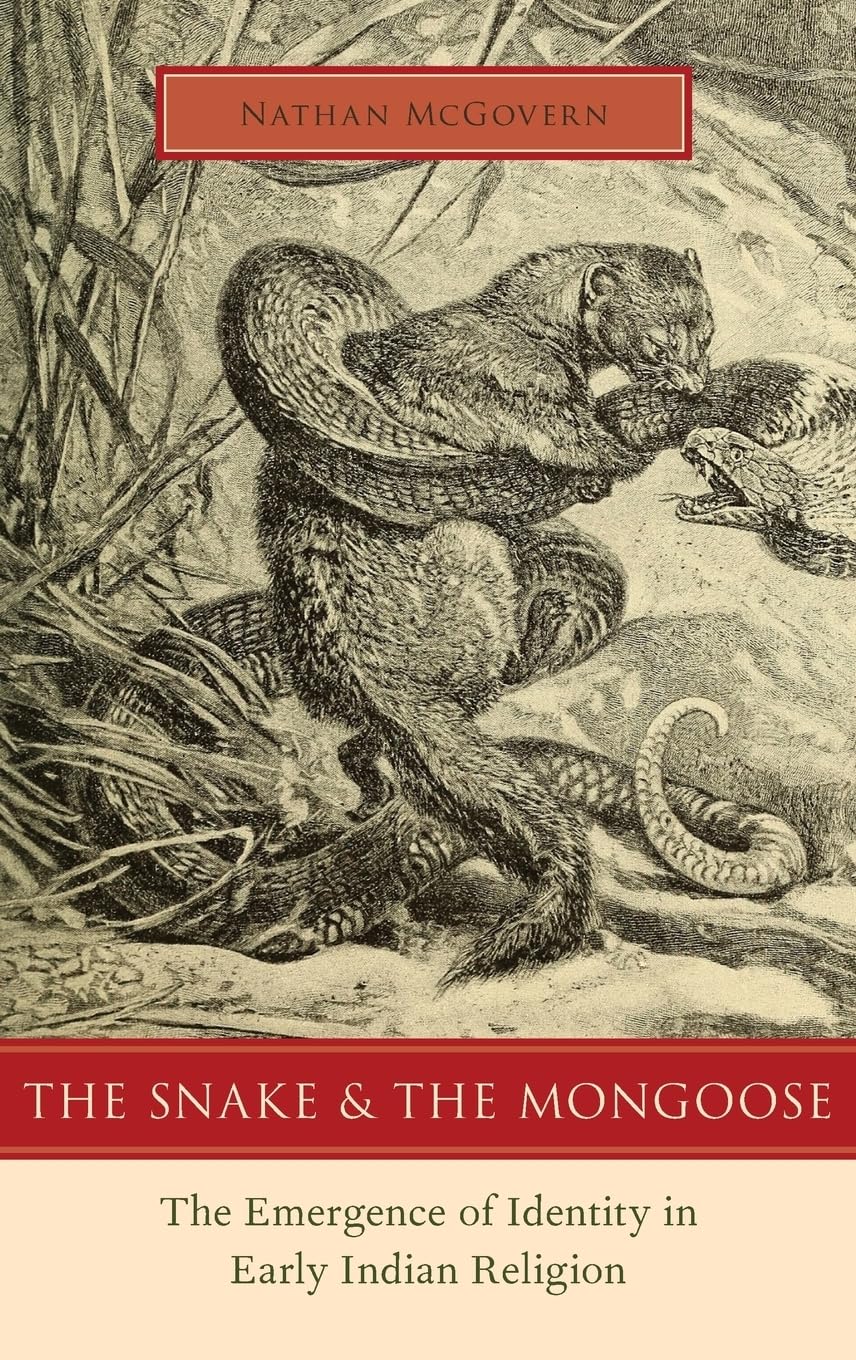
Title
The Snake and the Mongoose: The Emergence of Identity in Early Indian Religion,Used
Sold by Ergodebooks, an authorized reseller.
Returns accepted within 30 days | support@ergodebooks.com
Shipping Information
- Free Standard Shipping — United States only
- Processing Time: 3–5 business days
- Estimated Delivery: 6–10 business days after dispatch
- Double-boxed, fully insured & discreetly packaged
- Tracking number sent via email once dispatched
Returns & Refund
Returns accepted within 30 days of delivery.
Damaged or Defective Item
Free return shipping + replacement or full refund
Wrong Item Received
Free return shipping + replacement or full refund
Change of Mind
Return shipping at customer's expense · 25% restocking fee applies
Payment Option

Since the beginning of modern Indology in the 19th century, the relationship between the early Indian religions of Buddhism, Jainism, and Hinduism has been predicated on a perceived dichotomy between two metahistorical identities: "the Brahmans" (purveyors of the ancient Vedic texts and associated ritual system) and the newer "nonBrahmanical" sramana movements from which the Buddhists and Jains emerged. Textbook and scholarly accounts postulate an opposition between these two groups, citing the 2ndcentury BCE Sanskrit grammarian Patajali, who is often quoted erroneously as likening them to the proverbial enemies snake and mongoose. Scholars continue to privilege Brahmanical Hindu accounts of early Indian history, and further portray Buddhist and Jain deviations from those accounts as evidence of their opposition to a preexisting Brahmanism.In The Snake and The Mongoose, Nathan McGovern turns this commonlyaccepted model of the origins of the early Indian religions on its head. His book seeks to decenter the Hindu Brahman from our understanding of Indian religion by "taming the snake and the mongoose"that is, by abandoning the anachronistic distinction between "Brahmanical" and "nonBrahmanical." Instead, McGovern allows the earliest articulations of identity in Indian religion to speak for themselves through a comparative reading of texts preserved by the three major groups that emerged from the social, political, cultural, and religious foment of the late first millennium BCE: the Buddhists and Jains as they represented themselves in their earliest sutras, and the Vedic Brahmans as they represented themselves in their Dharma Sutras. The picture that emerges is not of a fundamental dichotomy between Brahmanical and nonBrahmanical, but rather of many different groups who all saw themselves as Brahmanical. Thus, McGovern argues, it was through the contestation between these groups that the distinction between Brahmanical and nonBrahmanicalthe snake and the mongooseemerged.
⚠️ WARNING (California Proposition 65):
This product may contain chemicals known to the State of California to cause cancer, birth defects, or other reproductive harm.
For more information, please visit www.P65Warnings.ca.gov.