If you have any questions, you are always welcome to contact us. We'll get back to you as soon as possible, withing 24 hours on weekdays.
Customer service
All questions about your order, return and delivery must be sent to our customer service team by e-mail at yourstore@yourdomain.com
Sale & Press
If you are interested in selling our products, need more information about our brand or wish to make a collaboration, please contact us at press@yourdomain.com
Help
If you have any questions, you are always welcome to contact us. We'll get back to you as soon as possible, withing 24 hours on weekdays.
Customer service
All questions about your order, return and delivery must be sent to our customer service team by e-mail at yourstore@yourdomain.com
Sale & Press
If you are interested in selling our products, need more information about our brand or wish to make a collaboration, please contact us at press@yourdomain.com
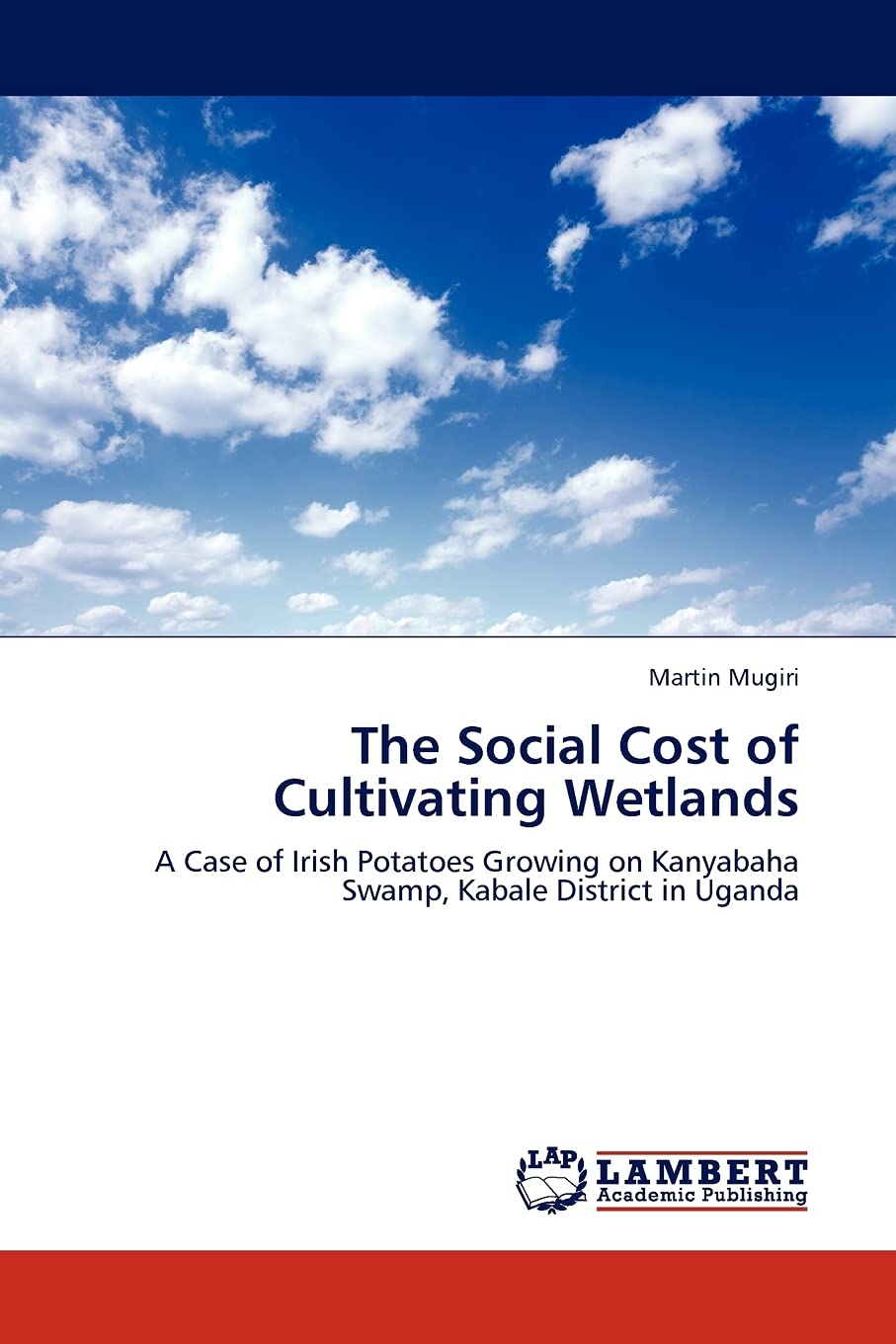
Wetlands in some communities are regarded as 'wastelands' due to little value placed on the intrinsic and nonmonetary functions of wetlands. This thinking has been exacerbated by the spiraling population growth that has seen human developments on the 'wasted' wetlands increase. The incentive to establish human activities especially farming and construction on wetlands has been due to the high profits accruing from such activities, usually to private individuals with little regard to, and understanding about the potential permanent loss of wetland value and community welfare. As an economist who has studied Natural Resource and Environmental Economics, in this study I bring out the fact that profitable developments on wetlands do not reflect actual costs since wetland resources are usually available to private individuals at no cost. I also argue that based on the precautionary principle of sustainable development, the fact that the opportunity cost of utilizing wetlands (the loss to society) is not computed and monetized should not give ground for wetland degradation.
⚠️ WARNING (California Proposition 65):
This product may contain chemicals known to the State of California to cause cancer,
birth defects, or other reproductive harm.
For MAP (Minimum Advertised Price) violations and Intellectual Property (IP) or Trademark concerns, please contact:
support@ergodebooks.com
⚠️ California Proposition 65 Warning: Some products sold on this website may expose you to chemicals known to the State of California to cause cancer, birth defects, or other reproductive harm. For more information, visit www.P65Warnings.ca.gov.