
Title
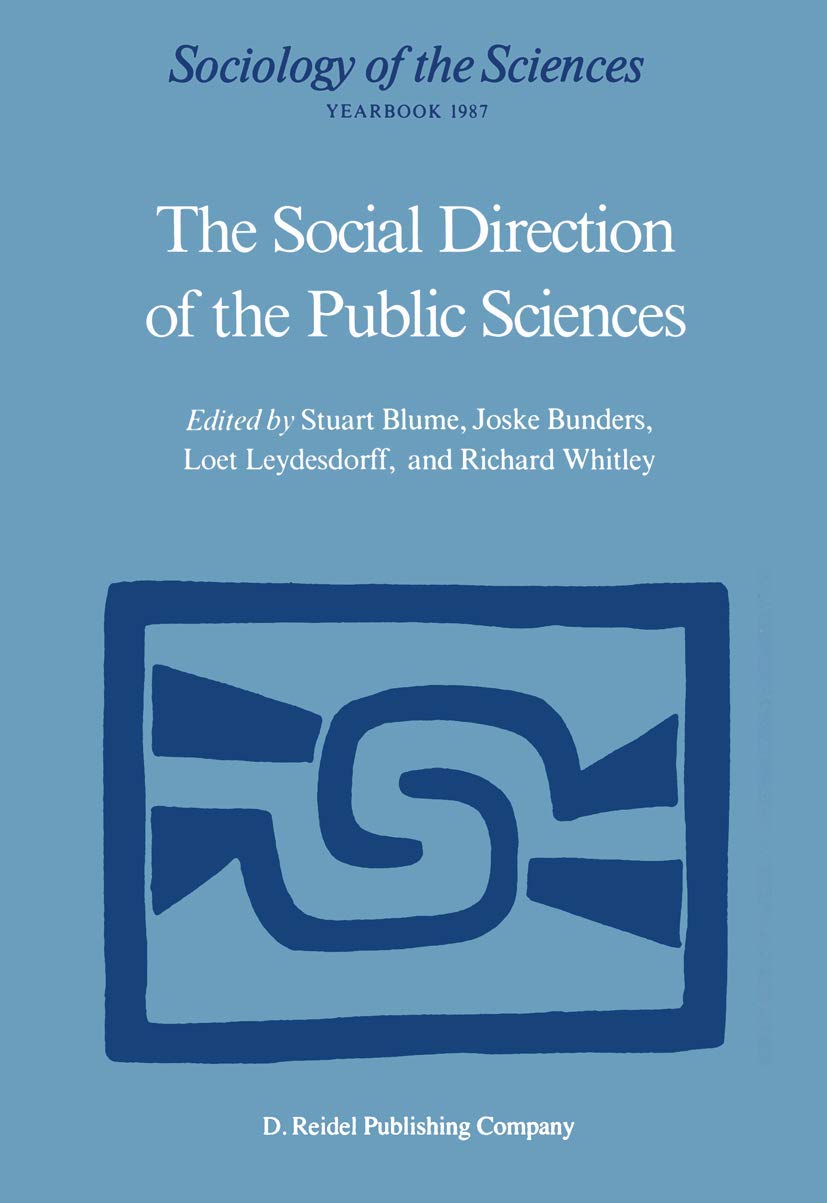
The Social Direction of the Public Sciences: Causes and Consequences of Cooperation between Scientists and Nonscientific Group,Used
Sold by Ergodebooks, an authorized reseller.
Returns accepted within 30 days | support@ergodebooks.com
Shipping Information
- Free Standard Shipping — United States only
- Processing Time: 3–5 business days
- Estimated Delivery: 6–10 business days after dispatch
- Double-boxed, fully insured & discreetly packaged
- Tracking number sent via email once dispatched
Returns & Refund
Returns accepted within 30 days of delivery.
Damaged or Defective Item
Free return shipping + replacement or full refund
Wrong Item Received
Free return shipping + replacement or full refund
Change of Mind
Return shipping at customer's expense · 25% restocking fee applies
Payment Option

This volume of the Sociology of the Sciences Yearbooks stems from our experience that collaborations between nonscientists and scientists, often initiated by scientists seeking greater social relevance for science, can be of major importance for cognitive development. It seemed to us that it would be useful to explore the conditions under which such collaborations affect scientific change and the nature of the processes involved. This book therefore focuses on a number of instances in which scientists and nonscientists were jointly involved in the genera tion of scientific results at the "interface" of science and society. Despite the considerable variety of cases reported here, a number of questions are central. Under what conditions do such cooperative processes occur? What perceptions of social relevance and what sorts of col laborations with nonscientific groups are involved? How is this collaboration achieved, and through what forums? How can insights into its conditions and mechanisms stabilize such cooperations over a longer period of time? If they are stabilized, do they really affect science, or do they mainly function to shield the rest of the science system against external influences? These questions are pertinent both to intellectual problems in the sociology of science and to the practical concerns of modern science policies. The significance of relations between knowledge producers and knowledge consumers and interest in how these relations affect science and society have changed considerably in recent decades.
⚠️ WARNING (California Proposition 65):
This product may contain chemicals known to the State of California to cause cancer, birth defects, or other reproductive harm.
For more information, please visit www.P65Warnings.ca.gov.