If you have any questions, you are always welcome to contact us. We'll get back to you as soon as possible, withing 24 hours on weekdays.
Customer service
All questions about your order, return and delivery must be sent to our customer service team by e-mail at yourstore@yourdomain.com
Sale & Press
If you are interested in selling our products, need more information about our brand or wish to make a collaboration, please contact us at press@yourdomain.com
Help
If you have any questions, you are always welcome to contact us. We'll get back to you as soon as possible, withing 24 hours on weekdays.
Customer service
All questions about your order, return and delivery must be sent to our customer service team by e-mail at yourstore@yourdomain.com
Sale & Press
If you are interested in selling our products, need more information about our brand or wish to make a collaboration, please contact us at press@yourdomain.com
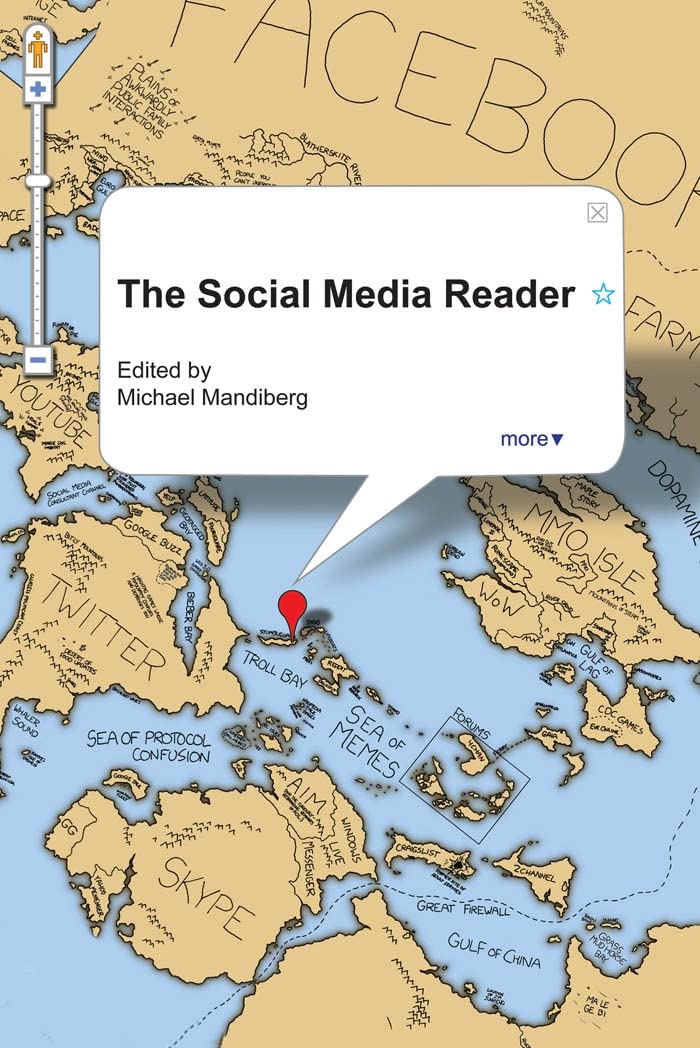
The first collection to address the collective transformation happening in response to the rise of social mediaWith the rise of web 2.0 and social media platforms taking over vast tracts of territory on the internet, the media landscape has shifted drastically in the past 20 years, transforming previously stable relationships between media creators and consumers. The Social Media Reader is the first collection to address the collective transformation with pieces on social media, peer production, copyright politics, and other aspects of contemporary internet culture from all the major thinkers in the field.Culling a broad range and incorporating different styles of scholarship from foundational pieces and published articles to unpublished pieces, journalistic accounts, personal narratives from blogs, and whitepapers, The Social Media Reader promises to be an essential text, with contributions from Lawrence Lessig, Henry Jenkins, Clay Shirky, Tim O'Reilly, Chris Anderson, Yochai Benkler, danah boyd, and Fred von Loehmann, to name a few. It covers a wideranging topical terrain, much like the internet itself, with particular emphasis on collaboration and sharing, the politics of social media and social networking, Free Culture and copyright politics, and labor and ownership. Theorizing new models of collaboration, identity, commerce, copyright, ownership, and labor, these essays outline possibilities for cultural democracy that arise when the formerly passive audience becomes active cultural creators, while warning of the dystopian potential of new forms of surveillance and control.
⚠️ WARNING (California Proposition 65):
This product may contain chemicals known to the State of California to cause cancer,
birth defects, or other reproductive harm.
For MAP (Minimum Advertised Price) violations and Intellectual Property (IP) or Trademark concerns, please contact:
support@ergodebooks.com
⚠️ California Proposition 65 Warning: Some products sold on this website may expose you to chemicals known to the State of California to cause cancer, birth defects, or other reproductive harm. For more information, visit www.P65Warnings.ca.gov.