If you have any questions, you are always welcome to contact us. We'll get back to you as soon as possible, withing 24 hours on weekdays.
Customer service
All questions about your order, return and delivery must be sent to our customer service team by e-mail at yourstore@yourdomain.com
Sale & Press
If you are interested in selling our products, need more information about our brand or wish to make a collaboration, please contact us at press@yourdomain.com
Help
If you have any questions, you are always welcome to contact us. We'll get back to you as soon as possible, withing 24 hours on weekdays.
Customer service
All questions about your order, return and delivery must be sent to our customer service team by e-mail at yourstore@yourdomain.com
Sale & Press
If you are interested in selling our products, need more information about our brand or wish to make a collaboration, please contact us at press@yourdomain.com
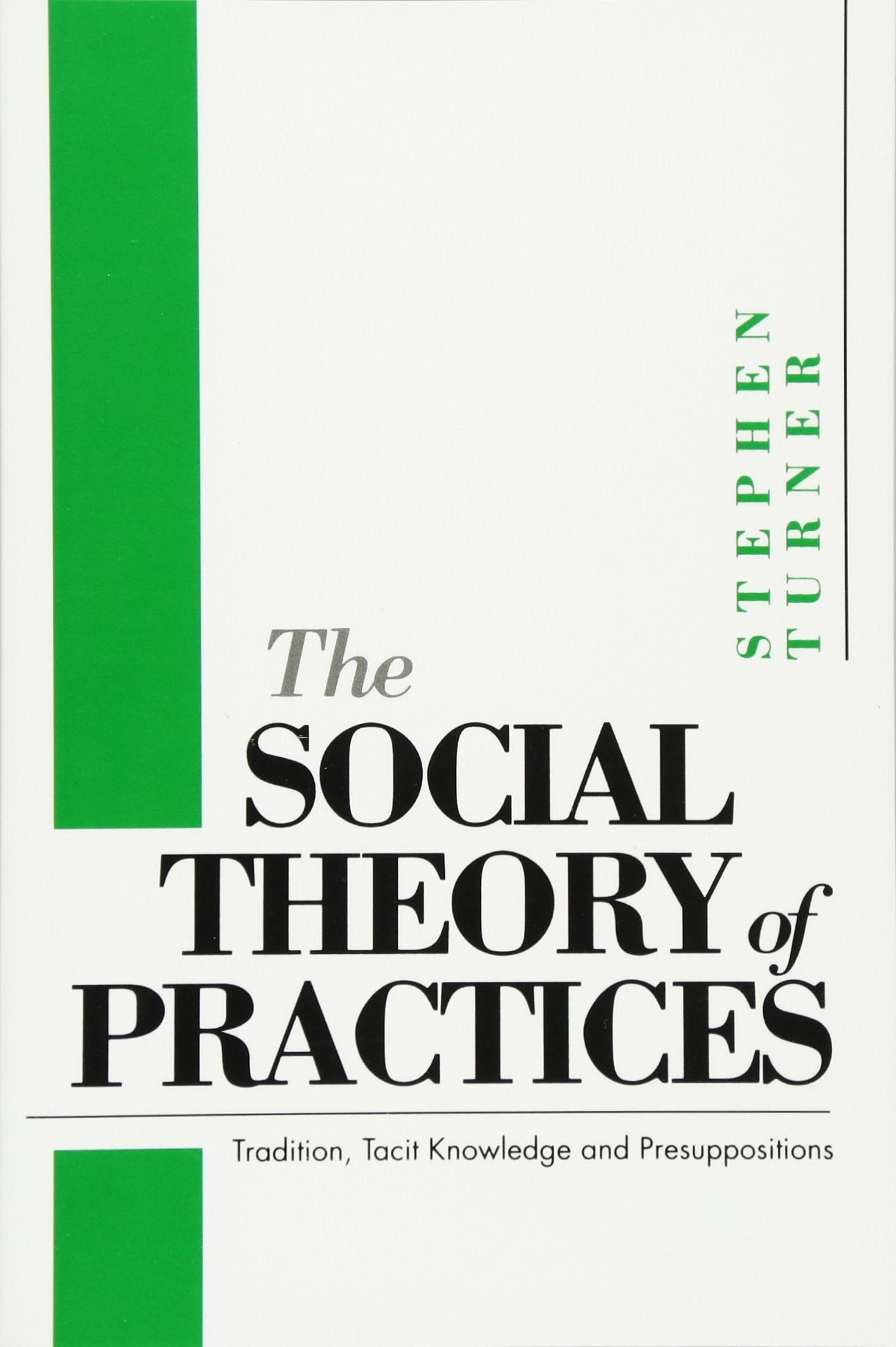
This book presents the first analysis and critique of the idea of practice as it has developed in the various theoretical traditions of the social sciences and the humanities. The concept of a practice, understood broadly as a tacit possession that is 'shared' by and the same for different people, has a fatal difficulty, the author argues. This object must in some way be transmitted, 'reproduced', in Bourdieu's famous phrase, in different persons. But there is no plausible mechanism by which such a process occurs. The historical uses of the concept, from Durkheim to Kripke's version of Wittgenstein, provide examples of the contortions that thinkers have been forced into by this problem, and show the ultimate implausibility of the idea of the interpersonal transmission of these supposed objects. Without the notion of 'sameness' the concept of practice collapses into the concept of habit.The conclusion sketches a picture of what happens when we do without the notion of a shared practice, and how this bears on social theory and philosophy. It explains why social theory cannot get beyond the stage of constructing fuzzy analogies, and why the standard constructions of the contemporary philosophical problem of relativism depend upon this defective notion.
⚠️ WARNING (California Proposition 65):
This product may contain chemicals known to the State of California to cause cancer,
birth defects, or other reproductive harm.
For MAP (Minimum Advertised Price) violations and Intellectual Property (IP) or Trademark concerns, please contact:
support@ergodebooks.com
⚠️ California Proposition 65 Warning: Some products sold on this website may expose you to chemicals known to the State of California to cause cancer, birth defects, or other reproductive harm. For more information, visit www.P65Warnings.ca.gov.