
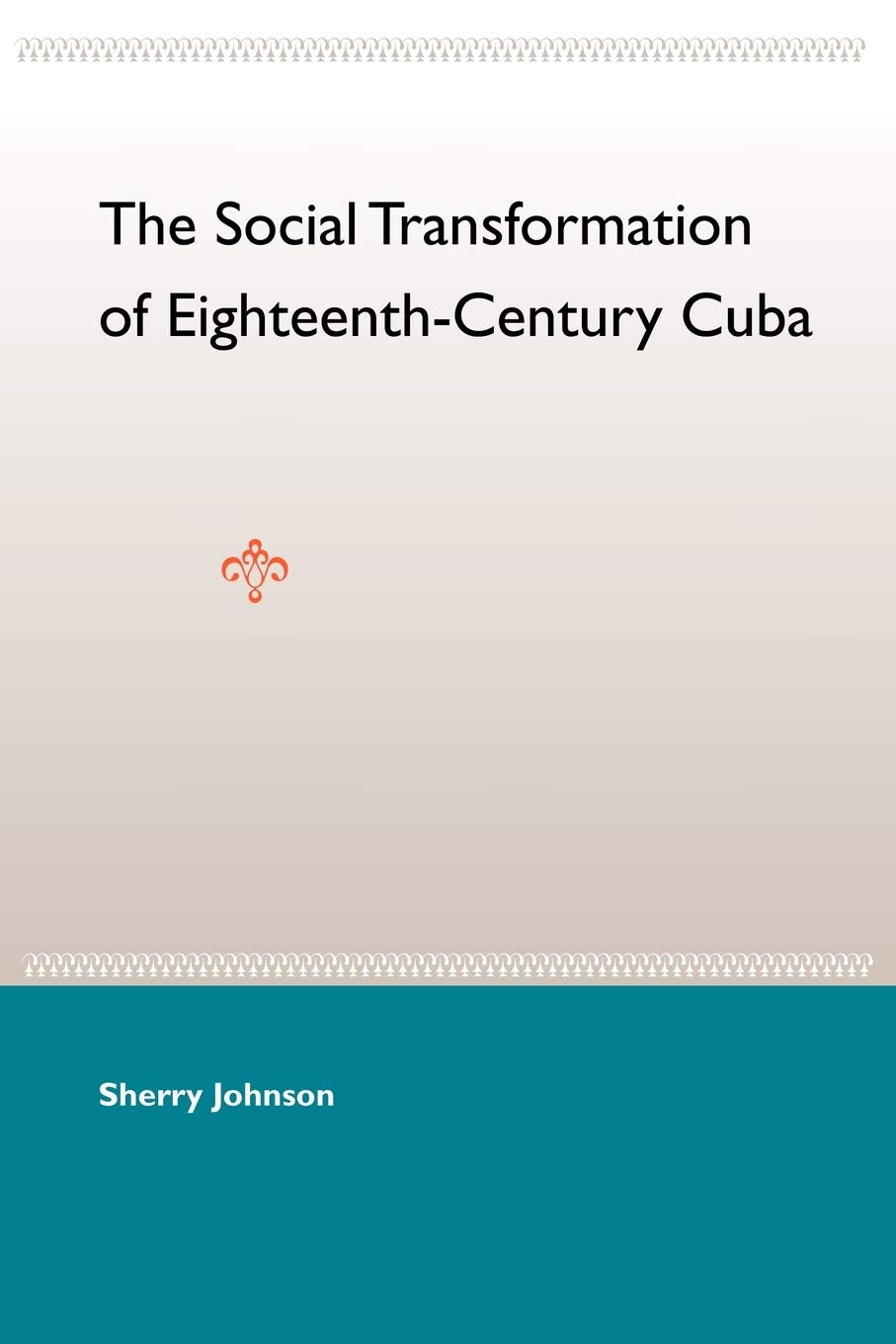
Title
The Social Transformation Of Eighteenthcentury Cuba,Used
Sold by Ergodebooks, an authorized reseller.
Returns accepted within 30 days | support@ergodebooks.com
Shipping Information
- Free Standard Shipping — United States only
- Processing Time: 3–5 business days
- Estimated Delivery: 6–10 business days after dispatch
- Double-boxed, fully insured & discreetly packaged
- Tracking number sent via email once dispatched
Returns & Refund
Returns accepted within 30 days of delivery.
Damaged or Defective Item
Free return shipping + replacement or full refund
Wrong Item Received
Free return shipping + replacement or full refund
Change of Mind
Return shipping at customer's expense · 25% restocking fee applies
Payment Option

No previous work so clearly and coherently examines the uniqueness of Cuba within the Caribbean and Hispanic American context. It is indispensable for understanding the development of society and economy in Cuba after 1762.'Franklin W. Knight, Leonard and Helen R. Stulman Professor of History, Johns Hopkins UniversitySherry Johnsons revisionist study contributes to a new understanding of colonial Cuban history in several ways. Most important, it challenges existing interpretations of Cuban history by advancing an alternative to the 'sugar is forever thesis. In doing so, Johnson provides answers to fundamental questions regarding Cuban identity in the 19th century.Johnson advances a wealth of demographic data to document the contribution of the military, particularly military spending, to social, spatial, and economic change on the island long before sugar became the principal engine of its economy. She also shows how immigration had an impact on the elite and middling ranks, analyzes family life in the city, and explains how the consequences of reform resonated to the lowest ranks of Cuban society.In addition, she establishes how the death of the Spanish monarch Charles III in 1788 brought a brutal purge of Cuban society and a new, detested captaingeneral to power in 1790. The political repercussions of this hated regime were felt well into the 19th century, she argues, in the genesis of a popular discourse against Spanish colonialism, sugar, and slavery.Sherry Johnson is assistant professor of history and Cuban studies at Florida International University. She is the author of articles on Cuban and Florida history in such journals as Florida Historical Quarterly, Hispanic American Historical Review, Cuban Studies, and Colonial Latin American Historical Review.
⚠️ WARNING (California Proposition 65):
This product may contain chemicals known to the State of California to cause cancer, birth defects, or other reproductive harm.
For more information, please visit www.P65Warnings.ca.gov.