If you have any questions, you are always welcome to contact us. We'll get back to you as soon as possible, withing 24 hours on weekdays.
Customer service
All questions about your order, return and delivery must be sent to our customer service team by e-mail at yourstore@yourdomain.com
Sale & Press
If you are interested in selling our products, need more information about our brand or wish to make a collaboration, please contact us at press@yourdomain.com
Help
If you have any questions, you are always welcome to contact us. We'll get back to you as soon as possible, withing 24 hours on weekdays.
Customer service
All questions about your order, return and delivery must be sent to our customer service team by e-mail at yourstore@yourdomain.com
Sale & Press
If you are interested in selling our products, need more information about our brand or wish to make a collaboration, please contact us at press@yourdomain.com
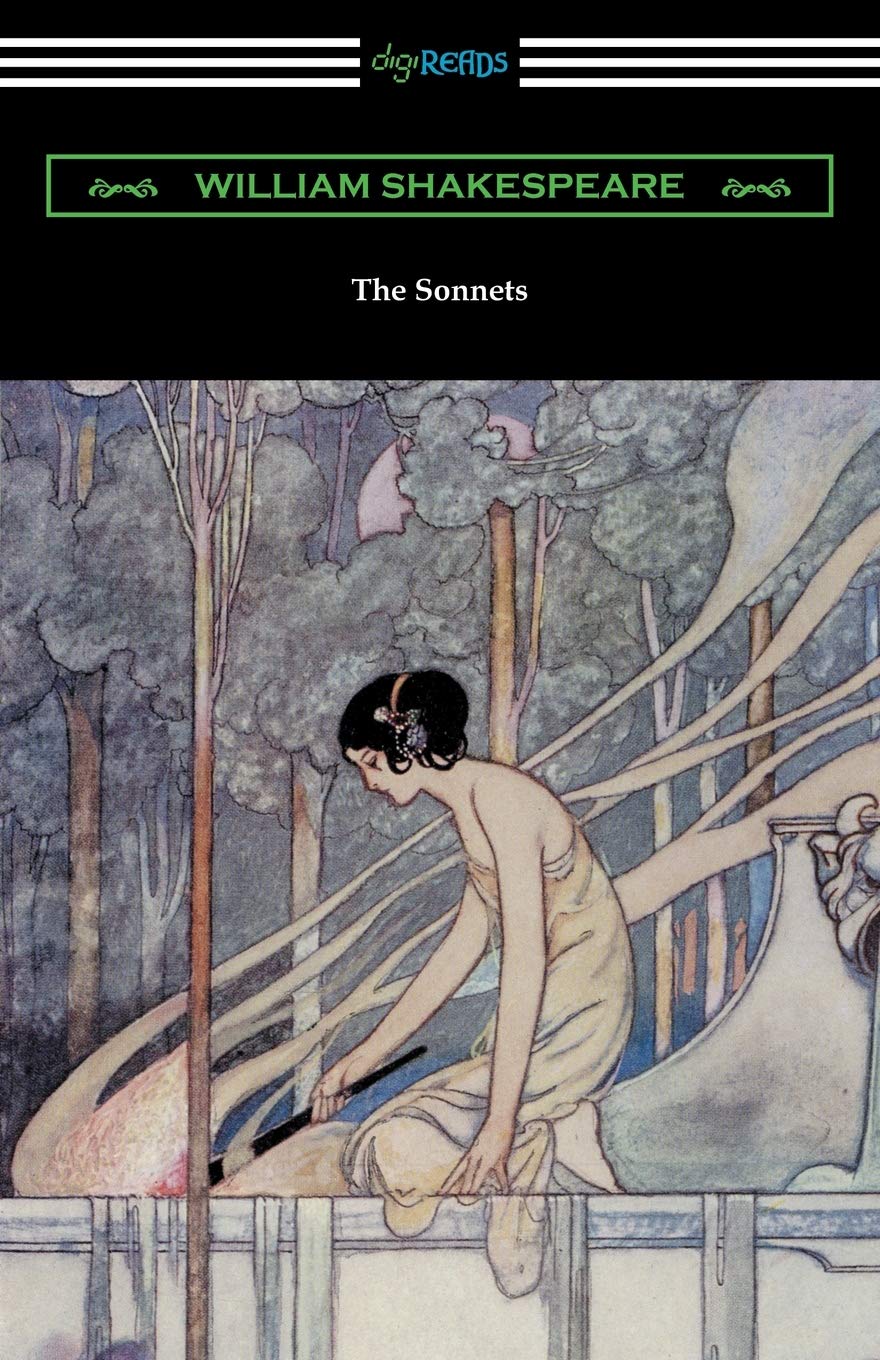
First published in 1609, The Sonnets of William Shakespeare are a collection of 154 loosely connected 14 line poems. Considered by many to be among some of the greatest love poetry ever written much debate surrounds the context of the poetry. It has been suggested that the work may be semiautobiographical but no real evidence firmly supports this notion. The themes of the poems contained within this volume are varied and include such subjects as the passage of time, love, beauty, and mortality. Some scholars have interpreted the collection as a parody of the 300yearold tradition of Petrarchan love sonnets. This analysis arises out of the fact that Shakespeare inverts conventional gender roles creating a more complex depiction of human love. Seen as a new type of love poetry when first written, The Sonnets largely languished in obscurity until the renewed interest in Shakespeares work which accompanied the Romantic literary movement of the 19th century. Regardless of Shakespeares intent behind the writing of The Sonnets, these poems can be appreciated individually or as a whole as examples of William Shakespeares true literary genius. This edition is printed on premium acidfree paper, includes a preface and annotations by Henry N. Hudson, and an introduction by Charles Harold Herford.
⚠️ WARNING (California Proposition 65):
This product may contain chemicals known to the State of California to cause cancer,
birth defects, or other reproductive harm.
For MAP (Minimum Advertised Price) violations and Intellectual Property (IP) or Trademark concerns, please contact:
support@ergodebooks.com
⚠️ California Proposition 65 Warning: Some products sold on this website may expose you to chemicals known to the State of California to cause cancer, birth defects, or other reproductive harm. For more information, visit www.P65Warnings.ca.gov.