
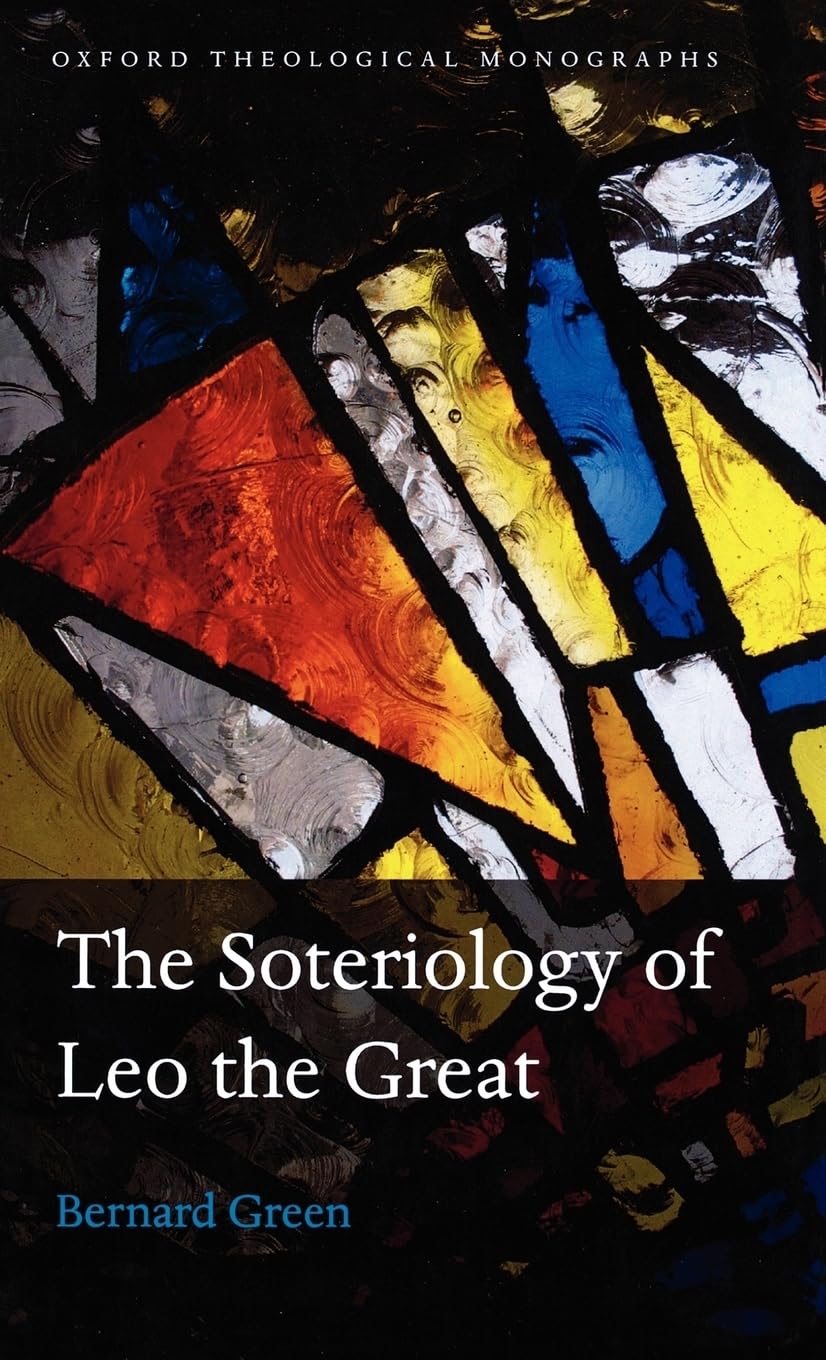
Title
The Soteriology Of Leo The Great (Oxford Theology And Religion Monographs)
Sold by Ergodebooks, an authorized reseller.
Returns accepted within 30 days | support@ergodebooks.com
Shipping Information
- Free Standard Shipping — United States only
- Processing Time: 3–5 business days
- Estimated Delivery: 6–10 business days after dispatch
- Double-boxed, fully insured & discreetly packaged
- Tracking number sent via email once dispatched
Returns & Refund
Returns accepted within 30 days of delivery.
Damaged or Defective Item
Free return shipping + replacement or full refund
Wrong Item Received
Free return shipping + replacement or full refund
Change of Mind
Return shipping at customer's expense · 25% restocking fee applies
Payment Option

Leo the Great was the beneficiary of the consolidation of the power of the papacy in Rome and the Christianization of the city over the course of the preceding century. In this carefully nuanced study, Bernard Green demonstrates the influences at work on this celebrated pope's development as a theological thinker, including two of the most renowned theological names of the period, Ambrose of Milan and Augustine of Hippo.Green charts Leo's theological journey from his first encounters with the Pelagian and Nestorian controversies, where he engaged Cassian as an advisor. Leo took an admiring though limited view of Cyril of Alexandria but misunderstood the weaknesses in Nestorius' thought. As pope, Leo preached a civic Christianity, accessible to all citizens, baptising the virtues of the classical and civic past.The study then examines Leo's recently dated sermons and reveals the evolution of his thought as he worked out a soteriology that gave full value to both the divinity and humanity of Christ, especially in reaction to Manichaeism. In the crisis that led to Chalcedon, Leo's earlier misunderstanding of Nestorius affected the content of his Tome, which was atypical of the Christology and soteriology he had developed in his earlier preaching. Green persuasively concludes that its emphasis on the distinction of the two natures was an uncharacteristic attempt to respond to both Eutyches and Nestorius, as this pope understood them. In the light of Chalcedon, Leo produced a revised statement of Christology, the Letter to the Palestinian monks, which is both more accomplished and better aligned with his characteristic thought.
⚠️ WARNING (California Proposition 65):
This product may contain chemicals known to the State of California to cause cancer, birth defects, or other reproductive harm.
For more information, please visit www.P65Warnings.ca.gov.