If you have any questions, you are always welcome to contact us. We'll get back to you as soon as possible, withing 24 hours on weekdays.
Customer service
All questions about your order, return and delivery must be sent to our customer service team by e-mail at yourstore@yourdomain.com
Sale & Press
If you are interested in selling our products, need more information about our brand or wish to make a collaboration, please contact us at press@yourdomain.com
Help
If you have any questions, you are always welcome to contact us. We'll get back to you as soon as possible, withing 24 hours on weekdays.
Customer service
All questions about your order, return and delivery must be sent to our customer service team by e-mail at yourstore@yourdomain.com
Sale & Press
If you are interested in selling our products, need more information about our brand or wish to make a collaboration, please contact us at press@yourdomain.com
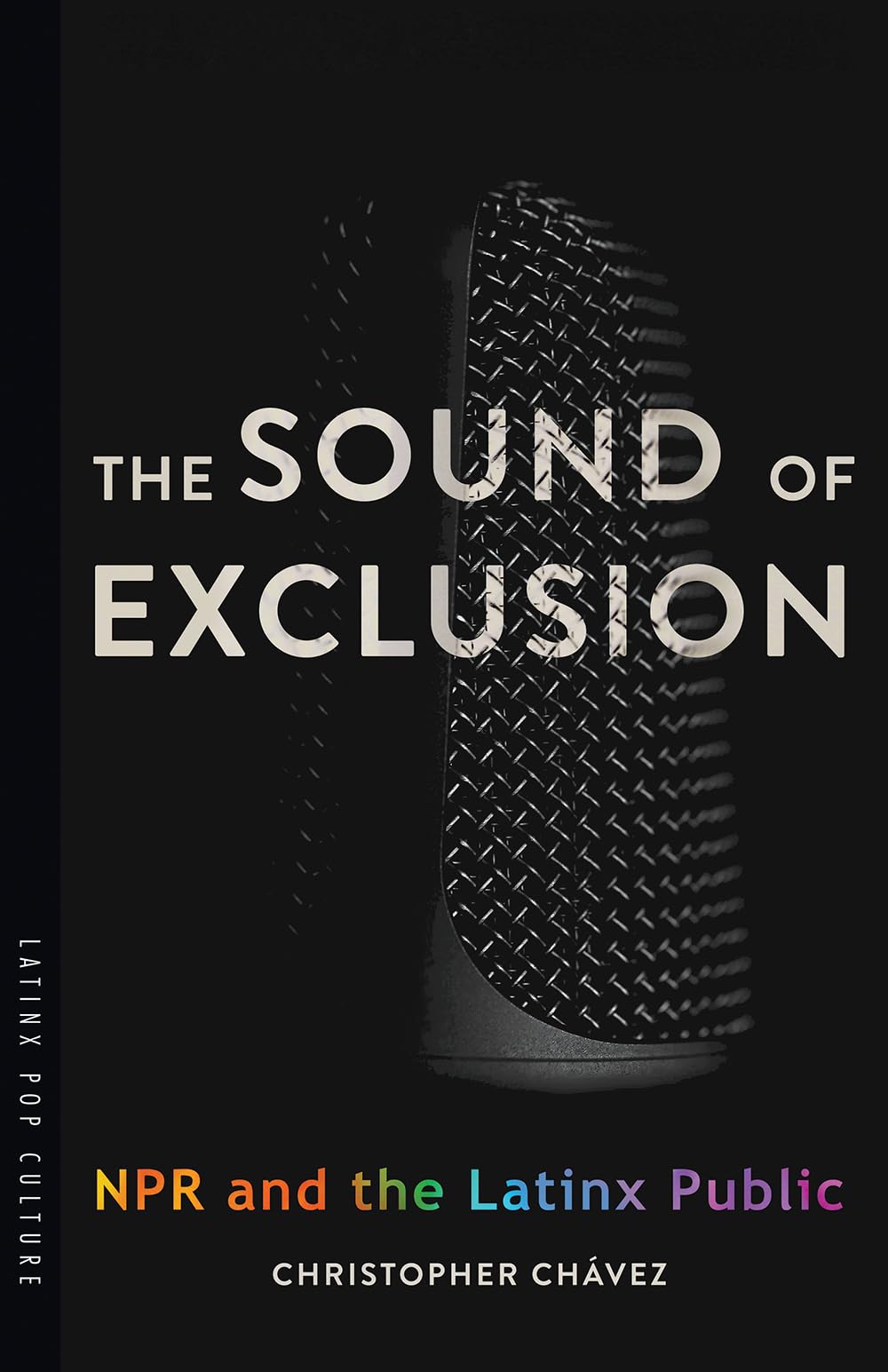
As a network that claims to represent the nation, NPR asserts unique claims about what it means to be American. In The Sound of Exclusion, Christopher Chvez critically examines how National Public Radio conceptualizes the Latinx listener, arguing that NPR employs a number of industry practices that secure its position as a white public space while relegating Latinx listeners to the periphery. These practices are tied to a larger cultural logic. Latinx identity is differentiated from national identity, which can be heard through NPRs cultivation of an idealized dialect, situating whiteness at its center. Pushing Latinx listeners to the edges of public radio has crucial implications for Latinx participation in civic discourses, as identifying who to include in the public audience necessarily involves a process of exclusion.Chvez analyzes NPR as a historical product that has evolved alongside significant changes in technology, industry practice, and demography. In The Sound of Exclusion, Chvez asks these pressing questions: What kind of news organization was NPR intended to be? What has it become over time? In what ways is it evolving to meet the needs of a nation, in which U.S. Latinxs are becoming an increasingly larger portion of the American public that NPR serves? Informed by more than fifty indepth interviews conducted with public radio practitioners from all aspects of the business, Chvez addresses how power is enacted in everyday broadcast practices. By interrogating industry practices, we might begin to reimagine NPR as a public good that serves the broad and diverse spectrum of the American public.
⚠️ WARNING (California Proposition 65):
This product may contain chemicals known to the State of California to cause cancer,
birth defects, or other reproductive harm.
For MAP (Minimum Advertised Price) violations and Intellectual Property (IP) or Trademark concerns, please contact:
support@ergodebooks.com
⚠️ California Proposition 65 Warning: Some products sold on this website may expose you to chemicals known to the State of California to cause cancer, birth defects, or other reproductive harm. For more information, visit www.P65Warnings.ca.gov.