
Title
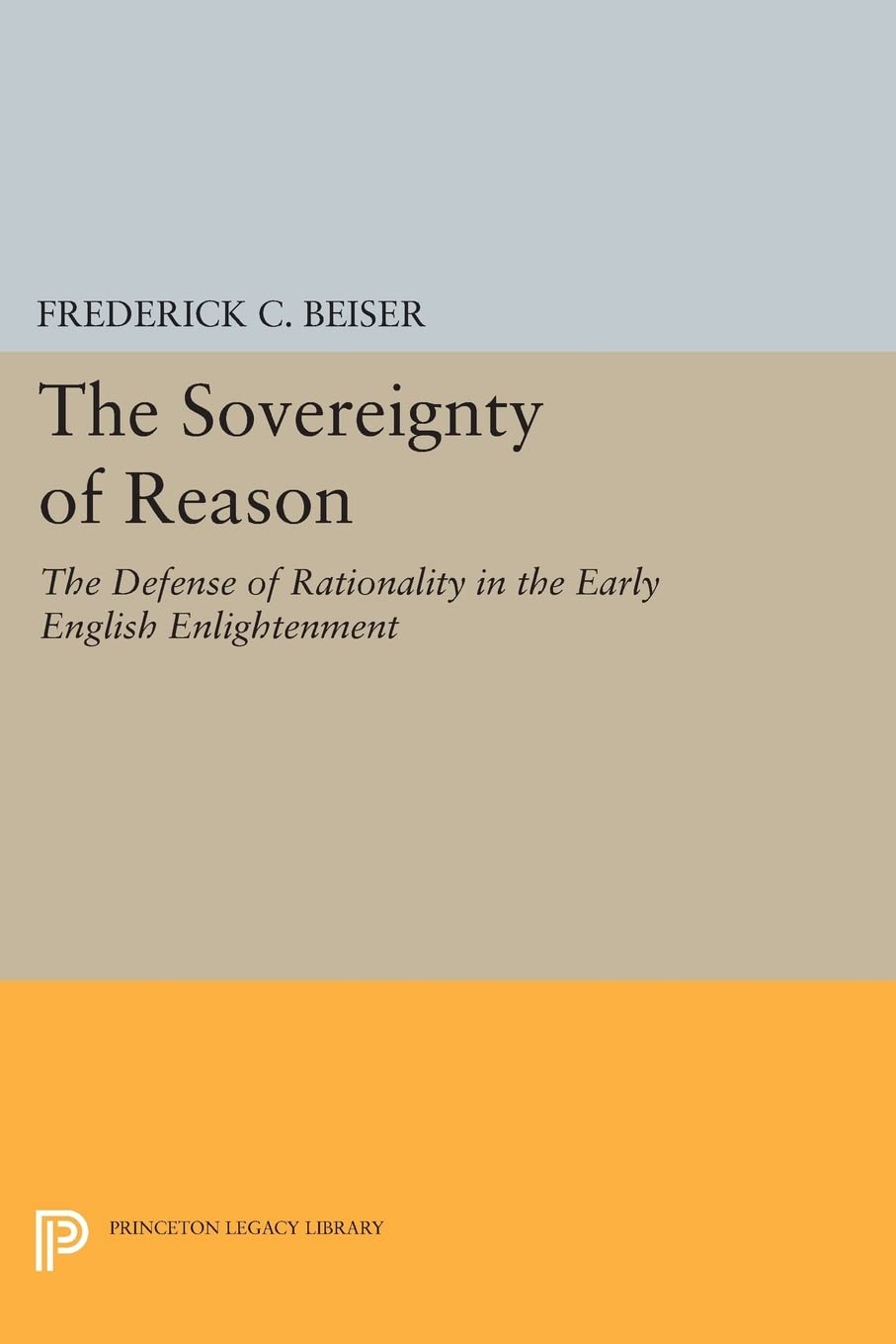
The Sovereignty Of Reason: The Defense Of Rationality In The Early English Enlightenment (Princeton Legacy Library),Used
Sold by Ergodebooks, an authorized reseller.
Returns accepted within 30 days | support@ergodebooks.com
Shipping Information
- Free Standard Shipping — United States only
- Processing Time: 3–5 business days
- Estimated Delivery: 6–10 business days after dispatch
- Double-boxed, fully insured & discreetly packaged
- Tracking number sent via email once dispatched
Returns & Refund
Returns accepted within 30 days of delivery.
Damaged or Defective Item
Free return shipping + replacement or full refund
Wrong Item Received
Free return shipping + replacement or full refund
Change of Mind
Return shipping at customer's expense · 25% restocking fee applies
Payment Option

The Sovereignty of Reason is a survey of the rule of faith controversy in seventeenthcentury England. It examines the arguments by which reason eventually became the sovereign standard of truth in religion and politics, and how it triumphed over its rivals: Scripture, inspiration, and apostolic tradition. Frederick Beiser argues that the main threat to the authority of reason in seventeenthcentury England came not only from dissident groups but chiefly from the Protestant theology of the Church of England. The triumph of reason was the result of a new theology rather than the development of natural philosophy, which upheld the orthodox Protestant dualism between the heavenly and earthly. Rationalism arose from a break with the traditional Protestant answers to problems of salvation, ecclesiastical polity, and the true faith. Although the early English rationalists were not able to defend all their claims on behalf of reason, they developed a moral and pragmatic defense of reason that is still of interest today.Beiser's book is a detailed examination of some neglected figures of early modern philosophy, who were crucial in the development of modern rationalism. There are chapters devoted to Richard Hooker, the Great Tew Circle, the Cambridge Platonists, the early ethical rationalists, and the freethinkers John Toland and Anthony Collins.Originally published in 1996.The Princeton Legacy Library uses the latest printondemand technology to again make available previously outofprint books from the distinguished backlist of Princeton University Press. These editions preserve the original texts of these important books while presenting them in durable paperback and hardcover editions. The goal of the Princeton Legacy Library is to vastly increase access to the rich scholarly heritage found in the thousands of books published by Princeton University Press since its founding in 1905.
⚠️ WARNING (California Proposition 65):
This product may contain chemicals known to the State of California to cause cancer, birth defects, or other reproductive harm.
For more information, please visit www.P65Warnings.ca.gov.